 CravingMind AI
Have you ever wondered why you can’t resist a cookie while a friend seems completely indifferent? The answer isn’t a simple lack of willpower; it’s a fascinating puzzle woven from your unique biology. This guide is all about unpacking the science behind why some people crave sugar more than others.
It boils down to a powerful cocktail of your genetics, brain chemistry, hormones, and even the tiny bacteria living in your gut.
The Real Drivers Behind Intense Sugar Cravings
It’s a story most of us know all too well. You make a solid plan to eat healthier, but then an overwhelming urge for something sweet completely hijacks your good intentions. This feeling isn’t the same for everyone; your coworker might happily pass on the office birthday cake, while you find its pull almost magnetic.
Figuring out why this happens is the first real step toward getting a handle on it.
These cravings are deeply rooted in your body’s most intricate systems. Far from being a character flaw, an intense sweet tooth is often the result of a powerful interplay between multiple biological factors. Think of each factor as a dial—for some of us, those dials are all turned up to eleven.
Before we get into the nitty-gritty details, this quick table breaks down the main players behind your sugar cravings.
Key Drivers of Sugar Cravings at a Glance
| Factor | How It Influences Cravings | Key Takeaway |
|---|---|---|
| Genetics | Your DNA can literally wire your brain to find sugar more rewarding and harder to resist. | Some people are genetically predisposed to have a stronger sweet tooth. |
| Brain Chemistry | Eating sugar triggers a dopamine release, creating a powerful reward loop that makes your brain want more. | It’s not just in your head; it’s a real chemical reaction driving the urge. |
| Hormones | Fluctuating hormones like insulin, leptin, and ghrelin can send mixed signals about hunger and energy needs. | Imbalanced hormones can create intense, hard-to-ignore cravings for quick energy. |
| Gut Health | The trillions of bacteria in your gut can send signals to your brain, influencing your food choices to feed themselves. | An unhealthy gut microbiome can actively contribute to your sugar cravings. |
This table gives you the big picture, but the real magic happens when you understand how these forces work together.
What’s Really Pulling the Strings?
To truly get a grasp on this, it helps to see how all the pieces fit together. Your personal craving profile is a unique blueprint shaped by these key influences, each varying in strength from person to person.
- Genetics and DNA: Some people are born with genes that make them more sensitive to the rewarding taste of sugar. It’s like being pre-programmed to seek it out more often.
- Brain Chemistry: Your brain’s reward system, which runs on the chemical dopamine, can create a powerful feedback loop. Just one taste of sugar can make your brain demand another hit.
- Hormonal Signals: Hormones are your body’s messengers. Insulin and ghrelin, for example, can send powerful signals that either dampen or ignite your desire for the quick energy that sweets provide.
- Gut Health: The community of microbes in your gut—your microbiome—can actually send signals to your brain, influencing what you crave based on what they want to eat.
The big takeaway here is this: your cravings are not a failure of willpower but a biological response. Shifting to this perspective is a game-changer. It allows you to stop blaming yourself and start exploring the real root causes.
As we dive deeper into each of these areas, you’ll start to see exactly how your unique biology shapes your relationship with sugar. This knowledge is your roadmap—it helps you work with your body, not against it, to finally manage those powerful urges.
How Your DNA Programs Your Sweet Tooth
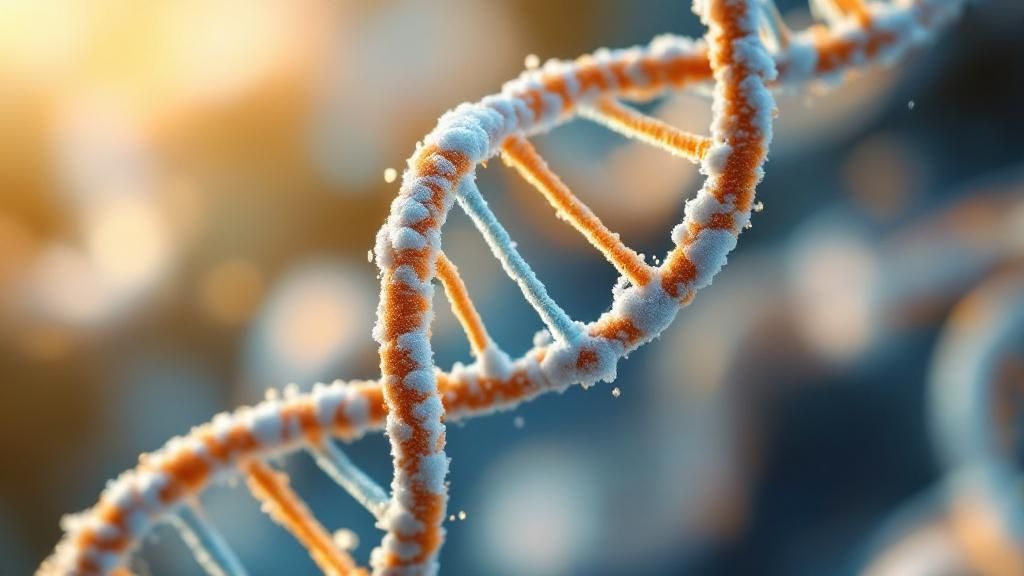
Have you ever felt like your sweet tooth is just a part of who you are, something you can’t seem to shake no matter how hard you try? You’re not just making excuses. The reason why some people crave sugar more than others often starts with a story written into their genetic code.
Think of your genes as the original blueprint for your body. This blueprint includes detailed instructions for everything, including how you experience taste. For sweetness, two of the most important genes are TAS1R2 and TAS1R3, which are responsible for building the sweet taste receptors on your tongue.
You can think of these receptors like tiny volume dials for sweetness. In some people, genetic variations turn these dials way up. They perceive sweetness much more intensely, making sugary foods feel incredibly rewarding and almost impossible to resist. For others, the dials are set lower, and sweets just don’t have the same pull.
Stress often acts as the trigger for these pre-programmed cravings, turning a quiet genetic tendency into a very real, very loud urge.
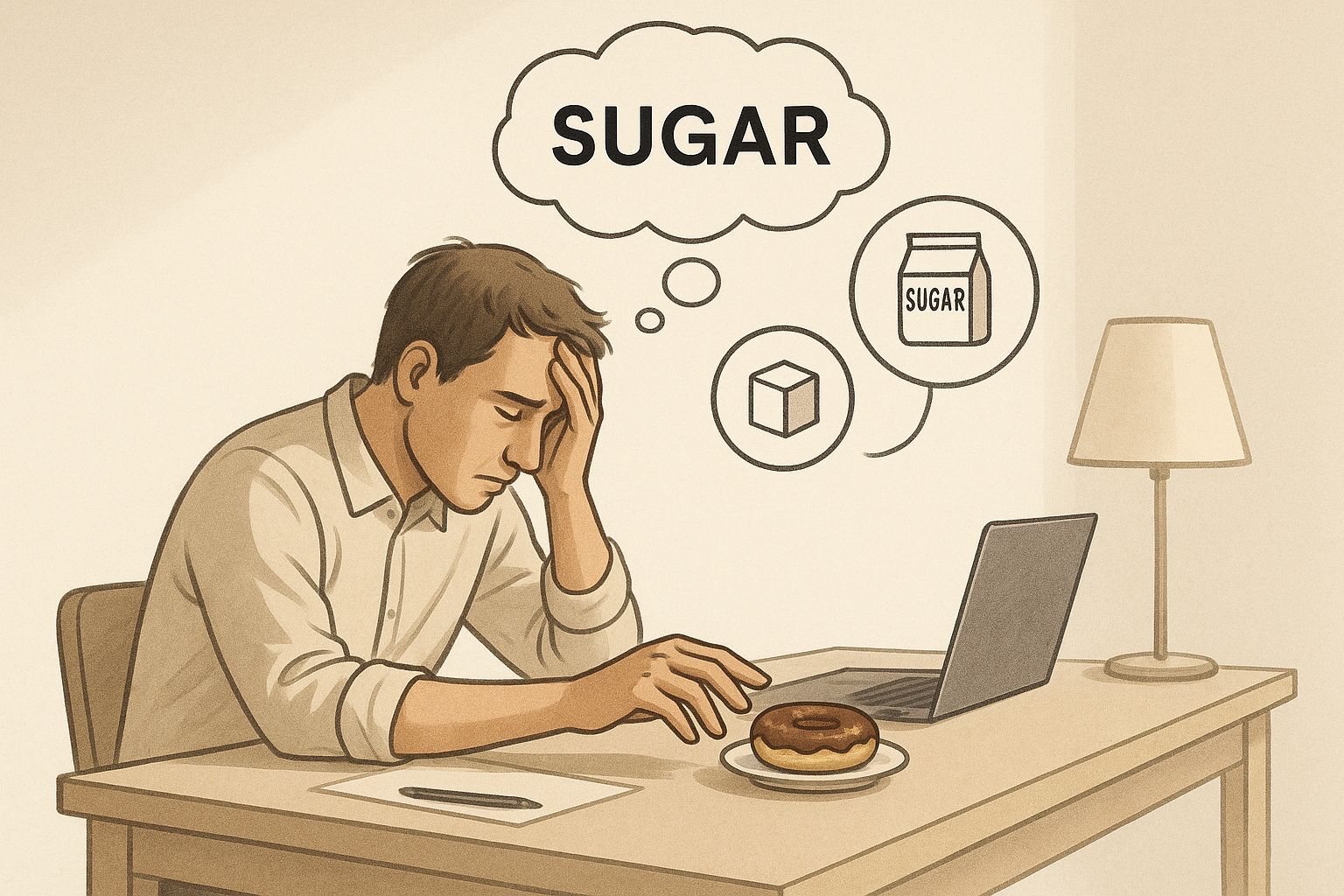
The connection between our internal state and our genetic wiring is powerful. A stressful day can easily flip the switch on that deep-seated need for a sugary reward.
The Dopamine Connection in Your Genes
But it’s not just about what happens on your tongue. Your DNA also has a say in how your brain’s reward system works, and that’s where the neurotransmitter dopamine enters the picture. Dopamine is the “feel-good” chemical that drives feelings of pleasure, motivation, and satisfaction.
A specific gene, DRD2, plays a key role in determining how many dopamine receptors you have in your brain. Certain variations of this gene result in fewer receptors, which can create what some researchers call a “reward deficiency.”
This genetic setup means that someone might need a much bigger stimulus—like the intense rush from a sugary treat—to get the same feeling of pleasure that someone else gets from something milder. Sugar delivers that powerful hit, kicking off a compelling cycle of craving and consumption that’s tough to break.
This isn’t a personality flaw; it’s a fundamental difference in brain chemistry, all programmed by your DNA. You can take a deeper dive into this fascinating process in our guide on the brain’s love for sugar and fat.
How Genes Impact Real-World Choices
These genetic tendencies aren’t just fascinating theories; they show up in our everyday choices and habits. Researchers have actually pinpointed specific gene variants that are directly linked to a preference for sweet tastes and, you guessed it, higher sugar consumption.
For instance, those variations in the TAS1R2 and TAS1R3 genes don’t just change perception—they actively influence behavior. Studies have found that people with certain versions of these genes don’t just prefer sweeter foods, they may also eat 20-30% more sugary items than people who don’t have those variants.
It’s clear evidence that a powerful sweet tooth can literally be passed down through generations. Understanding this biological foundation is the first step toward realizing that your cravings aren’t a sign of weak willpower, but a deeply ingrained part of your physical makeup.
Understanding Your Brain’s Reward System
Genetics play a part, but to really understand why some people crave sugar more than others, we need to look deep inside the brain’s powerful reward system. This is the ancient, hardwired circuitry that encourages us to repeat behaviors essential for survival, like eating, by making them feel intensely pleasurable. The star player in this whole operation is a neurotransmitter called dopamine.

Think of dopamine as your brain’s internal cheerleader, shouting, “Yes! That was amazing! Let’s do that again.” When you eat something sugary, your brain unleashes a flood of dopamine, creating a satisfying wave of pleasure. This powerful feedback loop trains your brain to associate sugar with a feel-good rush, making you want to seek it out again and again.
For some of us, this dopamine hit is more like a firework show than a little spark. If your brain is wired for a stronger response, sugar feels exceptionally rewarding. This can turn a simple preference for sweets into an intense, biological drive that feels less like a choice and more like a command. You can dive deeper into how sugar acts as a chemical jackpot in the brain’s reward system in our other article.
When Your Brain Adapts to Sugar
Here’s the thing: your brain is incredibly smart. It strives for balance. When it’s constantly flooded with the intense stimulation from sugar, it starts to protect itself through a process called neuroadaptation. In simple terms, your brain begins turning down the volume on its own reward signals to avoid being overwhelmed.
This smart adaptation, however, has two major consequences that end up fueling a vicious craving cycle:
- Tolerance: Your dopamine receptors become less sensitive to sugar’s effects. The single scoop of ice cream that used to send you to heaven no longer does the trick. Now, you need two or three scoops just to get that same initial feeling of pleasure.
- Withdrawal: When you try to cut back, the dialed-down dopamine signaling leaves you feeling flat, irritable, and foggy. These uncomfortable withdrawal symptoms are a powerful motivator to grab something sweet, not for pleasure, but just to feel normal again.
It’s a frustrating loop. Your brain, in its attempt to find equilibrium, inadvertently traps you. The very system designed to reward you becomes the source of an escalating, hard-to-satisfy craving.
This cycle is precisely why the “just try harder” approach to resisting sugar so often backfires. You’re not just fighting a weak will or a bad habit. You’re up against a powerful biological process where your brain’s chemistry has been rewired to expect—and demand—its next hit. Grasping this neurochemical dance is the first real step toward breaking the cycle without blaming yourself for what is a completely normal brain response.
It’s not all in your head. Beyond the brain’s reward pathways, a powerful group of hormones is constantly sending messages throughout your body, and they have a major say in whether you reach for that cookie. Think of them as your body’s internal text messaging system, firing off signals about hunger, fullness, and how to use energy. When that system gets out of whack, it can unleash sugar cravings that feel downright impossible to control.
These hormones are essentially the managers of your body’s energy account. Their main job is to make sure your cells get the fuel they need, when they need it. But sometimes, wires get crossed, and you get a frantic, confusing demand for sweets even when you’re not physically hungry.
When Your Energy Key Stops Working
Let’s start with one of the biggest players: insulin. Insulin’s job is to act like a key, unlocking your cells so glucose (sugar) can get inside and be used for energy. Simple enough, right? But a diet consistently high in sugar throws a wrench in the works, leading to something called insulin resistance.
Imagine the lock on your cell door gets worn out from the insulin key being used too aggressively, too often. That’s insulin resistance in a nutshell. The key doesn’t fit as well anymore, so glucose can’t get into the cells easily. This leaves your cells starved for energy, even with plenty of sugar floating around in your bloodstream.
Your brain perceives this cellular starvation as an all-out energy crisis. It can’t see the sugar that’s locked out of the cells, so it does the only thing it knows how: it sends out a powerful SOS signal. That signal is an intense, urgent craving for more sugar to solve the “problem.”
This kicks off a vicious cycle. You eat more sugar, which only dulls the “locks” on your cells even further, setting you up for even stronger cravings down the line.
Fullness and Hunger Hormones Gone Rogue
Two other key hormones, leptin and ghrelin, are supposed to work in harmony to manage your appetite. But their signals are easily scrambled.
Leptin: The ‘I’m Full’ Signal. Leptin is released from your fat cells, and its job is to tell your brain, “Hey, we’ve got enough energy stored, you can stop eating now.” But just like with insulin, your brain can become resistant to leptin, especially when sugar intake is high. When that happens, your brain never gets the “I’m full” memo, leaving you feeling constantly unsatisfied and ready to keep eating.
Ghrelin: The ‘I’m Hungry’ Signal. Known as the “hunger hormone,” ghrelin revs up when your stomach is empty to tell you it’s time to eat. Things like stress and poor sleep can cause ghrelin to spike, creating a sudden, urgent need for quick energy. And what’s the fastest source of energy your brain knows? Sugar.
These hormonal glitches are a huge reason why cravings feel so different for everyone. Conditions like insulin resistance, now a factor for the nearly 10.5% of adults worldwide with diabetes or prediabetes, can seriously disrupt how your body manages sugar, intensifying cravings as the brain misinterprets your real energy needs. You can find more data on global health trends and sugar consumption on World Population Review.
And of course, we can’t forget the monthly hormonal shifts of the menstrual cycle. Fluctuations in estrogen and progesterone can mess with mood-regulating brain chemicals like serotonin and dopamine, leading to those classic premenstrual cravings for sweets and carbs as the body tries to find a quick fix.
Ever get the feeling that your sugar cravings are coming from somewhere… else? It’s not just in your head. Down in your gut, trillions of tiny microbes—your gut microbiome—are having a major say in what you want to eat.
Think of it like a bustling city inside you, with a direct hotline to your brain. This connection is called the gut-brain axis, a two-way communication superhighway where messages are constantly flying back and forth. The bacteria living in your gut can actually produce chemical signals that travel straight to your brain, telling it what they want for dinner.
When the Wrong Crowd Takes Over
Your gut is home to a diverse crowd of bacteria. Some are helpful, keeping things running smoothly, while others are just looking out for themselves. The troublemakers? A certain type of bacteria and yeast that absolutely loves simple sugars. It’s their favorite food, and they need it to grow and multiply.
When these sugar-fiends start to outnumber the good guys, they can essentially hijack your brain. They pump out signals that your brain reads as an intense, undeniable craving for their fuel of choice: sugar. This is a huge reason why some people crave sugar more than others—an out-of-whack gut can create a relentless demand for sweets that feels impossible to ignore.
It becomes a vicious cycle. You eat sugar, which feeds the bad bacteria. They get stronger, send out even more powerful craving signals, and you find yourself reaching for more sugar. The key to getting off this merry-go-round is to break the loop.
Taming Cravings by Feeding the Good Guys
The good news? You’re not powerless here. You can completely change the environment in your gut. By shifting what you eat, you can start feeding the helpful bacteria and essentially starve out the sugar-craving mob. It’s like changing the management of the city inside you.
A healthier gut doesn’t just put a lid on cravings. It can also lift your mood. A huge amount of your body’s serotonin—the “feel-good” chemical—is actually made in your gut. So, when your gut is happy, you tend to feel more emotionally balanced, too.
Ready to start rebalancing your internal ecosystem? Here are two simple but powerful places to start:
- Load Up on Fiber: Your good bacteria absolutely thrive on fiber from things like vegetables, fruits, and whole grains. Eating more fiber helps them flourish, leaving less room for the unhealthy microbes to take hold.
- Bring in Probiotic Reinforcements: Foods like yogurt, kefir, sauerkraut, and kimchi are packed with live, beneficial bacteria. Think of them as reinforcements for your gut’s good guys, helping restore order and quiet down the sugar-loving bacteria.
By putting a little focus on your gut health, you’re doing so much more than just improving digestion. You’re fundamentally changing the conversation between your gut and your brain, making it far easier to manage those cravings from the inside out.
The Psychology of Your Habit Loops
It’s not all just biology. Your mind is a major player in the game, often explaining why some people crave sugar more than others. Many of those intense urges have nothing to do with physical hunger and everything to do with deeply ingrained psychological patterns called habit loops. This is a simple, yet incredibly powerful, three-step process that wires your emotions directly to your actions.
Think of it like this:
- The Cue: It all starts with a trigger. This could be an emotion (stress, boredom), a specific time (that 3 PM slump), or even a place (walking past your favorite bakery).
- The Routine: The cue sparks the behavior—in this case, reaching for and eating something sweet.
- The Reward: Finally, you get that hit of pleasure, comfort, or a brief escape from whatever triggered you in the first place.
Every single time you run through this cycle, you’re strengthening that neural pathway. Before you know it, feeling stressed automatically triggers the thought of a cookie, completely bypassing any conscious decision-making. It becomes pure instinct.
From Childhood Comfort to Adult Cravings
Where did this programming come from? For a lot of us, it started way back in childhood. Did you get a lollipop after scraping your knee? Or ice cream to celebrate a good report card? These early experiences forge incredibly strong emotional connections, teaching our young brains that sugar equals comfort, celebration, and reward.
Fast forward to today, and those learned behaviors have become our go-to coping mechanisms. The real issue is that what started as a simple, occasional treat has morphed into an automatic, default response to a whole spectrum of emotional triggers.
This is where it’s crucial to know the difference. Real, physical hunger comes on gradually and can be satisfied with just about any food. An emotional craving, on the other hand, hits you like a ton of bricks—it feels urgent and demands a very specific food, usually something sweet.
Learning to hit the pause button and identify your personal triggers is the first step to breaking free. The next time a craving strikes, ask yourself what you were feeling right before it hit. Bored? Sad? Anxious? Recognizing the cue is your chance to consciously choose a different routine—one that actually addresses the emotion instead of just slapping a sugary band-aid on it. This self-awareness is your single most powerful tool for getting a handle on these complex urges.
Got Questions About Sugar Cravings? Let’s Break It Down.
When it comes to sugar cravings, there’s a lot of confusing advice out there. Let’s tackle some of the most common questions head-on so you can get a clearer picture of what’s happening in your own body.
Are My Cravings Genetic or Just a Bad Habit?
This is the classic nature versus nurture question, and the real answer is: it’s almost always both.
Think about it this way: if you’ve had an intense sweet tooth for as long as you can remember, genetics are likely playing a strong role. But if your cravings pop up like clockwork at 3 PM, in front of the TV, or when you’re stressed, you’re looking at a powerful habit loop.
The most effective strategy is to address both sides of the coin. You can work on breaking the habit by changing your routine, while also supporting your unique biology by adding more protein and fiber to your meals.
Do Artificial Sweeteners Help or Hurt Cravings?
The jury is still out on this one, and the effects can be very personal. For some, a diet soda can be a useful tool to sidestep the calories in a regular one.
For others, though, it can be a real problem. Your brain gets the signal for intense sweetness but doesn’t receive the calories it expects.
This mismatch can leave your brain’s reward system feeling confused and unsatisfied, sometimes making you crave sweetness even more.
A good rule of thumb? Use them sparingly, if at all. The real goal is to gradually reduce your overall desire for intensely sweet things, not just substitute them.
What’s the Single Best First Step I Can Take?
Before you even think about cutting sugar out completely, focus on one thing: balancing your blood sugar.
The most powerful way to do this is to make sure every single meal includes a solid serving of protein, healthy fats, and fiber. This trio works together to slow down digestion and prevent the wild blood sugar roller coaster that so often triggers a desperate search for sugar.
When you feel genuinely full and stable for hours after eating, that biological scream for a quick fix starts to quiet down all on its own.