 CravingMind AI
If you’ve ever tried to “willpower” your way through a food craving, you know how that story usually ends. It’s a frustrating cycle. But here’s the truth: managing cravings has very little to do with raw willpower and everything to do with understanding your body’s biology and the habits you’ve built around it.
The real, lasting solution involves a combination of smarter nutrition to balance your hormones, better stress management, quality sleep, and a dose of mindfulness. It’s about learning to listen to your body’s signals and respond thoughtfully, rather than just reacting on autopilot.
Why You Crave Certain Foods

Let’s get one thing straight. That intense, can’t-stop-thinking-about-it urge for chips or a donut isn’t a moral failing. It’s not a sign that you’re weak. Your food cravings are simply complex signals—a mix of biological and psychological messages that your body is sending for a specific reason.
Once you start to understand why you’re craving something, you can shift from fighting a losing battle against yourself to working with your body. That’s the first real step toward getting a handle on them.
The Real Drivers Behind Your Food Cravings
Cravings rarely pop up out of nowhere. They’re usually triggered by a handful of key physiological and psychological drivers. Getting to know them is like getting a peek behind the curtain.
| Craving Driver | What’s Happening in Your Body | A Real-World Example |
|---|---|---|
| Hormonal Imbalance | Ghrelin (“I’m hungry”) and leptin (“I’m full”) get out of sync, often due to poor sleep. | Tossing and turning all night, then waking up ravenous for a pastry, even after a decent breakfast. |
| Stress Response | Your body releases cortisol, which increases appetite. Your brain seeks a dopamine hit for comfort. | After a brutal day of back-to-back meetings, you find yourself heading straight for the ice cream. |
| Gut-Brain Axis | An imbalanced gut microbiome can affect mood-regulating neurotransmitters like serotonin. | Feeling irritable and down for a few days, you notice you’re reaching for sugary snacks more often. |
| Blood Sugar Swings | A high-sugar meal causes a rapid spike and then a crash in blood glucose, triggering more sugar cravings. | That 3 PM slump after a carb-heavy lunch, where all you can think about is a candy bar. |
This table is just a starting point, but it shows how these internal cues are often the real culprits behind your sudden urges.
The Hormonal Hunger Games
Think of your appetite as being run by two key hormones: ghrelin, which shouts “I’m hungry!”, and leptin, which says, “Okay, you’re full.” In a perfect world, they work in beautiful harmony. But several things can throw this delicate balance completely out of whack.
Lack of sleep is a massive disruptor. I’ve seen it time and time again with clients. Just one night of poor sleep can send ghrelin levels soaring while tamping down leptin. This creates a hormonal perfect storm where you feel hungrier than normal and food is far less satisfying, making you crave high-calorie, sugary foods to get that feeling of fullness.
Stress and Your Brain’s Reward System
Chronic stress is another huge piece of the puzzle. When you’re constantly on edge, your body pumps out cortisol, a hormone that can seriously ramp up your appetite. But it goes deeper than that. Your brain starts desperately looking for a quick hit of pleasure to feel better.
Your brain’s reward system, which runs on the neurotransmitter dopamine, lights up like a pinball machine when you eat those hyper-palatable foods packed with sugar and fat. This forges a powerful neurological shortcut where you learn to associate these foods with comfort and relief.
This isn’t just in your head; it’s a learned, physical response. Over time, your brain gets wired to seek out these “rewards” whenever you feel stressed, bored, or even slightly anxious. This is how that “I deserve this” feeling turns into a deeply ingrained cycle. Beyond what’s happening inside your body, you can dig deeper into how environmental and social influences shape why we crave junk food in our detailed guide.
Your Gut, Your Mood, and Your Choices
The connection between what’s happening in your gut and your brain is incredibly powerful. The trillions of bacteria living in your digestive system—your gut microbiome—are tiny chemical factories that help produce neurotransmitters like serotonin, which is crucial for regulating your mood.
When that gut community is out of balance, it can directly impact your emotional state, making you feel irritable, anxious, or down. And how do we often cope with those feelings? We reach for comfort food. It’s a clear illustration of just how interconnected our physical and mental well-being truly are. A happy gut often makes it much easier to make clear-headed food choices.
Using Protein to Regain Appetite Control
Let’s be honest: trying to fight off food cravings with sheer willpower is a losing battle. The real secret to regaining control isn’t about restriction; it’s about making smart nutritional choices that work with your body. And one of the most effective tools in your arsenal is protein.
I’m not just talking about building muscle here. Protein is a powerhouse for managing your appetite and quieting those nagging cravings that can derail your entire day. When you eat protein, it triggers the release of satiety hormones that tell your brain, “Hey, we’re full and satisfied.” This feeling of fullness lasts much longer, which naturally dials down the urge to mindlessly snack.
How Protein Puts the Brakes on Cravings
The effect protein has on our hunger is pretty remarkable when you look at the science. Research has shown that a high-protein diet can cut cravings by a whopping 60% and slash the desire for late-night snacking by half. How? By helping to balance key hunger hormones like ghrelin (the one that screams “I’m hungry!”) and peptide YY (the one that says “You can stop eating now”).
When these hormones are in check, the intensity and frequency of your cravings drop significantly. Getting a handle on the science behind the urge for unhealthy foods can really shed light on why these hormonal shifts are so critical for long-term success.
For so many of us, the real danger zone is that mid-afternoon slump. Your energy tanks, and that call for a sugary pick-me-up feels impossible to ignore. This is often the direct result of a lunch that wasn’t properly balanced. A protein-packed lunch, however, helps stabilize your blood sugar, giving you a steady stream of energy instead of the sharp spike and crash that leaves you reaching for cookies.
This simple snack swap is a perfect example of putting this into practice.
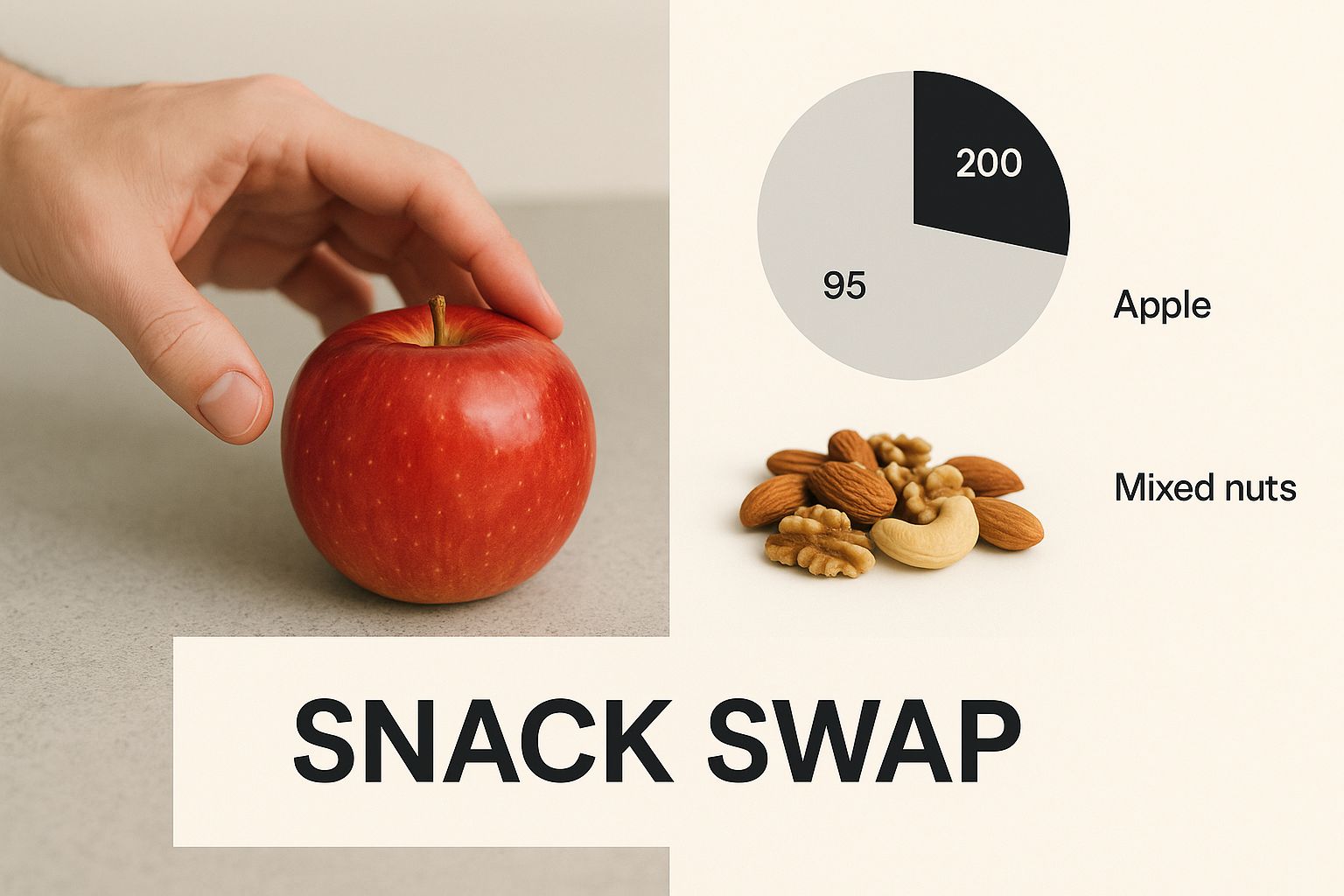
Choosing to pair a carb source like an apple with a protein/fat source like nuts makes a world of difference in keeping you full and preventing those blood sugar rollercoaster rides.
Simple Ways to Get More Protein in Your Day
Upping your protein intake doesn’t have to mean a complete diet overhaul or expensive supplements. Small, consistent tweaks are what truly count.
Here are a few ideas I’ve seen work for countless people:
- Boost Your Breakfast: Instead of a carb-heavy pastry or plain toast, try a couple of scrambled eggs. Even adding a scoop of protein powder to your oatmeal or smoothie makes a huge difference.
- Fortify Your Lunch: Toss a can of chickpeas or a handful of lentils into your salad. Add grilled chicken, fish, or tofu to your wraps and sandwiches.
- Snack Smarter: When you need a snack, trade the chips or pretzels for a small bowl of Greek yogurt, a handful of almonds, or a simple hard-boiled egg. These options give you lasting energy, not a fleeting sugar rush.
The real aim is to include a source of protein with every meal and snack. It’s a simple rule of thumb that builds a solid foundation for stable energy and far fewer cravings. You’ll end your day feeling in control, not completely worn out from fighting your own body.
Mindful Techniques to Tame Your Cravings

What if you could disarm a craving before you even reach for a snack? Instead of fighting your urges with brute force, mindfulness offers a smarter, more grounded approach. It’s about learning to observe your cravings with curiosity rather than immediately acting on them.
This isn’t about suppressing what you feel. It’s about creating a small pocket of time between the craving and your reaction. In that space, you regain your power of choice. This simple pause is the key to rewiring your brain’s automatic responses and building lasting control over your eating habits.
And it works. Studies show that people who practice mindfulness meditation for as little as 8 weeks can reduce their food cravings by roughly 31%. These techniques boost your awareness of what triggers you, breaking the automatic link between thinking about food and actually eating it. You can explore more about these powerful behavioral findings to really dig into the science behind this shift.
Become a Detective of Your Habits
The first, most crucial step is to get curious about your cravings. When an urge for a specific food hits, don’t see it as a random attack. Instead, treat it like a clue. This is where a tool like the Craving Mind app becomes invaluable, helping you log these moments so you can see the bigger picture emerge.
Ask yourself a few simple questions in the moment:
- What was I doing right before this craving started?
- What am I feeling right now? (Bored, stressed, tired, anxious?)
- Am I actually hungry, or is this something else?
More often than not, you’ll find a craving isn’t about hunger at all. That sudden urge for chips might really be your brain signaling boredom, while the intense desire for chocolate could be an attempt to self-soothe after a stressful email. Recognizing these patterns is the first step toward developing smarter coping strategies that don’t involve the pantry.
Master the Art of Craving Surfing
One of the most effective mindfulness exercises I’ve come across is called “craving surfing.” The idea is simple but powerful: cravings, much like ocean waves, build in intensity, hit a peak, and then naturally recede on their own—if you just wait them out. Instead of letting the wave crash over you, you learn to surf it.
Here’s how you can practice it:
- Acknowledge the Craving: When the urge appears, just notice it without judgment. Say to yourself, “Okay, a craving for cookies is here.”
- Observe the Physical Sensations: Tune into your body. Where do you feel it? Is it a tightness in your stomach? A watering mouth? Get specific and just observe these sensations as they are.
- Ride the Wave: Continue to watch the feeling as it intensifies. Remind yourself that this is temporary. The peak of a craving usually only lasts for a few minutes.
- Notice It Fade: Pay close attention as the intensity starts to lessen. See for yourself how the urge naturally loses its power when you don’t feed it.
This technique isn’t about fighting the urge. It’s about accepting its presence and realizing you don’t have to act on it. Each time you successfully surf a craving, you weaken its hold over you.
This practice builds what experts call self-regulation. By simply observing your internal state without reacting, you’re actively training your brain to handle discomfort. You’re proving to yourself, one craving at a time, that you are the one in charge.
How Movement Can Outsmart Your Appetite
When a powerful craving takes hold, it’s easy to think the battle is all in your head. But honestly, one of the best ways I’ve seen people get a handle on cravings has nothing to do with willpower and everything to do with their bodies. Getting up and moving, even for just a few minutes, can completely shift your brain chemistry and stop an urge in its tracks.
It works like a circuit breaker. You know that nagging internal monologue demanding a cookie? The one that just won’t quit? It gets cut short the second you change what you’re physically doing. This isn’t about some grueling, hour-long workout. The real goal is just to shift your focus and your body’s state. Sometimes, all it takes is a quick walk around the block.
The Immediate Impact of a Short Walk
That old advice to “go for a walk” sounds almost too simple, but it’s incredibly effective. A brisk, 15-minute walk can do two things right away. First, it gets you out of the environment that triggered the craving in the first place. By stepping away from your desk or leaving the kitchen, you physically remove the temptation. It’s an instant reset.
Second, that simple walk sets off a chain reaction in your brain. A bit of light exercise releases endorphins, those natural mood-lifters that help dissolve stress. This is huge, especially if your cravings are tied to emotions like boredom or anxiety. Instead of seeking comfort from a bag of chips, you’re giving your brain the very feel-good chemicals it was after.
A craving often feels like an emergency, a demand that must be met right now. A short burst of movement proves that it’s not. It gives you the space to see the urge for what it is—a temporary signal that you have the power to influence.
And this isn’t just a feeling; the science backs it up. Physical activity is a proven method for managing these intense urges. A meta-analysis pooling 15 global studies confirmed that both single bouts of activity and regular exercise routines slashed cravings for high-calorie foods by 25-40%. It’s a combination of exercise tweaking our appetite-regulating hormones and the simple fact that you’re distracting yourself from thinking about food. If you’re curious about the deeper science, you can learn more about these powerful findings on food security and what drives our choices.
Finding Movement That Works for You
The trick to making this strategy stick is finding something you’ll actually do in the moment. The “best” activity is whatever is easy and maybe even a little fun for you.
Here are a few ideas to get you started:
- Quick Bursts at Home: You don’t even have to leave the house. Try a quick set of jumping jacks, jog on the spot for a couple of minutes, or—my personal favorite—have a 5-minute dance party to a great song.
- Office-Friendly Breaks: Stuck at work? Take the stairs instead of the elevator. Even doing a few simple stretches right at your desk can make a difference.
- Outdoor Reset: A walk is fantastic, but so is a short bike ride or spending a few minutes pulling weeds in the garden. Anything that gets you outside and shifts your mindset works.
The goal is to build a new habit. Instead of a craving automatically leading to the pantry, you can train yourself to respond with movement. Over time, you’ll find that you’ve forged a new, much healthier pathway. Movement becomes your reliable tool for taking back control.
Let’s be honest: relying on sheer willpower to fight off cravings is a losing battle. We all have a limited supply, and it runs out fast, especially when we’re tired or stressed.
A far smarter approach is to set up your daily life so that healthy choices become the easy, almost automatic, option. Think of it as building a fortress against those impulsive grabs for sugary or processed foods. It’s about preventing the craving from even starting in the first place.
This isn’t about being rigid or depriving yourself. It’s about intelligently shaping your surroundings and routines. And it starts with something you might not immediately link to your appetite: your sleep.
Start with Better Sleep
Cutting corners on sleep is one of the quickest ways to derail your good intentions. Even one night of tossing and turning can throw your hunger hormones completely out of whack.
When you’re sleep-deprived, levels of ghrelin (the “go” hormone that tells you to eat) spike, while leptin (the “stop” hormone that signals fullness) takes a nosedive. This hormonal mess creates a powerful, biological pull toward high-calorie, high-sugar foods. Your brain is literally screaming for a quick energy fix.
Making 7-9 hours of quality sleep a priority isn’t just a nice idea; it’s a fundamental part of keeping your appetite in check. When you’re well-rested, your hormones are balanced, and you’re in a much better position to make thoughtful decisions about food.
Your environment is one of the most powerful, yet overlooked, factors in managing cravings. You can’t out-willpower a kitchen full of tempting snacks when you’re tired and stressed. The goal is to make the healthy choice the easy choice.
This is where a little bit of planning makes all the difference.
Master Your Kitchen with Smart Prep
Think about when a powerful craving usually hits. For most people, it’s when they’re starving and there are no healthy options in sight. In that moment of decision fatigue, the siren song of fast food or a bag of chips is almost impossible to resist.
Strategic meal prep is your secret weapon here. And no, this doesn’t mean you have to spend your entire Sunday cooking a week’s worth of identical meals in plastic containers.
It can be much more flexible:
- Cook Components, Not Just Meals: Make a big batch of quinoa or brown rice. Roast a sheet pan of your favorite vegetables. Grill a few chicken breasts. Having these building blocks ready means you can throw together a satisfying meal in minutes.
- Make Healthy Snacks Obvious: Don’t hide the good stuff! Keep washed and cut-up veggies, single-serving portions of nuts, or Greek yogurt right at the front of the fridge. Make them the first thing you see.
- Out of Sight, Out of Mind: This classic advice works for a reason. Move the junk food. Instead of a clear cookie jar on the counter, put those treats in an opaque container on a high shelf. Even that small barrier can be enough to make you pause and reconsider.
By simply organizing your kitchen, you dramatically lower the “food noise”—those constant, nagging thoughts about tempting foods. When an apple with peanut butter is easier to grab than digging for a bag of chips, you naturally start making the better choice. You’re not fighting the craving anymore; you’re just sidestepping it.
Got Questions About Food Cravings? Let’s Get Them Answered
It’s one thing to have a toolbox of strategies, but it’s another to navigate the real-world challenges that pop up. When you’re trying to get a handle on food cravings, questions are going to come up. That’s not just normal; it’s a sign you’re engaged in the process.
Getting clear, straightforward answers can be the very thing that keeps you going when you hit a bump in the road. So, let’s dive into some of the most common questions I hear from people just starting out.
How Quickly Will I Actually See Results?
This is probably the number one question, and the honest answer is: it depends. Some strategies deliver an almost immediate payoff. The instant clarity you get from a quick walk or the satisfying fullness after a protein-rich meal can stop a craving in its tracks right then and there.
But the real magic happens over time. Techniques like mindfulness and tracking your patterns are about building a new skill. Think of it like learning an instrument; you don’t master it overnight. Most people tell me they feel a real, noticeable shift in craving intensity after a few solid weeks of practice—especially when they consistently use methods like “craving surfing” or logging their triggers in an app like Craving Mind. The goal isn’t a quick fix, but lasting change.
Every single time you choose a healthy response, you’re casting a vote for a new habit. Those small wins add up, slowly but surely chipping away at the power those urges have over you.
Is It Really Okay to Give In to a Craving Sometimes?
Absolutely. In fact, I’d say it’s essential. This journey is about you being in the driver’s seat, not being a prisoner to a strict “all-or-nothing” diet. A genuinely healthy relationship with food includes room for planned, joyful indulgence.
There’s a world of difference between mindlessly caving to an urge and making a conscious, deliberate choice to enjoy a piece of cake. When you’re in control, you can savor it without the side of guilt and then simply move on. This balanced, flexible mindset is far more sustainable—and mentally healthier—than chasing an unrealistic ideal of perfection.
What if I’m Craving Healthy Stuff?
Cravings aren’t always for pizza and ice cream. You might find yourself with a powerful urge for a bowl of mangoes or a salty handful of almonds. For the most part, this isn’t something to worry about unless the feeling becomes obsessive or leads you to eat way beyond what feels good for your body.
An intense craving for fruit, for instance, might just be your body’s way of asking for vitamins, hydration, or a quick hit of energy. The same mindfulness tools we’ve talked about are perfect here. They help you press pause and get curious about the “why” behind the urge, so you can give your body what it actually needs.
Does Drinking Water Really Help with Cravings?
It helps more than you might think. The brain signals for hunger and thirst are surprisingly easy to mix up because they originate in the same area. It’s incredibly common to think you’re desperate for a snack when what your body truly needs is a glass of water.
Try this little experiment yourself. The next time a craving strikes, drink a full glass of water and just wait 15 minutes. I bet you’ll be surprised at how often the craving either disappears completely or becomes much less intense. Keeping a water bottle handy all day is one of the simplest and most powerful preventative moves you can make.