 CravingMind AI
Mindful eating is all about paying full, deliberate attention to the experience of eating and drinking. It’s a practice that invites you to bring all your senses to the table, to truly savor your food, and to finally listen to what your body is trying to tell you about hunger and fullness. More than that, it helps you get to the bottom of your emotional eating triggers. This simple shift can turn a meal from an automatic, thoughtless act into an intentional and deeply nourishing experience.
What Are Mindful Eating Techniques and Why Do They Matter
Let’s be real for a moment. Most of us eat on autopilot. In our ridiculously busy lives, a meal is often just another task to check off the list—shoveled in at a desk, eaten on the go, or consumed while scrolling through a feed. This kind of mindless eating completely severs the connection to our body’s natural wisdom. It makes it almost impossible to know if we’re actually hungry or just eating out of boredom, stress, or exhaustion.
Mindful eating is the antidote. It’s not another punishing diet obsessed with what you can’t have. Instead, it’s a kind, compassionate practice focused entirely on how you eat. When you intentionally slow down and pay attention, you start to rebuild that crucial mind-body connection, allowing you to hear your internal signals of hunger and satisfaction once again.
This one change can make a world of difference.
- Better Digestion: When you eat slowly, you give your digestive system the head start it needs to work efficiently. This can significantly reduce common issues like bloating and indigestion.
- Less Overeating: Tuning into your body’s cues helps you recognize that subtle—but important—feeling of being comfortably full. You’re far more likely to stop eating when you’re satisfied, not stuffed.
- A Healthier Relationship with Food: Mindfulness helps you shed the guilt and anxiety that so many of us attach to food. It opens the door to finding genuine, uncomplicated pleasure in your meals again.
This isn’t just some fringe idea; it’s part of a massive cultural shift. The global wellness market, valued at over $1.5 trillion USD in 2023, is increasingly embracing practices that unite mental and physical health. Mindful eating is a perfect fit. Research backs it up, showing that people who practice it feel more satisfied with less food, which naturally leads to improved digestion and reduced overeating.
The data below highlights just how impactful this practice can be.
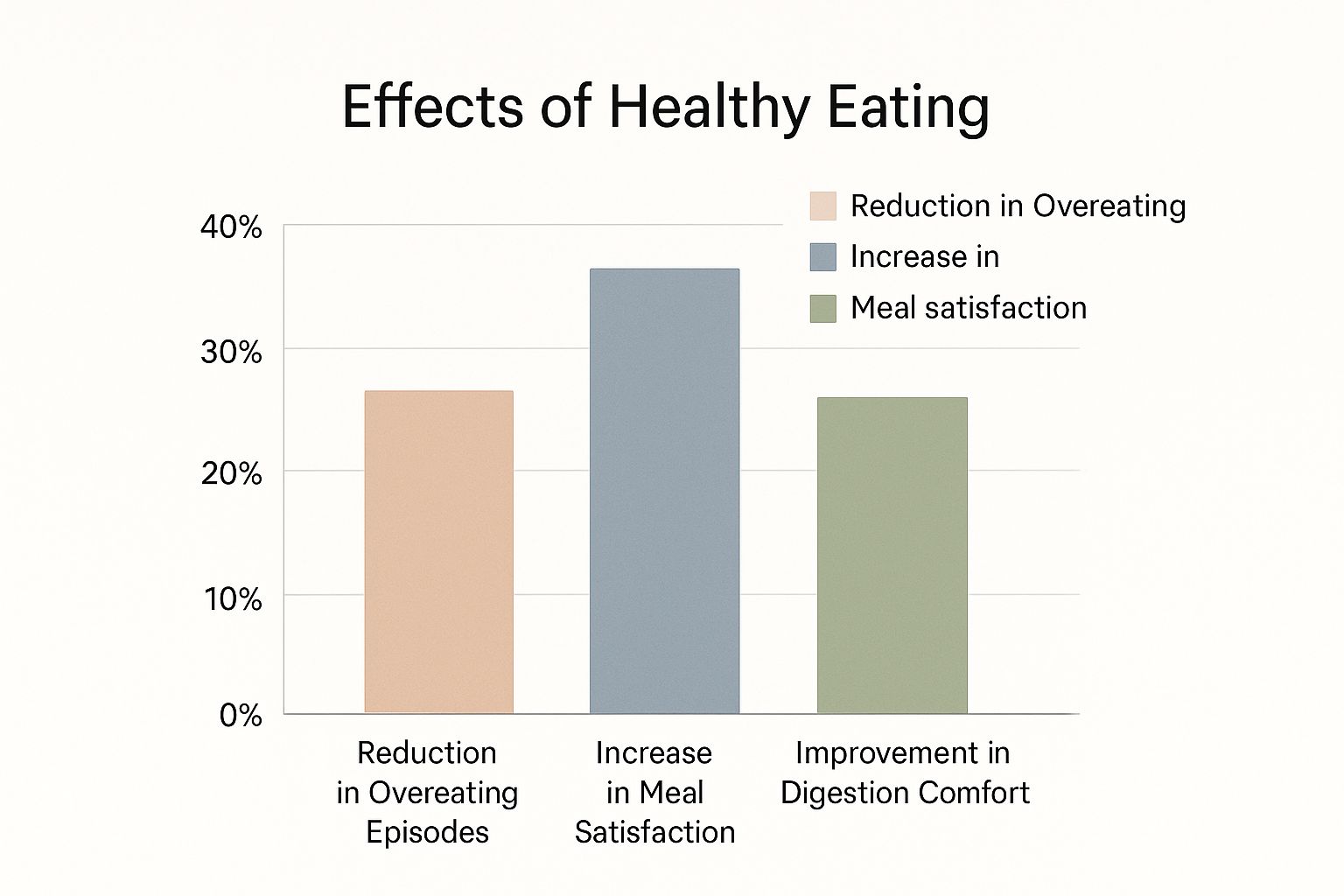
As you can see, simply being more present during meals can lead to real, measurable improvements in both physical comfort and overall meal satisfaction.
To help you spot the difference in your own life, here’s a quick comparison of mindless versus mindful eating habits. It’s a great way to identify where you might be eating on autopilot and how you can shift toward a more conscious approach.
Mindless vs Mindful Eating: A Quick Comparison
| Common Habit (Mindless Eating) | Alternative Practice (Mindful Eating) | Benefit |
|---|---|---|
| Eating while distracted (TV, phone) | Creating a dedicated, screen-free eating space | Increased focus on food and body signals |
| Rushing through meals quickly | Chewing each bite thoroughly and setting utensils down | Improved digestion and satiety awareness |
| Ignoring hunger and fullness cues | Checking in with your body before and during the meal | Prevents overeating and honors body’s needs |
| Eating based on emotions (stress, boredom) | Pausing to ask, “Am I truly hungry?” | Breaks the cycle of emotional eating |
| Judging food as “good” or “bad” | Approaching food with curiosity and without judgment | Reduces food-related guilt and anxiety |
This table isn’t about judging your current habits—it’s about illuminating the path forward. Each mindless habit has a mindful alternative that empowers you to take back control.
By treating each meal as an opportunity for awareness rather than a race to the finish line, you give yourself the gift of presence. This simple change is the foundation for making meaningful, lasting improvements to your overall well-being.
Ultimately, mindful eating techniques help you shift from a reactive state—driven by old habits and runaway emotions—to a truly intentional one. With the foundational understanding from this guide, you can start making conscious choices that nourish both your body and your mind.
Setting the Stage for Mindful Meals

Before you even think about what’s on your plate, take a look at where you’re eating. The environment you’re in can either help or hinder your journey toward mindful eating. A little prep work goes a long way in shifting your mindset from rushed and mindless to calm and present.
You don’t need a fancy dining room. Seriously. All you need is a dedicated spot. This could be a specific chair at your kitchen table or even just one corner of your counter. The key is to make it your screen-free eating zone. This simple physical boundary tells your brain, “Okay, time to focus on food now”—not on work emails, not on scrolling through social media.
Once your space is set, it’s time to prepare your mind. Just before you take that first bite, pause. Take three slow, deep breaths. This isn’t just a relaxation trick; it’s a pattern interrupt. It breaks the momentum of a hectic day and pulls you out of “doing” mode and into a state of “being,” making you far more attuned to what your body is trying to tell you.
Check In with Your Hunger
This next part is fundamental. One of the most important skills you can develop is learning to tell the difference between true physical hunger and an emotional craving. You know the kind—the ones driven by stress, boredom, or just plain old habit. This is where a quick “body check-in” becomes your superpower.
The goal is to shift your internal question from “What do I want to eat?” to “Is my body actually hungry right now?” It’s a subtle change in wording, but it opens up a crucial space for honest self-reflection.
Before you eat, try rating your hunger on a scale of 1 to 10. Let’s say 1 is ravenously hungry and 10 is Thanksgiving-dinner stuffed. In an ideal world, you’d start eating when you’re at a 3 or 4 (just starting to feel those first hunger pangs) and aim to stop when you hit a 6 or 7 (pleasantly satisfied, not stuffed).
To get a clearer picture, ask yourself a few questions:
- Where am I feeling this? Is it a hollow, growling feeling in my stomach? That’s likely physical hunger. Is it a laser-focused craving for something specific that you’re feeling more in your head? That might be emotional.
- What’s my energy like? Am I genuinely sluggish and in need of fuel to keep going?
- What’s my emotional state? Am I feeling stressed? Tired? Anxious? It’s easy to mistake these feelings for hunger and reach for food to cope.
Using an app like Craving Mind to log these pre-meal check-ins is a fantastic way to see your patterns emerge. By jotting down your hunger score and how you’re feeling emotionally before you eat, you start to build a personal data set. Over time, this information becomes an incredible tool, helping you make choices based on what your body truly needs, not just what your emotions are demanding.
Engaging All Your Senses at the Table

Most of us treat eating as a one-dimensional event dominated by taste. But a truly mindful meal is a full-sensory experience, one that invites sight, smell, touch, and even sound to the party. Learning to engage all your senses is one of the most powerful ways to slow down and find genuine satisfaction in what you eat.
This practice anchors you firmly in the present moment. Suddenly, it’s much harder for your mind to drift to your to-do list or the stresses of the day. Instead of just getting food into your stomach, you become an active, curious participant in the act of nourishing your body.
Start with Your Eyes and Nose
Before that first bite, just pause. Really look at your plate. What colors do you see? Notice the deep green of the spinach, the vibrant red of a tomato, the golden-brown crust on a piece of chicken. Take in the different shapes and how the light hits the food. Simply appreciating the visual beauty of a meal is the first step toward truly savoring it.
Now, bring your awareness to the aroma. Close your eyes for a second and inhale deeply through your nose. What do you smell? Can you pick out the individual notes of garlic, fresh herbs, or a squeeze of citrus? Our sense of smell is wired directly to taste and memory, and taking a moment to consciously register the fragrance elevates the entire experience.
Expert Tip: By engaging your sight and smell first, you’re essentially priming your brain and digestive system for the food you’re about to eat. This simple act creates a deliberate pause, which is key to breaking the all-too-common habit of eating on autopilot.
Explore Texture and Sound
As you begin to eat, shift your focus to the sensations happening inside your mouth. What is the texture? Is it crunchy, soft, creamy, or chewy? Pay attention to the temperature as well. Is the food warm and comforting, or is it cool and refreshing on your tongue?
Don’t forget to listen. The crisp snap of a fresh apple, the loud crunch of a tortilla chip, or the soft squish of a ripe strawberry are all part of the experience. These subtle auditory cues add another layer of sensory information, keeping you present and engaged with every single bite.
Developing this kind of sensory awareness is a skill. You can even apply it to specific ingredients to deepen your appreciation. For instance, you can learn how to taste olive oil like an expert to understand its surprisingly complex nuances.
The Art of Chewing and Tasting
Finally, we get to the main event: taste. The goal here is to chew slowly and deliberately, giving yourself a chance to identify the full spectrum of flavors. Don’t rush to swallow. Try chewing each mouthful 20-30 times. I know it sounds like a lot and might feel awkward at first, but it serves two crucial purposes: it significantly aids digestion and gives your palate enough time to register every last flavor note.
As you chew, see if you can pinpoint the five basic tastes:
- Sweet
- Salty
- Sour
- Bitter
- Umami (that rich, savory flavor)
This kind of heightened awareness isn’t just a personal wellness practice; it’s part of a much larger trend. A recent report found that 67% of consumers are actively curious about foods that can support cognitive health. This interest isn’t limited to one generation—it’s a widespread desire to understand how intentional eating improves mental clarity and emotional well-being, which is a core benefit of these mindful techniques.
When you log these sensory details in the Craving Mind app, you’ll start to build a fascinating map of which foods truly satisfy you on a much deeper, more holistic level.
Navigating Your Emotional Eating Triggers
So many of us eat because of how we feel, not because we’re actually hungry. This link between our emotions and eating habits is incredibly common, yet it often works just below the surface of our awareness. It’s what drives us to the pantry when what we really need isn’t food at all.
Emotional hunger, often sparked by stress, sadness, or even boredom, feels urgent and specific. It’s that sudden, intense desire for a particular comfort food. Physical hunger, on the other hand, builds more gradually and is open to a variety of options. Learning to pause and spot the difference is a core mindful eating skill.
The Power of the Pause with S.T.O.P.
When an intense craving hits, your first instinct might be to react immediately. Don’t. Instead, try a simple but powerful technique I teach my clients called S.T.O.P. This mental framework creates just enough space between the trigger and your response to allow for a more conscious choice.
Here’s how it works:
- S – Stop. Whatever you’re doing, just pause. Don’t reach for anything. Just stop.
- T – Take a breath. Inhale slowly and deeply, then exhale. This simple action helps calm your nervous system right down.
- O – Observe. Check in with yourself. What are you feeling right now? Is it a true pang in your stomach or a wave of anxiety? What thoughts are racing through your mind? Be a detective.
- P – Proceed. Based on what you observed, you decide how to proceed. If you realize you’re stressed, maybe a short walk would be more helpful than a snack. If you’re genuinely hungry, then choose something to eat mindfully.
This isn’t about denying yourself food. It’s about making sure your actions line up with your actual needs. It helps you shift from a reactive relationship with food to an intentional one, putting you back in control.
Distinguishing Hunger Types
Getting good at telling the difference between emotional and physical hunger is a skill that develops with practice. The two show up in very different ways, and spotting these signs is crucial. For a much deeper look, you can learn more about the differences between emotional hunger vs physical hunger to really sharpen your awareness.
The real breakthrough happens when you realize that an emotional craving is not a command you have to obey. It’s simply a piece of information about your current emotional state.
This awareness is your starting point for building healthier coping mechanisms. If you consistently find yourself eating when you’re anxious or lonely, that’s a clear signal you need to find new ways to manage those feelings. To build those skills, exploring emotional regulation exercises can be incredibly helpful.
Tracking Moods to Uncover Patterns
One of the most effective ways to understand your personal triggers is to start tracking them. This is where a tool like the Craving Mind app becomes a game-changer. By taking a quick photo of your meal and logging your mood and cravings, you create a powerful visual diary of your habits.
Over time, this log will reveal undeniable patterns. You might discover that every stressful workday ends with a craving for something sweet, or that feelings of boredom on a Sunday afternoon consistently send you searching for salty snacks. Seeing these connections laid out so clearly moves them from vague feelings to concrete, actionable data.
Once you identify a pattern, you can get ahead of it. If stress is a major trigger, you can have non-food coping strategies ready to go, such as:
- A five-minute meditation
- A go-to calming playlist
- A quick walk around the block
This proactive approach empowers you to meet your emotional needs directly, rather than trying to soothe them with food.
Weaving Mindful Eating Into a Busy Life

The very idea of adding one more thing to your packed schedule probably sounds exhausting. A lot of people I talk to think mindful eating is some luxury for people with endless free time. That’s just not true.
Real mindfulness isn’t about finding an extra hour you don’t have. It’s about creating small, doable moments of awareness that fit into your life, not some idealized version of it. The goal here is progress, not perfection. It’s all about being flexible and making these practices feel supportive, not like another chore.
Start with Small Mindful Moments
Instead of trying to transform every single meal overnight, just pick one small, achievable goal. Think of it as a micro-habit. This is what makes the practice stick.
Try one of these to get started:
- The First Three Bites Rule: Before you dive into lunch, commit to being completely present for just the first three bites. Really notice the flavors and textures. After that, you can let your mind wander if it needs to.
- One Mindful Meal a Day: Pick one meal—maybe breakfast before the day gets crazy—to practice. That means no TV, no phone. Just you and your food.
- The Mid-Bite Pause: This one is my favorite because it’s so simple yet so effective. Just put your fork down on your plate between bites. It creates a natural pause that forces you to slow down and check in with how you’re feeling.
The point isn’t to overhaul your life in a day. It’s to prove to yourself that you can find a tiny pocket of mindfulness even on the most hectic days. These small wins are what build real momentum.
Mindful Eating on the Go
Let’s be realistic. Desk lunches and car meals are going to happen. You can still bring a little awareness to them.
If you’re eating at your desk, just close out of your work tabs for 10 minutes. In the car? Turn off the podcast and eat in silence for a bit. Just removing one layer of distraction can make a surprising difference.
When you log these “on-the-go” meals and how you felt in the Craving Mind app, you start to see patterns. You might realize that a rushed desk lunch always leaves you feeling hungry an hour later. That insight is powerful. It can nudge you to find a better way the next day and helps you learn how to control food cravings that sneak up on you after mindless meals.
Got Questions About Mindful Eating? Let’s Talk.
When you’re trying something new, it’s completely normal to have questions. Mindful eating can feel a bit strange at first, almost like you’re overthinking something as simple as lunch. A lot of people get hung up on a few common myths, so let’s clear the air and give you some real-world answers to help you get started with confidence.
“Do I Really Have to Eat Mindfully at Every Single Meal?”
Good heavens, no. That’s probably the biggest misconception out there, and it’s what makes the whole idea feel impossible. Let’s be realistic: aiming for perfection right out of the gate is a recipe for quitting.
The real goal here is progress, not perfection.
Start small. Seriously. Try it with just your morning coffee or the first few bites of your lunch. Maybe you can commit to one fully mindful meal a week. The point is to slowly build the skill without adding another item to your stress list. You’ll probably find that you want to do it more often because it makes you feel better—more satisfied, less bloated, and more in tune with what your body actually needs.
Think of mindful eating like a muscle you’re gently strengthening, not a strict diet you’re failing. It’s about weaving moments of awareness into your real, busy life, not chasing some unattainable ideal.
“What If I Get Totally Distracted? My Mind Always Wanders.”
Join the club! Our brains are wired to wander. If you’re trying to eat mindfully and suddenly find yourself mentally rewriting work emails or planning your weekend, you’re not failing—you’re human.
The practice isn’t about having a perfectly blank mind. It’s about what you do in that moment you notice your thoughts have drifted off.
The key is to gently guide your attention back. No judgment needed. Just a simple, silent acknowledgment like, “Oh, there’s that to-do list again,” and then softly bring your focus back to the taste of the food, the feeling of the fork in your hand, or the aroma from your plate. Every time you do that, you’re doing a rep for your mindfulness muscle. That’s the real work.
“Can This Actually Help Me Lose Weight?”
This is a big one. While losing weight can definitely happen for some people as a result of mindful eating, it shouldn’t be the main goal. Focusing too much on the scale can sabotage the whole process.
At its core, mindful eating is about repairing your relationship with food. When you start listening to your body’s hunger and fullness cues, you naturally learn to stop eating when you’re satisfied, not stuffed. That alone can prevent the kind of habitual overeating that leads to weight gain.
The real win here is the freedom you find. Less guilt, less stress about food, and a genuine, rediscovered joy in the simple act of eating. If weight loss happens, think of it as a bonus, not the grand prize.
“How Am I Supposed to Do This When I’m Out With Friends?”
Mindful eating doesn’t mean you have to be the silent one at the dinner party, staring intently at your plate while everyone else is laughing and talking. It’s about finding a balance between enjoying the company and enjoying your food.
You can absolutely be present with both the people and the plate.
Here are a few subtle tricks I use:
- Take a “first bite” pause. Before diving into the conversation, take one deliberate, mindful bite. Really savor it.
- Put your fork down. When a friend is telling a story, rest your utensils on your plate. It creates a natural pause and helps you listen better.
- Alternate your attention. Consciously shift your focus. Tune into the conversation, then tune back into the sensation of eating. A little back-and-forth works wonders.
This way, you get to experience the richness of the social connection and the pleasure of the meal, instead of letting both fly by in a distracted blur.