 CravingMind AI
If you’ve ever tried to just “stop stress eating” and failed, you’re not alone. It’s a frustrating experience, but here’s the thing: it’s rarely about a lack of willpower. This is a battle with your own biology, and to win, you need a different strategy. It all starts with understanding what’s happening in your body, spotting your personal triggers, and building a new toolkit of healthier ways to cope.
The Real Reason You Eat When Stressed

That magnetic pull toward the pantry after a rough day at work? That’s not a character flaw. It’s a deeply ingrained physiological response. When you’re stressed, your body goes into high alert and pumps out a flood of hormones, with cortisol—the “stress hormone”—leading the charge.
At first, a sudden stressor might actually kill your appetite. But when that pressure doesn’t let up, cortisol hangs around and starts sending urgent signals to your brain to refuel. It demands high-energy, high-calorie foods to prepare for a “fight or flight” scenario that, in modern life, never actually comes. It’s an ancient survival instinct that hasn’t caught up with 21st-century stressors.
Why You Crave Specific Foods
So why aren’t you craving a salad? Cortisol isn’t just making you hungry; it’s hijacking your brain’s reward system. It creates intense, undeniable cravings for foods packed with fat, sugar, and salt.
These aren’t just any foods. They’re what we call “hyper-palatable,” meaning they’re engineered to be incredibly satisfying. Eating them triggers a release of dopamine—a feel-good brain chemical—that temporarily puts a lid on your stress.
This kicks off a powerful, hard-to-break cycle:
- Stress hits.
- You reach for your go-to comfort food.
- Your brain rewards you with a moment of relief.
Before you know it, your brain has learned that a bag of chips is the fastest way to feel better, making it a knee-jerk reaction. And this isn’t a niche problem; research shows that nearly 45% of overweight adults turn to food to handle emotional distress.
Key Takeaway: Stress eating is your body’s attempt to self-soothe. It’s not a sign of weakness—it’s a biological pattern that can be unlearned.
Once you see this cycle for what it is—a biological process, not a personal failing—you can start to approach it with a sense of curiosity instead of criticism. It’s about recognizing the pattern so you can consciously choose a different path. For a more detailed look, you can explore our guide on the science behind why we have cravings for unhealthy food.
Pinpoint Your Personal Stress Eating Triggers

So, we know biology plays a big part in why we reach for food when stressed. That’s the foundation. Now comes the real detective work: figuring out what’s actually setting you off. To really break the cycle, you first have to know when and why it’s happening in your own life.
A surprisingly effective way to start is by keeping a simple journal. This has nothing to do with counting calories. It’s all about connecting the dots between your feelings and what you eat. Just for a week, try noting down what you eat, the time, and—this is the most important part—what you were feeling right before you grabbed that snack.
You might be genuinely surprised by what you find. Maybe your trigger isn’t some vague “work stress,” but that very specific feeling of being overlooked right after a team meeting. Or maybe it’s that late-night anxiety that creeps in when the house goes quiet and you’re left alone with your thoughts.
This data shows just how common certain triggers are.
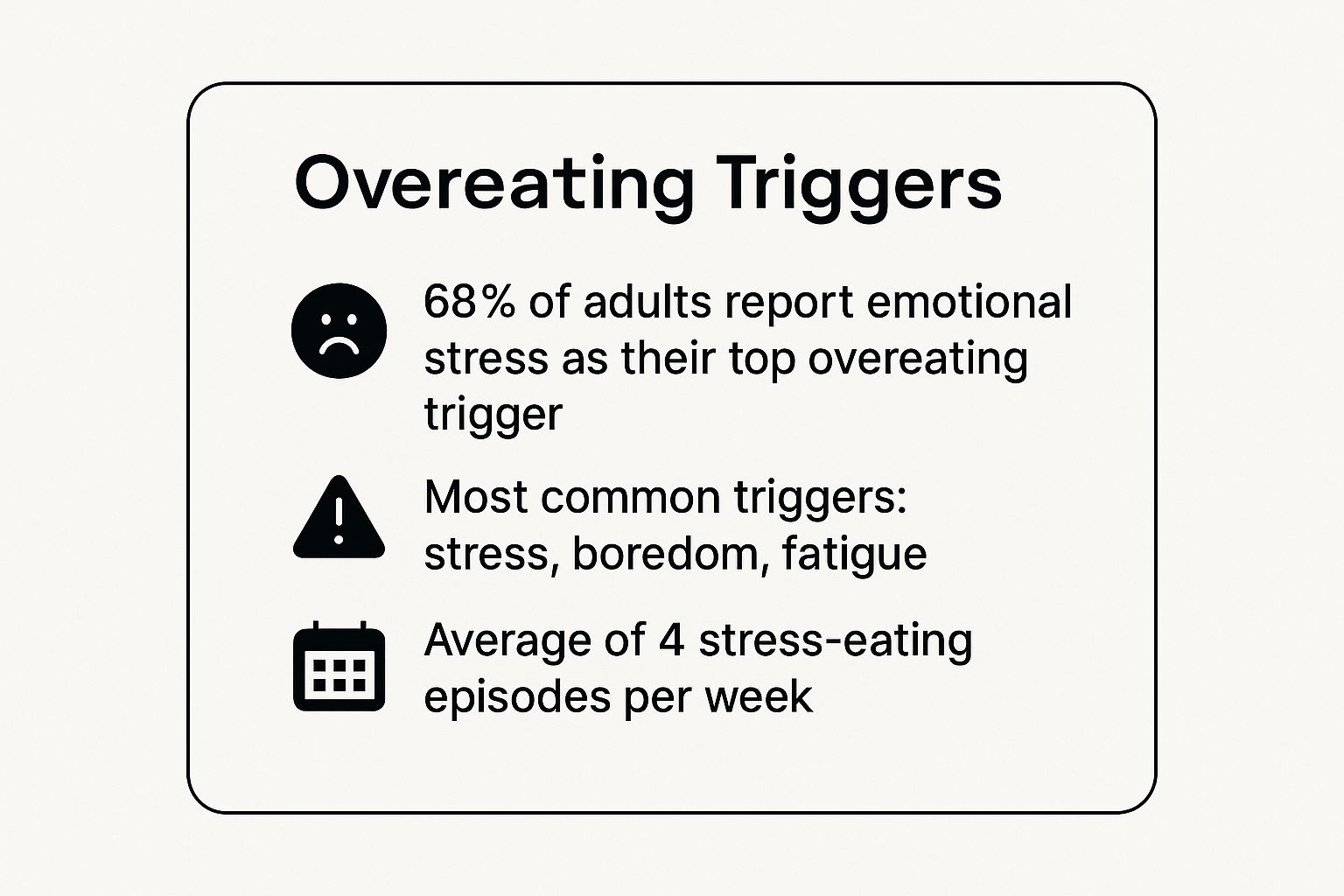
It’s clear that stress, boredom, and plain old fatigue are the big three for most of us. Simply being able to name these feelings as they pop up is a huge step forward.
Emotional Hunger Versus Physical Hunger
Gaining this kind of self-awareness is what helps you finally tell the difference between true, physical hunger and its emotional look-alike. They feel very different when you pay attention.
The recent global health crisis threw this connection into sharp relief. As people everywhere dealt with intense anxiety and depression, emotional eating saw a major spike. In fact, a multi-country study found that 42% of people experienced depression and 27% reported anxiety—both of which are closely linked to these eating patterns. If you’re curious, you can dig into the full study on emotional eating and psychological distress for more detail.
Learning to pause and ask, “What am I really hungry for?” can be a game-changer. Is it truly food? Or is it comfort, a distraction, or just a little relief from a feeling you’d rather not feel?
The table below breaks down the key differences. Use it to check in with yourself the next time a strong craving hits.
Physical Hunger vs Emotional Hunger Cues
| Cue | Physical Hunger | Emotional Hunger |
|---|---|---|
| Onset | Develops gradually over time. | Hits suddenly, like a tidal wave. |
| Feeling | A gnawing or rumbling in the stomach. | A craving in your head or mouth. |
| Cravings | Open to various food options. | Often for a specific comfort food (e.g., pizza, ice cream). |
| Mindfulness | You’re aware of eating and when you’re full. | Can feel mindless, “zoned out,” or automatic. |
| Satisfaction | Ends when you’re full and satisfied. | Doesn’t feel satisfied, even when physically full. |
| Aftermath | A sense of contentment. | Feelings of guilt, shame, or powerlessness. |
Understanding these cues gives you a powerful tool. Once you can put a name to the real emotion you’re feeling, you can start to find a solution that isn’t food but that actually addresses the root cause. That small pause is your moment of power—it’s your chance to interrupt the old habit and choose a new, more helpful response.
Build Your Non-Food Coping Toolkit
You can’t just wish stress away, but you absolutely have the power to change how you deal with it. The secret to stopping stress eating isn’t about willpower; it’s about having a better plan ready to go before the craving strikes. This means creating your own personalized “menu” of food-free coping strategies that you can turn to for fast relief.
Forget the generic advice you’ve heard a thousand times. A bubble bath isn’t always practical. Your toolkit needs to be filled with things that actually fit into your real, messy, busy life. We’re looking for activities that deliver a similar sense of comfort or distraction as food, just without the side of guilt.
Immediate Stress Resets
When that familiar wave of stress washes over you, you need something that works now. The faster you can interrupt that signal from your brain, the more control you’ll have over your next move.
Try a few of these quick, powerful resets:
- Five-Minute Breathing: Find a quiet corner—even a bathroom stall works—and just focus on your breath. Breathe in for four seconds, hold it for four, and then exhale slowly for six. This simple exercise helps activate your body’s natural relaxation response, calming that “fight or flight” feeling.
- A Brisk Walk: A quick trip around the block can work wonders. The change of scenery combined with light movement is often enough to clear your head and shift your focus away from whatever is causing the stress.
- Engage Your Senses: Put on a playlist that instantly boosts your mood. Light a scented candle you love. Hold a warm mug of herbal tea and just feel the heat in your hands. Engaging senses other than taste can ground you firmly in the present moment.
Crucial Insight: The best coping tools are the ones you genuinely enjoy and can do at a moment’s notice. The easier it is to access, the more likely you are to actually use it when you need it most.
Activities for Deeper Relief
Sometimes, stress lingers. For those days when it feels more persistent, you might need an activity that’s more absorbing. This is where hands-on hobbies or tasks that demand your focus really shine. Think about things like knitting, sketching, playing an instrument, or even tackling a small organization project like a junk drawer.
These activities aren’t just a distraction. They provide a tangible sense of accomplishment and a state of “flow” that directly counters feelings of being overwhelmed. By channeling your energy into a constructive outlet, you’re actively rewiring the stress-craving-reward loop in your brain. It’s a fascinating process, and you can learn more about what happens to our brain when we crave junk food to really grasp the science behind it.
Design an Environment That Supports You
Let’s be honest: relying on sheer willpower to fight off a craving in the middle of a stressful moment is a losing battle. It’s like trying to hold back a flood with a paper towel—you’re going to get overwhelmed. A much smarter, more sustainable approach is to set up your environment so that making a healthy choice is the easiest possible thing to do.
Think of yourself as the architect of your own kitchen and personal spaces. The goal is to “trigger-proof” your surroundings. Start by rearranging your pantry and fridge. Don’t leave your go-to comfort foods sitting out on the counter or at eye-level. Instead, put the good stuff—like pre-cut veggies, fruit, or single-serving yogurts—right where you’ll see them first. The chips, cookies, and other high-stress snacks? Move them to a high shelf, put them in an opaque container, or better yet, just don’t bring them into the house in the first place.
Make Healthy the Easy Choice
The whole idea is to make it harder to stress eat and easier to do something else. It’s a simple “out of sight, out of mind” principle, but it works wonders when you’re running on empty.
Here are a few practical ways to do this:
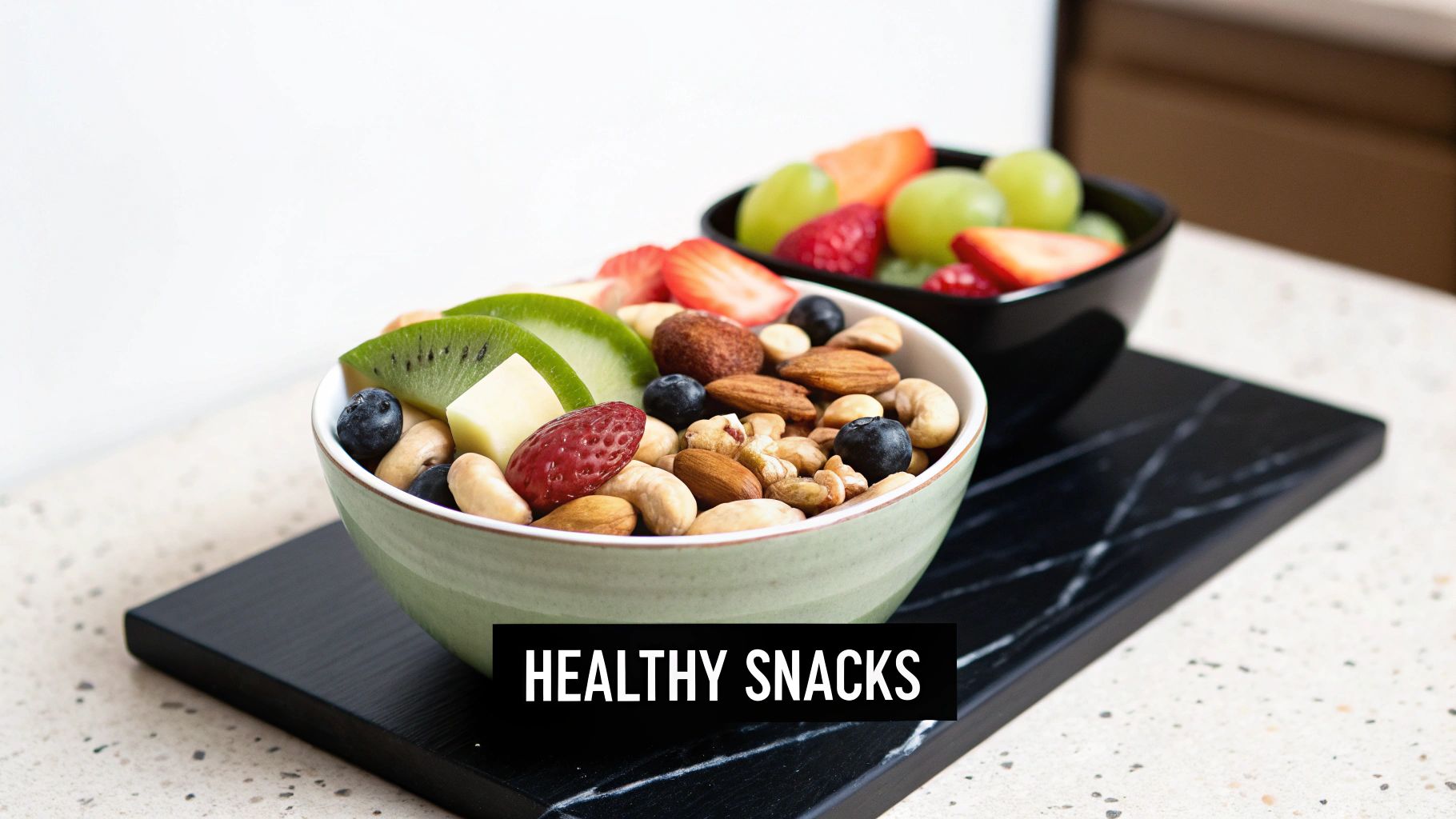
- Prep for success. Take a little time over the weekend to wash and chop veggies or portion out nuts. When a healthy snack is just as easy to grab as a bag of chips, you’re far more likely to choose it.
- Create a comfort station. Find a spot in your home—that isn’t the kitchen—and make it your dedicated relaxation zone. Keep your non-food toolkit there: a good book, a cozy blanket, some herbal tea, or your headphones.
- Communicate your goals. Give your family or roommates a heads-up. A simple, “Hey, I’m really trying to find better ways to handle stress than raiding the fridge, so your support would mean a lot” can make a huge difference. It helps them understand why you might not want that slice of pizza they’re offering.
Your environment can be your biggest ally or your toughest obstacle. By making intentional changes, you turn good decisions into the default setting, not a constant, draining battle.
This isn’t just about what’s in your pantry, either. Your social and cultural environment plays a huge role. The way we’ve been taught to cope with stress is deeply influenced by the world around us. For example, studies from different parts of the world show that sociocultural pressures have a significant impact on our eating habits. One study involving medical students in Middle Eastern countries found that their unique stressors frequently led to emotional eating.
This is a powerful reminder that any strategy to stop stress eating has to fit your life and your context. To see just how much culture shapes these patterns, you can dive into the full research article on Frontiers.
Practice Mindful Eating to Rebuild Your Relationship with Food
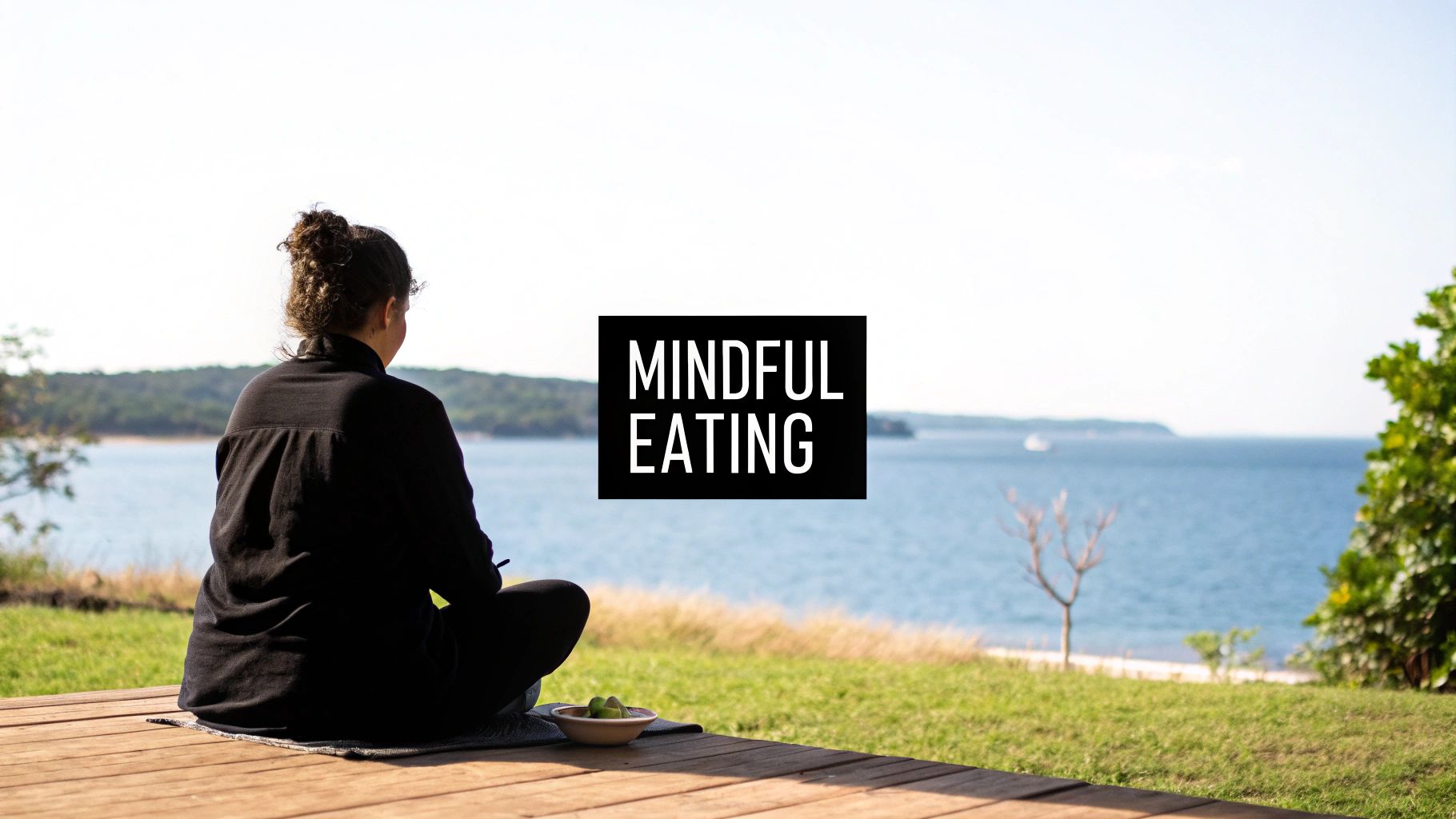
Let’s be clear: this isn’t about starting another restrictive diet. In fact, it’s the complete opposite. We’re trying to step away from the automatic, distracted eating that so often happens when we’re stressed. The goal is to turn your meals into moments of genuine awareness and, believe it or not, actual pleasure. This is the heart of mindful eating.
Mindful eating is simply the practice of paying full attention to the experience of eating and drinking. You start noticing the colors, smells, textures, and flavors of your food. You check in with your body’s actual hunger levels and learn to recognize the subtle signals it sends when it’s comfortably satisfied.
Think of it as a tool. A powerful one. It physically separates the act of eating from the emotion of stress, breaking the habit of using food to unconsciously numb yourself.
Your First Mindful Bite
Ready to give it a shot? You can try this with your very next meal or snack. There’s no pressure to do it “perfectly”—the only goal is to pay attention.
- Ditch the distractions. Turn off the TV. Put your phone on silent and out of sight. Close the laptop. Even if it’s just for the first five minutes of your meal, give your food the focus it deserves.
- Really look at your food. Before taking a bite, pause and observe what’s on your plate. Notice the different shapes, the vibrant colors, maybe even the steam rising from it. Take a second to appreciate the journey it took to get to you.
- Savor every mouthful. Chew slowly. I mean, really slowly. Try to pinpoint all the different flavors. Is it sweet? Salty? Savory? What about the texture—is it crunchy, creamy, or smooth?
The point of mindful eating isn’t to judge yourself or restrict what you eat. It’s about bringing curiosity and enjoyment back to the experience. It helps transform food from an emotional crutch back into what it should be: nourishment and pleasure.
When you eat this way, you’re finally giving your brain and stomach enough time to have a conversation. It takes about 20 minutes for your brain to get the message that you’re full, which is why eating slowly is so incredibly effective. By truly savoring your food, you’re far more likely to feel satisfied with less and recognize when you’ve had enough.
This one simple shift can start rebuilding a healthier, more intuitive relationship with food, putting you back in control—not your stress.
Of course. Here is the rewritten section, designed to sound like it was written by an experienced human expert.
Your Stress Eating Questions, Answered
As you start untangling your emotions from your eating habits, you’re bound to have questions. It’s also completely normal to hit a few bumps in the road. Let’s walk through some of the most common hurdles I see people face.
What if I Slip Up and Stress Eat?
First things first: take a breath. One slip-up doesn’t mean you’ve failed. It’s just data. The most powerful thing you can do in that moment is offer yourself some compassion instead of criticism.
Acknowledge what happened, but leave the guilt behind. Then, put on your detective hat. What was going on right before the urge to eat took over? Were you completely drained after a brutal day at work? Did you accidentally skip lunch and were legitimately starving? This isn’t about making excuses; it’s about gathering clues to help you prepare for next time.
Remember, progress isn’t linear. One detour doesn’t erase the progress you’ve already made. Forgive yourself and simply focus on the very next choice in front of you.
How Long Does This Actually Take?
This is probably the most common question I get, and the honest answer is: it’s different for everyone. There’s no set timeline for rewiring these deep-seated habits. Some people feel a noticeable change in a few weeks, while for others, it can be a process of several months of dedicated practice.
The trick is to focus on consistency, not speed. Chasing a far-off finish line can feel overwhelming. Instead, shift your focus to celebrating the small wins right in front of you.
Did you notice an emotional craving and take a walk instead? That’s a huge win. Did you pause to identify the real feeling behind the urge—even if you still ate something? That’s incredible progress. These moments are the real foundation of lasting change.
So, I Can Never Eat My Favorite Comfort Foods Again?
Absolutely not. The goal here isn’t to create a massive list of “bad” foods or to sentence yourself to a life of deprivation. It’s all about breaking that automatic, unconscious connection between feeling stressed and reaching for food.
You can—and should—enjoy the foods you love. The key difference is the intention. The aim is to eat that bowl of ice cream or slice of pizza as a mindful, deliberate choice because you genuinely want to enjoy it, not because you’re trying to push down an uncomfortable feeling.
When you plan for a treat and savor it, you transform the experience. It stops being a crutch and becomes a moment of real pleasure. That shift in mindset is what puts you firmly back in control.