 CravingMind AI
If you’ve ever felt a powerful, almost uncontrollable urge for something sweet, you’re not just lacking willpower. What you’re experiencing is a complex biological process that looks remarkably similar to classic substance addiction. It all comes down to how sugar hijacks your brain’s reward system.
This isn’t just a metaphor. Both sugar and addictive drugs trigger a massive release of dopamine, the brain’s “feel-good” neurotransmitter. This creates a powerful feedback loop: you eat sugar, you feel pleasure, and your brain hardwires itself to seek that feeling again. It’s why kicking a sugar habit can feel less like a dietary choice and more like breaking a genuine dependency.
The Real Link Between Sugar and Addiction
Ever found yourself reaching for a donut or a candy bar even when you weren’t physically hungry? That’s not a simple craving; it’s your brain chemistry at work. The connection between that urge and addiction is deeply embedded in the neural pathways that evolved to reward us for survival behaviors, like eating energy-dense foods.
When you eat sugar, it lights up the very same reward circuits in your brain as addictive substances. This dopamine flood feels intensely pleasurable, and your brain takes careful note, essentially learning that “sugar = reward.” But with repeated exposure, this system starts to go haywire.
This image highlights just how widespread this issue is, connecting the dots between consumption, cravings, and the underlying brain science.
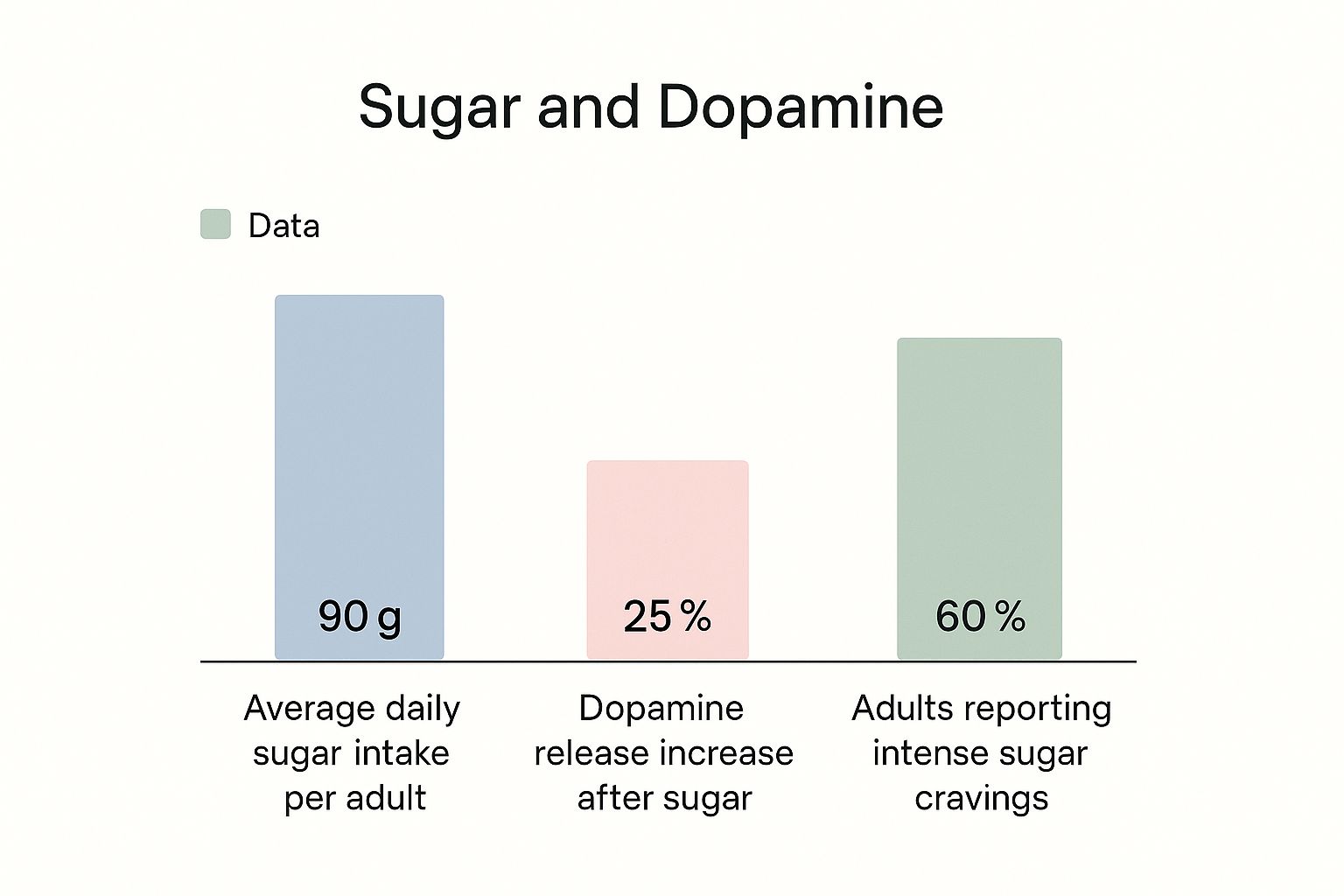
The data is pretty telling. With 60% of adults admitting to intense cravings, it’s clear that the dopamine rush from sugar is driving many of us to eat far more than is healthy.
The Vicious Cycle: Tolerance and Withdrawal
Here’s where the parallels to addiction become undeniable. Just like with other substances, your brain adapts to the constant sugar rush. Your dopamine receptors start to become less sensitive, a phenomenon called tolerance.
This means that one cookie no longer gives you the same satisfying feeling. Soon, you need two, then three, just to get the same hit of pleasure. It’s a chase for a high that keeps getting further away.
At its core, the problem is a rewiring of your brain’s entire reward system. The relentless pursuit of that sugar-fueled dopamine spike begins to eclipse the joy you’d normally find in healthier foods and activities.
And when you try to stop? The withdrawal symptoms kick in, and they are very real. These aren’t just psychological; they are tangible, physiological responses from a brain that’s missing its fix.
- Irritability and mood swings: Without the expected dopamine surge, your mood can feel erratic and low.
- Headaches and fatigue: Your body physically protests the change as it adjusts to a different fuel source and brain chemistry.
- Overwhelming cravings: Your brain sends out powerful, urgent signals demanding the substance it now relies on.
To better illustrate these striking similarities, let’s break them down side-by-side.
Sugar Cravings vs. Addictive Behavior At a Glance
| Characteristic | Sugar Cravings | Classic Addictive Behavior |
|---|---|---|
| Intense Urges | An overwhelming desire for sugary foods, often unrelated to actual hunger. | A powerful compulsion to seek and use a substance, regardless of consequences. |
| Loss of Control | Eating more sugar than intended or for longer periods than planned. | Inability to cut down or stop using the substance, despite a desire to do so. |
| Tolerance | Needing increasing amounts of sugar to achieve the same feeling of satisfaction. | Requiring higher doses of a drug to get the same effect. |
| Withdrawal | Experiencing negative symptoms like irritability, headaches, and fatigue when cutting back. | Suffering from physical and psychological distress when the substance is withheld. |
| Reward Pathway | Activates the brain’s mesolimbic dopamine system, creating a powerful sense of pleasure. | Hijacks the same dopamine reward pathway, reinforcing substance-seeking behavior. |
Seeing the patterns laid out like this makes it clear: the struggle is rooted in neurobiology, not a lack of character.
Recognizing that sugar cravings mirror addictive behavior on a deep, neurochemical level is the critical first step toward freedom. It shifts the narrative from a battle of willpower to a healing process. You’re not fighting yourself; you’re working to gently rewire your brain’s reward pathways. This is precisely the journey that tools like the Craving Mind app are designed to guide you through.
How Sugar Hijacks Your Brain’s Reward System
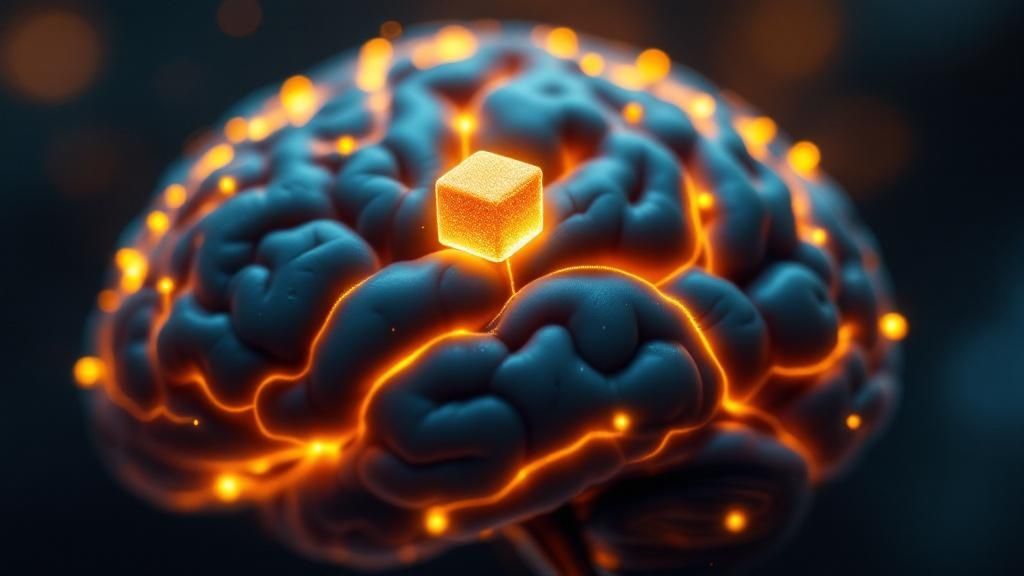
Think of your brain’s reward system as a finely tuned survival alarm. It’s designed to go off whenever you do something that helps you stay alive, like eating or finding warmth. Now, imagine sugar as a master key that can pick the lock to that alarm, flooding your brain with the “feel-good” chemical, dopamine.
This isn’t just a fleeting moment of pleasure. It’s a powerful biological instruction to your brain that says, “Remember this! Do it again!”
This dopamine surge is precisely why sugar cravings feel so much like addiction. When you eat something sweet, the intense rush of pleasure reinforces the behavior. Your brain quickly learns to link that food with a potent reward, making it your go-to solution when you’re feeling stressed, sad, or just plain bored.
It’s not a character flaw; it’s your survival wiring being cleverly exploited by modern, intensely sweet foods. Your brain’s ancient reward system can’t really distinguish between a naturally sweet berry and a candy bar packed with refined sugar. All it knows is the dopamine hit, and it wants more.
The Dopamine Rush and Reinforcement
When you eat sugar, it lights up the very same neural pathways—specifically, the mesolimbic dopamine system—that are activated by addictive substances. While the scale of the reaction might be different, the underlying brain mechanics are strikingly similar.
This creates a powerful, self-perpetuating cycle. The more sugar you have, the more your brain craves that immediate, reliable reward. This conditioning is so effective that simply seeing a photo of a donut or smelling a bakery can trigger a preemptive dopamine release, sparking a powerful craving before you’ve even had a bite.
Sugar’s impact on our neurochemistry is so significant that some research suggests it can be up to eight times more addictive than cocaine. This really puts into perspective the powerful hold it can have, often compelling us to indulge against our better judgment.
Over time, this constant high-intensity stimulation teaches your brain to value sugar above all else. A gentle walk in the park or a chat with a good friend offers a slow, steady trickle of good feelings, but sugar provides a massive, immediate jackpot. Your brain starts to devalue these quieter joys, making sugar feel like the only thing that truly works.
Building Tolerance: The Brain’s Adaptation
Have you ever found that one scoop of ice cream used to be the perfect treat, but now you need two or three to get the same satisfaction? That’s tolerance in action. It’s a classic sign of addiction, and it’s your brain’s natural defense against being constantly overwhelmed by dopamine spikes.
When faced with a steady diet high in sugar, your brain starts to downregulate—or reduce—the number of available dopamine receptors. It’s like turning down the volume on a speaker that’s been blasting music for hours.
This neurological adaptation has two significant downstream effects:
- You need more to feel good: With fewer dopamine receptors online, you need a larger hit of sugar to achieve the same level of pleasure you once did. This is what drives the pattern of eating more and more over time.
- Everything else feels less fun: Because your entire reward circuit is dampened, everyday activities and healthier foods just don’t pack the same punch. This state, known as anhedonia, can leave you feeling flat and uninspired, making you even more likely to reach for sugar to get a lift.
This biological chain reaction is key to understanding why the parallels between sugar cravings and addiction are a neurological reality, not just a figure of speech. To explore this further, you can learn more about how sugar acts as a chemical jackpot for the brain’s reward system. This cycle of craving, tolerance, and diminished pleasure is what keeps so many of us stuck, feeling like breaking free is an impossible task.
The Cycle of Craving, Tolerance, and Withdrawal
This is where all the complex brain science gets personal. The most compelling evidence for how sugar cravings mirror addictive behavior isn’t just in lab results; it’s in the daily cycle of wanting sugar, eating it, and then needing more. If you’ve ever tried to cut back on sweets, this pattern of craving, tolerance, and withdrawal probably sounds all too familiar.
Let’s play out a common scenario. It’s been a long, stressful day, and suddenly you’re hit with an overwhelming urge for a cookie. This isn’t just a gentle hunger pang. It’s a specific, powerful demand from your brain for a quick dose of relief. That’s the craving.
You promise yourself you’ll just have one. But one quickly becomes two, and before you realize it, you’ve eaten half the box. That’s a binge—a loss of control that’s a classic hallmark of addictive patterns. Your brain’s reward system, now conditioned to expect that sugar-fueled dopamine hit, pushed you to consume far more than you ever intended.
The Slow Creep of Tolerance
The next time you’re stressed, that single cookie just doesn’t hit the same. The initial burst of pleasure feels duller, less satisfying. Suddenly, you need two cookies to get the same feeling of comfort that one used to deliver. This is tolerance building in real time.
Your brain has physically adapted to the frequent sugar highs by essentially turning down the volume on its dopamine receptors. Think of it as a self-defense mechanism to avoid being constantly overwhelmed, but it creates a vicious cycle. You find yourself chasing a feeling that keeps moving just out of reach, forcing you to consume more and more sugar to get there.
This slow escalation is a cornerstone of dependency. It isn’t a failure of willpower; it’s a predictable, physiological adaptation to a surprisingly powerful substance.
The cycle of craving and tolerance is what shifts sugar from being a simple treat to feeling like a genuine necessity. Your brain learns that sugar is the fastest, most reliable way to feel good, which can make healthier sources of pleasure seem pale in comparison.
This isn’t just an individual struggle; it’s a global public health issue. The World Health Organization (WHO) recommends that free sugars account for less than 10% of our daily energy intake, and ideally, even less than 5%. Yet, in many places, consumption blows past these guidelines. For example, in the Eastern Mediterranean Region, sugar can make up 9% to 15% of daily energy, with kids often consuming over 70 grams a day. This kind of high, habitual intake is driven by the exact same neurochemical rewards we see in substance use. You can learn more about these global consumption patterns and health recommendations on WHO.int.
The Unspoken Reality of Sugar Withdrawal
The most powerful parallel between sugar and addiction often appears when you try to quit. We tend to dismiss sugar withdrawal as just a “bad mood,” but the symptoms are physiological and incredibly real. Your body is physically reacting to the absence of a substance it has come to depend on.
Common withdrawal symptoms often include:
- Persistent Headaches: Your brain chemistry and blood flow are literally adjusting to life without constant sugar spikes.
- Intense Irritability: Without the expected dopamine release from sugar, regulating your mood becomes a real challenge, leading to short tempers and frustration.
- Mental Fog: It’s common to have trouble concentrating or feel sluggish as your brain adapts to a new way of sourcing energy.
- Physical Fatigue: Your body might feel tired and achy as it recalibrates its energy systems.
These symptoms are not just in your head. They are a clear signal that your body is working through a state of dependency. Recognizing these physical responses as a legitimate withdrawal process is crucial. It validates just how hard it is to break the cycle and proves you’re overcoming a genuine biological challenge, not just kicking a “bad habit.” This entire cycle—craving, binging, tolerance, and withdrawal—draws a clear, undeniable line connecting excessive sugar consumption to classic addictive behavior.
The Hidden Psychological Drivers of Your Sweet Tooth
While biology explains what happens in your brain, psychology explains why you reach for that candy bar in the first place. Beyond sheer brain chemistry, a complex web of thoughts, feelings, and learned behaviors creates powerful, often subconscious, triggers that keep the cycle going. This is where we see just how much sugar cravings mirror addictive behavior on a deep, emotional level.
Many of us use sugar to self-medicate. When feelings like stress, boredom, sadness, or anxiety hit, the urge for something sweet can feel overwhelming. Why? Because sugar delivers a quick, reliable dopamine hit that temporarily dulls those negative emotions, offering a brief moment of comfort and escape.
This is the exact same pattern seen in substance use disorders, where someone uses a substance to cope with emotional pain. Over time, the brain learns to see sugar as the go-to fix for feeling bad, forging a strong psychological dependency that can be incredibly tough to break.
Emotional Eating: The Comfort Trap
Emotional eating is easily one of the biggest psychological forces behind sugar cravings. It’s when we use food to soothe or suppress feelings, not to satisfy actual physical hunger. When you’re feeling overwhelmed, that pint of ice cream can feel like a warm hug—a momentary break from whatever is causing you pain.
But here’s the trap: the relief is fleeting. The initial comfort often gives way to guilt or shame, which can, in turn, trigger another round of emotional eating. This creates a vicious loop where sugar is both the perceived solution and the source of even more distress.
This cycle of using a substance to manage difficult emotions is a core component of addictive behavior. The craving isn’t just for the taste of sugar; it’s a craving for the emotional escape it provides, reinforcing the belief that you need it to cope.
This emotional connection is incredibly powerful. A revealing 2017 study highlighted a strong link between high sugar intake and common mental disorders like depression. Researchers discovered that participants who ate the most sugar had a higher incidence of these disorders, with some estimates ranging from 9% to 15%. Even more telling, for those already diagnosed with a mental health disorder, 44% remained recurrent cases, showing just how deeply sugar can get tangled up with our mood and sense of dependency. You can read the full study about these mental health and sugar intake findings on Nature.com.
The Power of Conditioning and Habit
Your brain is an association machine. It’s constantly linking activities, environments, and feelings together. This process, known as conditioning, plays a huge part in your sugar cravings.
Think about your own life:
- Movie Night: Does watching a movie feel incomplete without a big bowl of popcorn and candy?
- Afternoon Slump: Is that 3 p.m. soda or sugary coffee an absolute must to power through the rest of the day?
- Celebrations: Are birthdays, holidays, and other big moments automatically marked with cake, cookies, and sweets?
These connections become so automatic that the craving itself feels involuntary. You aren’t consciously deciding you want sugar; your brain has simply been trained to expect it in certain situations. The cue—the movie, the time of day, the party—is enough to trigger the urge, just like specific people or places can trigger cravings for someone with a substance use disorder.
This conditioning transforms a simple preference into a deeply ingrained habit. Breaking these habits takes more than just willpower. It requires actively dismantling these powerful associations and building new, healthier routines in their place. This is how you begin to reclaim control, moving from an automatic reaction to a mindful choice and deconstructing your cravings from the inside out.
How Your Environment and Habits Fuel Cravings
While brain chemistry plays a huge part in cravings, it’s only half of the story. The world around us is practically wallpapered with cues that trigger our desire for sugar, often without us even realizing it. Our daily environment and ingrained habits work together to create a powerful feedback loop, making our surroundings just as influential as our own biology in this addictive cycle.
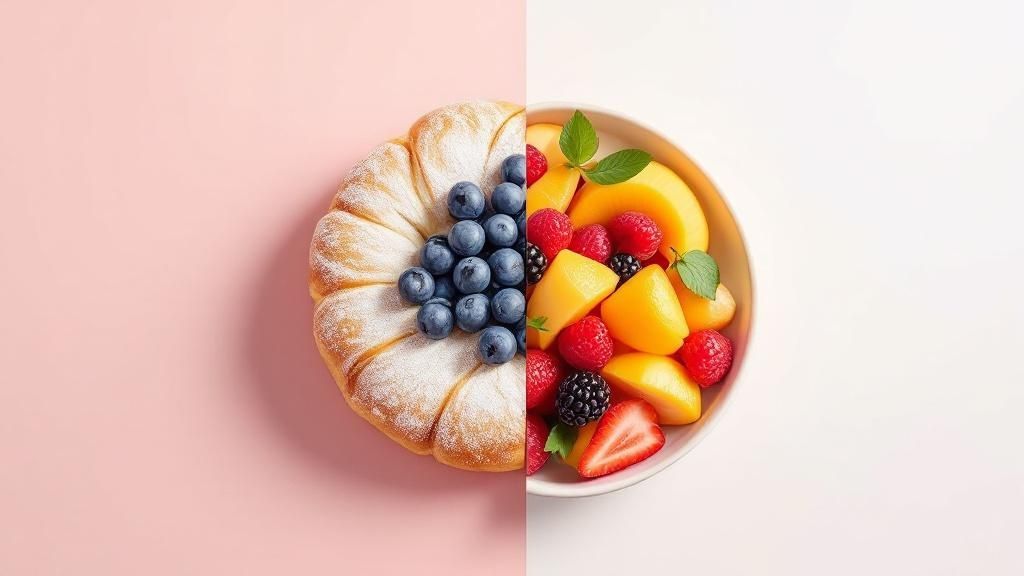
Just think about it. Sugary snacks are strategically placed at checkout counters, in office breakrooms, and at every gas station. Cafes put their most tempting pastries right at eye level. This isn’t an accident; it’s designed to keep sugar on your mind and make cravings feel almost inevitable. This is a classic example of how sugar cravings mirror addictive behavior—the environment itself is set up to push you toward using.
The Power of Habitual Cues
A simple daily ritual can easily morph into a habit that feels completely non-negotiable. That morning donut with your coffee or that 3 p.m. soda to power through the afternoon slump isn’t just a random choice. It’s a conditioned response. Your brain has forged a powerful connection between a specific cue—like a time of day or a place—and the sugary reward that follows.
This creates an automatic loop. The second you encounter the cue, your brain starts anticipating the dopamine hit, and the craving kicks in hard. You’re not just wanting sugar; you’re running a script you’ve practiced over and over again.
This kind of routine, widespread use is a dead giveaway of sugar’s reinforcing power. For instance, a startling study in the United States found that about 63% of adults drink at least one sugar-sweetened beverage every single day. On average, that’s 145 calories from these drinks alone. This pattern shows how a daily habit can easily become a dependency, much like with other addictive substances. You can dig deeper into these widespread sugar consumption insights on CDC.gov.
Social and Cultural Reinforcement
It’s not just about your personal routines, either. Our social norms are built around sugar. We use it to celebrate, to find comfort, and to connect with each other, weaving it so deeply into our culture that we barely notice it anymore.
Look at these common scenarios:
- Celebrations: What’s a birthday, holiday, or office party without cake, cookies, or sweets? Trying to skip them can feel like you’re breaking a social contract.
- Comfort and Reward: We give kids candy for being good and bring friends sugary treats to lift their spirits. From a young age, we learn that sugar is a stand-in for love and success.
- Workplace Culture: That box of donuts in the breakroom is more than just breakfast; it’s a gesture of team bonding, making sugar a part of the professional landscape.
This constant social validation makes it incredibly difficult to see excessive sugar as a problem. When everyone is doing it, the behavior seems completely normal. This normalization is what masks sugar’s addictive potential, allowing the cycle of craving and consumption to continue without question.
Breaking free from these triggers requires a conscious effort. It means you have to actively identify and dismantle the routines and environmental cues that are working against you. That candy bowl on the reception desk or the soda machine down the hall aren’t just convenient options—they are active players in a system designed to fuel your cravings. Once you understand these external forces, you can start building an environment that actually supports your goals instead of sabotaging them.
Actionable Strategies to Reclaim Control from Cravings
Understanding the science behind your cravings is one thing, but putting that knowledge into practice is where the real change happens. So, what do you do when a craving hits? This isn’t about punishing yourself or starting another restrictive diet. It’s about building a practical toolkit to thoughtfully respond to your body’s signals and break the cycle for good.
The idea is to gently rewire your brain’s reward system, not wage a war against it. By making small, conscious choices, you can steadily weaken the grip that sugar has on you. It’s a process of building new, healthier habits that, over time, become just as satisfying.
Identify Your Personal Craving Triggers
First things first: you need to become a bit of a detective. Cravings rarely just pop up out of the blue. They’re usually a response to a specific trigger. By figuring out what sets you off, you can start to short-circuit the automatic habit loop that sends you straight to the cookie jar.
Try keeping a simple journal for a week or so. When a powerful craving strikes, just take a second to note what’s going on. What time is it? How are you feeling—stressed, bored, tired, lonely? What were you just doing? You’ll likely start to see patterns pretty quickly, and that awareness is the first real step toward making a change.
Recognizing these triggers is crucial because it confirms how sugar cravings mirror addictive behavior in a very personal way. Just as someone with a substance dependency learns to avoid certain people or places, you can learn to navigate your own high-risk situations with intention.
Once you know what your triggers are, you can make a plan. If late-afternoon stress is your trigger, maybe a five-minute walk or listening to a favorite song becomes your new go-to. If it’s boredom, have a list of quick, engaging tasks on hand.
Use Smart Swaps and Stabilize Your Blood Sugar
One of the most effective ways to head off cravings before they even start is to keep your blood sugar stable. Wild swings from high to low are a recipe for intense, can’t-ignore-it cravings. The best way to prevent this is by building your meals around protein and fiber. These nutrients slow down digestion, keeping you full and your energy levels even.
- Protein Power: Make sure you’re getting things like eggs, lean meats, beans, lentils, or Greek yogurt in your meals. Protein is incredibly satiating and helps prevent a sharp spike in blood sugar.
- Fiber First: Reach for whole grains, fruits, vegetables, nuts, and seeds. Fiber fills you up and also feeds the good bacteria in your gut, which research shows can actually influence your food cravings.
You can also make simple swaps that cut down on sugar without making you feel deprived. Instead of a soda, try sparkling water with a squeeze of lime. Instead of a candy bar, maybe a handful of almonds and a square of dark chocolate will do the trick. For even more ideas, our complete guide offers a deep dive into how to overcome sugar cravings with a ton of practical tips.
Master the Art of Urge Surfing
Let’s be honest: sometimes, a craving will hit you like a ton of bricks. Trying to fight it head-on can feel completely overwhelming. This is where a fantastic mindfulness technique called urge surfing can be a game-changer. Instead of struggling against the craving or immediately giving in, you learn to simply notice it and ride it out.
Think of the craving like an ocean wave. It starts small, builds in intensity, reaches a peak, and then naturally fades away. All you have to do is observe it without getting swept up. Notice the physical feelings in your body and the thoughts in your head, but without judging them or acting on them. Each time you do this, you’re teaching your brain a powerful lesson: an urge is just a feeling, and you don’t have to obey it. You’re the one in control.
Your Questions About Sugar Cravings, Answered
As you start to look closer at your relationship with sugar, it’s natural for questions to pop up. Let’s tackle some of the most common ones that we didn’t fully explore earlier, so you can move forward with clarity.
How Long Does It Actually Take to Stop Craving Sugar?
There’s no magic number, but most people feel a real shift in about 2 to 4 weeks after they start consistently cutting back. Honestly, the first few days can be rough. You might deal with headaches, feel wiped out, or get a bit irritable—those are classic signs your body is physically adjusting.
But hang in there. As your brain’s reward pathways start to reset and your taste buds recalibrate, something amazing happens: natural foods begin to taste sweeter. Those all-consuming, urgent cravings will begin to fade, becoming much less frequent and way easier to manage.
What About Artificial Sweeteners? Are They a Safe Bet?
This is a tricky one, and the truth is, it’s complicated. While artificial sweeteners are free of calories, they can sometimes be a double-edged sword when you’re trying to break the sugar habit.
On one hand, they can definitely hit the spot when a sweet craving strikes. The catch? They are incredibly potent—often hundreds of times sweeter than regular sugar. This can keep your brain wired for intense sweetness, making naturally sweet foods like a crisp apple or a ripe peach seem bland by comparison.
It’s worth noting that some studies suggest artificial sweeteners don’t light up the brain’s reward center the same way sugar does. You might get the sweet taste without the deep satisfaction, which can leave you wanting the real deal anyway. A more sustainable approach is to gradually dial down your overall need for intense sweetness from all sources.
Why Do I Seem to Crave Sugar So Much More Than My Friends?
If you feel like you’re fighting a bigger battle with sugar than others, you’re not imagining things. Individual differences are very real and highlight how sugar cravings mirror addictive behavior in ways unique to each of us. It usually comes down to a combination of things:
- Genetics: It’s true—your DNA can influence how strongly your brain’s reward system reacts to sugar, making some of us more predisposed to cravings from the start.
- Your Gut Microbiome: The community of bacteria living in your gut has a surprising amount of say in your health. Certain types of gut bacteria actually thrive on sugar and can send signals that drive you to eat more of it.
- Learned Habits and Conditioning: Did you grow up with dessert as a reward or a go-to comfort after a bad day? Those deep-seated emotional connections to sugar are powerful and can be much tougher to untangle as an adult.
- Modern Lifestyle Factors: Chronic stress and not getting enough quality sleep throw your appetite-regulating hormones (like ghrelin and leptin) completely out of whack. When they’re off-balance, you’re far more likely to experience intense, hard-to-ignore cravings.