 CravingMind AI
Ever find yourself at the bottom of a cookie package or chip bag wondering what just happened? It wasn’t a failure of willpower. It was a perfectly executed hijack of your brain’s ancient survival programming.
Ultra-processed foods are engineered with irresistible combinations of sugar, fat, and salt. This trio triggers a massive burst of the “feel-good” chemical, dopamine, far more intense than any natural food could ever hope to muster. This overwhelming signal essentially teaches your brain to value these foods above all others, kicking off a powerful cycle of craving and reward.
Why You Can’t Stop at Just One Chip
That familiar experience of intending to have just a handful and suddenly finding the bag empty is pure biology in action. It’s not you; it’s your brain’s reward system being expertly manipulated by modern food science.
Think of your brain’s reward circuit as a simple, time-tested program designed for a world where calories were scarce. Junk food is like a sophisticated piece of code that exploits this ancient system. It delivers a “hyper-palatable” payload that our brains are hardwired to go crazy for, creating a dopamine surge that screams, “This is essential for survival!”
The Craving and Consumption Loop
This intense chemical reaction forges a powerful feedback loop in your brain. It quickly learns to connect junk food with an immediate, potent hit of pleasure. This creates a strong memory and an even stronger drive to do it again. The more often you eat these foods, the deeper that neural groove gets.
This image shows just how powerfully junk food can activate the brain’s reward pathways, conditioning us to seek it out again and again.
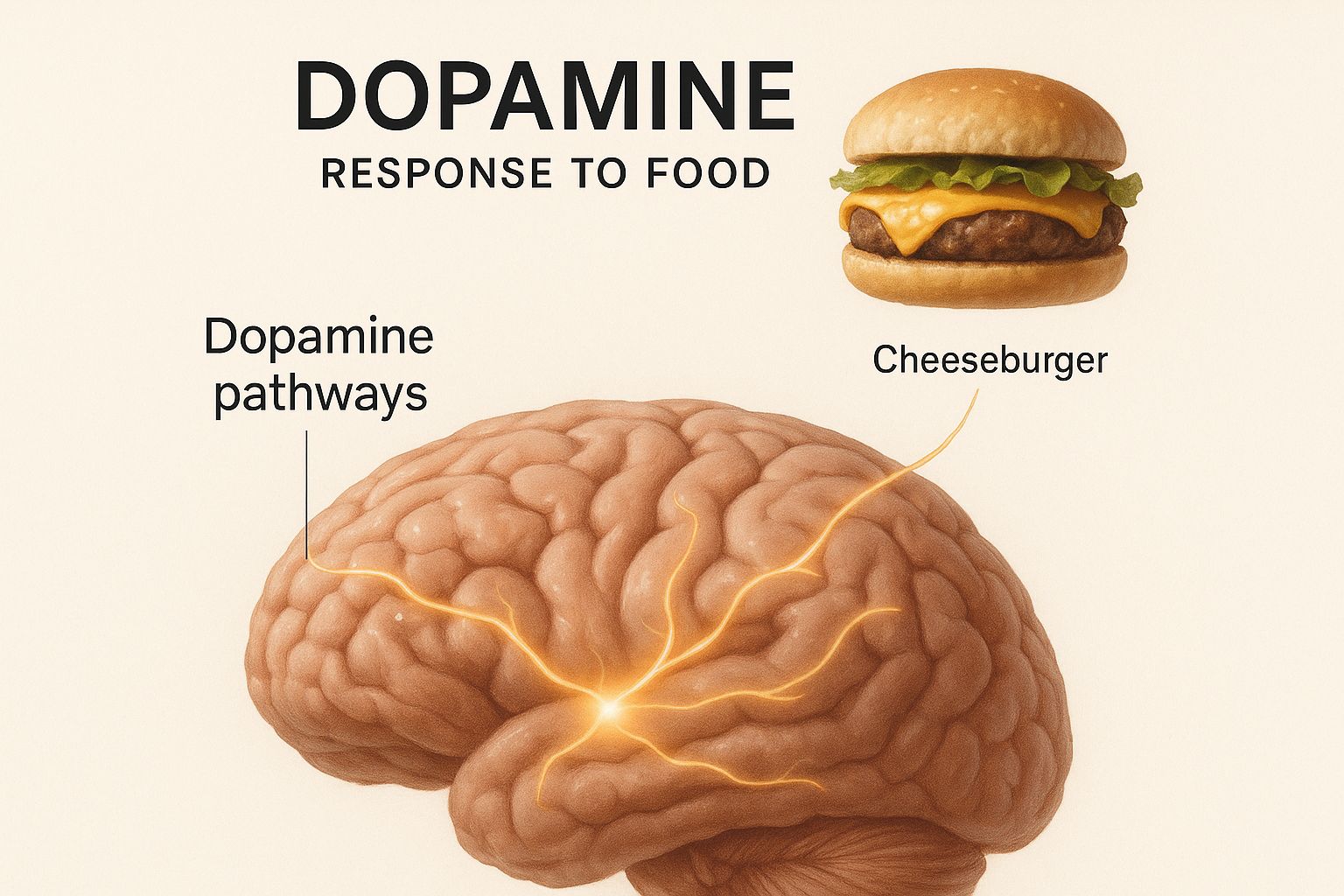
As you can see, the brain quickly learns to prioritize these engineered foods over healthier options, trapping you in a cycle that can feel impossible to break.
Your Brain on Junk Food
Constantly flooding your brain with these massive dopamine hits has consequences. To protect itself from the sensory overload, your brain starts to downregulate, or reduce, the number of dopamine receptors available. This crucial process is called dopamine downregulation.
What does this mean in practice? You now need to eat more junk food, more often, just to get the same feeling of pleasure you once got from a smaller amount. It’s a classic case of diminishing returns that builds a tolerance strikingly similar to what’s seen in substance addiction.
This process desensitizes your entire reward system. Research shows that as junk food intake goes up, the brain’s response to it can actually go down, requiring larger and larger amounts to get that same “high.” One study noted this exact pattern, finding that neural activity in a key reward region of the brain decreased over time with repeated exposure. If you’re curious, you can find more insights on how junk food messes with your brain.
To put it all together, junk food’s power comes from a clever, multi-faceted attack on our brain’s natural systems.
Junk Food’s Three-Pronged Attack on Your Brain
This table breaks down the key ways junk food creates such powerful cravings and overrides our body’s normal eating signals.
| Mechanism | What It Is | How Junk Food Exploits It |
|---|---|---|
| Dopamine Hijack | A massive release of the “feel-good” neurotransmitter that signals reward and pleasure. | Engineered formulas of fat, sugar, and salt trigger an unnaturally large dopamine surge, training the brain to prioritize these foods. |
| Hyper-Palatability | Creating an irresistible taste and texture experience that is more appealing than any natural food. | The precise combination of ingredients makes the food so rewarding that it’s difficult to stop eating, overriding fullness cues. |
| Dopamine Downregulation | The brain reduces its sensitivity to dopamine to protect itself from constant overstimulation. | This builds tolerance, meaning you need more junk food over time to achieve the same level of satisfaction, reinforcing the cycle. |
By understanding these mechanisms, you can start to see that cravings aren’t a personal failing but a biological response to a carefully designed stimulus.
Riding the Dopamine Rollercoaster
To get a real handle on how junk food hijacks our brains, we need to talk about dopamine. You’ve probably heard it called the “pleasure molecule,” but that’s not the whole story. It’s more accurate to think of it as the motivation molecule—the neurochemical that pushes you to seek out things your brain thinks are good for you.
Imagine it like this: eating a piece of fruit gives you a gentle, pleasant bump in dopamine. It’s a small, enjoyable hill on a scenic drive. But junk food? That’s a different beast entirely. Engineered with the perfect trifecta of sugar, fat, and salt, it’s like being strapped into a rocket-powered rollercoaster. Your dopamine levels don’t just rise; they blast off, giving you an intense, unnatural rush.
This massive surge sends a powerful message to your brain: “Pay attention! This is amazing. Remember how you got this, and do it again. Soon.” But as anyone who’s been on a rollercoaster knows, what goes up must come down.

The Unavoidable Dopamine Crash
After that intense high comes the crash. It’s not just a return to normal; your dopamine levels can actually plummet below where they started. This leaves you feeling sluggish, irritable, and in a complete mental fog.
Of course, your brain immediately starts screaming for a way to get back to that peak. This creates a powerful, almost desperate urge for more junk food—not just for the pleasure, but to escape the misery of the crash. This is the very engine of the addictive cycle.
To protect itself from this constant, overwhelming flood of dopamine, your brain starts a process called dopamine downregulation. It literally reduces the number of dopamine receptors available, like turning down the volume on its own reward system.
This is a crucial biological shift. It means you’re building a tolerance. The same slice of pizza that once gave you a euphoric rush now barely moves the needle. To get that same feeling of satisfaction, you need more and more, creating a feedback loop that looks eerily similar to classic substance addiction.
When Cravings Overrule Common Sense
This neurological process can become so powerful that it actually overrides your brain’s most basic survival instincts. The primal drive for that dopamine hit becomes the top priority, shoving aside rational thought and even your own well-being.
Consider the stunning results from lab studies on mice. When fed a diet of 50% sugar and 50% fat, they began eating compulsively. Here’s where it gets wild: researchers then introduced a mild electric shock to warn them away from the food. The control mice quickly learned to stop eating. But the junk-food-fed mice? They completely ignored the painful shocks and kept right on gorging.
This isn’t just a quirky mouse experiment; it’s a stark illustration of how the biological drive for that reward can completely steamroll the instinct for self-preservation. It shows the raw power of the programming that makes you reach for another cookie, even when you know you’ll feel terrible later. For a deeper dive, you can learn more about what happens to our brain when we crave junk food.
The Cycle of Needing More for Less
This downregulation creates a deeply frustrating paradox. The more you turn to junk food to feel good, the less effective it becomes, and the worse you feel when you’re not eating it. It’s a classic cycle of diminishing returns.
- The Initial High: You eat the junk food and get that intense dopamine rush. You feel great.
- The Rapid Crash: Your dopamine levels tank, leaving you feeling low, tired, and already craving the next fix.
- Building Tolerance: Your brain’s receptors become less sensitive. You now need more of the food to get the same mood lift.
- The Habit Loop: Your brain hardwires this entire sequence, turning the craving into an automatic response to triggers like stress, boredom, or even seeing a commercial.
If this feels familiar, know that it’s not a failure of willpower. It’s a predictable biological response to an unnaturally powerful stimulus. Understanding the mechanics of the dopamine rollercoaster—the thrilling high, the miserable low, and your brain’s desperate attempt to find balance—is the first, most important step toward finally getting off the ride for good.
Connecting Junk Food to Your Mental Well-Being
That relentless cycle of cravings, highs, and crashes isn’t just a physical battle—it takes a serious toll on your mental and emotional health. If you’ve ever dealt with persistent brain fog, found yourself uncharacteristically irritable, or just felt a lingering low mood, it might be more connected to your last meal than you think.
Understanding how junk food hijacks your brain goes way beyond the dopamine rush. It gets right to the heart of your overall sense of well-being.
The connection between what we eat and how we feel isn’t just a hunch; it’s a rapidly growing field of scientific discovery. The highly processed ingredients packed into most junk food can set off a chain reaction in your body, disrupting the delicate chemistry of your brain. This makes it so much harder to feel balanced, focused, and emotionally steady. This isn’t about blaming yourself for feeling down after a binge. It’s about finally seeing the powerful, physiological link between your diet and your mind.
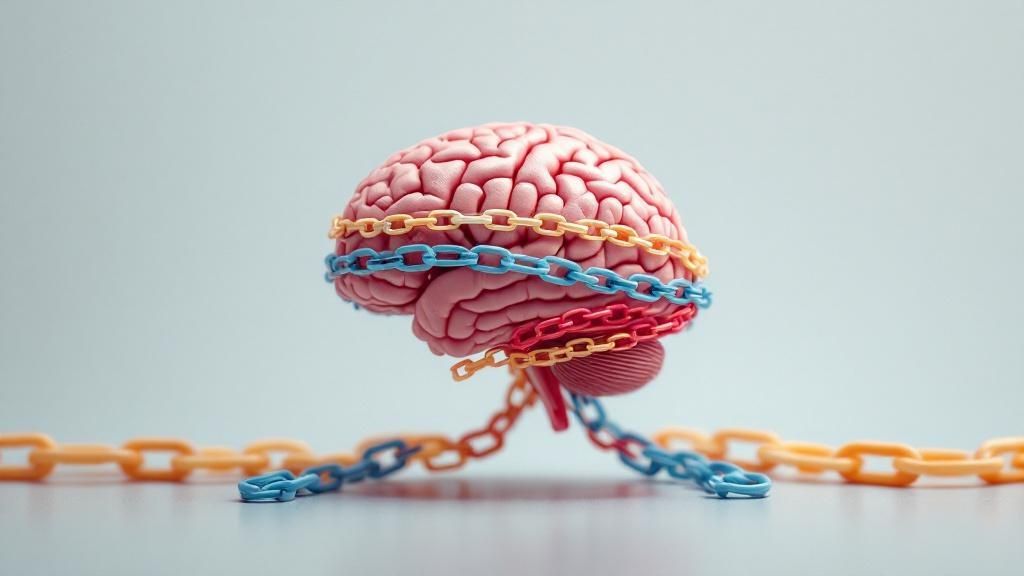
The Fire Within: Neuroinflammation
Think of your brain as a super-sensitive, high-performance computer. Now, imagine pouring a sugary, chemical-filled soda right onto its motherboard. That’s a pretty good analogy for neuroinflammation, which is simply inflammation happening inside the brain.
Diets loaded with refined sugars, unhealthy fats, and artificial additives can trigger a low-grade but chronic inflammatory response throughout your body. This simmering inflammation doesn’t just stay in your gut; it can actually cross the blood-brain barrier. Once there, it directly messes with your neural function, often contributing to feelings of depression and anxiety.
And this isn’t some rare occurrence. A massive meta-analysis that looked at over 159,000 people found a clear and significant link between eating a lot of junk food and experiencing mental health disorders. The researchers discovered that people with the highest intake had a 16% increased risk of developing these issues. If you want to dive into the specifics, you can read the full research about junk food and mental health.
Your Gut: The Second Brain
The connection between your digestive system and your brain is so deep and complex that scientists have nicknamed the gut “the second brain.” This gut-brain axis is a bustling, two-way communication highway, and the food you eat directly controls the flow of traffic.
Your gut is home to trillions of bacteria, a community we call the gut microbiome. When you eat a diet rich in whole, unprocessed foods, you’re nurturing a diverse and healthy microbiome, which is absolutely essential for producing key neurotransmitters that regulate your mood.
It’s estimated that up to 95% of your body’s serotonin—the “feel-good” chemical critical for mood stability—is actually produced in your gut, not your brain. A diet dominated by junk food throws this delicate ecosystem completely out of whack, which can directly tank your mood and emotional resilience.
When your gut microbiome is unhealthy, it starts sending distress signals up to the brain, which can manifest as anxiety and depressive symptoms. It’s a perfect example of how nourishing your gut is one of the most direct ways to nourish your mind.
Starving Your Brain of Essential Nutrients
Beyond sparking inflammation and disrupting your gut, there’s another problem: junk food often pushes nutrient-dense foods right off your plate. This can lead to nutrient deficiency, even if you’re eating plenty of calories. Your brain is a hungry organ, and it needs a steady supply of specific vitamins, minerals, and fatty acids to work properly.
Think of these as the essential building blocks for a healthy mind:
- Omega-3 Fatty Acids: Found in foods like fatty fish and walnuts, these are crucial for building healthy brain cells and tamping down inflammation.
- B Vitamins: These are the workhorses for producing energy in your brain and creating essential neurotransmitters like dopamine and serotonin.
- Magnesium: This mineral plays a key role in calming the nervous system and helping your body manage its stress response.
When your diet is mostly made up of ultra-processed foods, you’re essentially starving your brain of the raw materials it needs to build these mood-regulating chemicals. This deficiency can leave you feeling mentally drained, anxious, and unable to cope with everyday stress. The link couldn’t be clearer: what you feed your body, you feed your brain, and the quality of that fuel directly shapes your mental landscape.
Actionable Strategies to Rewire Your Brain
Knowing how junk food hijacks your brain is one thing; taking back the controls is another. The great news is your brain has an incredible capacity to change and adapt—a quality known as neuroplasticity. By deliberately building new habits and reshaping your environment, you can actually weaken those old junk-food circuits and forge stronger, healthier ones.
This isn’t about gritting your teeth and relying on willpower alone. That’s a losing battle. Instead, we’re going to work smarter by strategically rewiring the system. Let’s walk through some practical, proven strategies to break the cycle and teach your brain to want what truly nourishes it.
Design Your Environment for Success
The simplest way to avoid temptation is to make it invisible. Your environment is constantly sending subconscious cues to your brain, triggering old habits before you even notice. By consciously curating your surroundings, you make healthy choices the path of least resistance.
Think of it as setting up a supportive ecosystem for your brain. If cookies and chips are living on your kitchen counter, you’re forcing your prefrontal cortex—the part of your brain that handles impulse control—to fight a never-ending battle. Eventually, it’s going to get tired and give in.
Why It Works: This approach drastically reduces decision fatigue. When healthy options are visible and easy to grab (like a bowl of fresh fruit on the counter) and junk food is hidden away (or better yet, not in the house), you conserve precious mental energy. You’re no longer running on willpower; you’re running on smart design.
Create Powerful Behavioral Swaps
When a craving hits, your brain automatically defaults to the most well-worn path. A behavioral swap is simply a pre-planned action you take instead of caving. The trick is to have a simple, specific plan locked and loaded before the craving even shows up.
For instance, if you always get a sweet tooth around 3 p.m., your swap could be brewing a cup of spiced herbal tea or stepping outside for a five-minute walk.
Here are a few ideas for effective swaps:
- Instead of a sugary soda: Try sparkling water with a squeeze of fresh lemon or lime.
- Instead of salty chips: Grab a handful of nuts, some crunchy carrots with hummus, or a few olives.
- Instead of mindless TV snacking: Keep your hands busy with something else—stretching, knitting, or even a simple puzzle.
Why It Works: Behavioral swaps help overwrite old neural pathways. Each time you choose the new behavior, you strengthen a healthier connection in your brain. Over time, that new response becomes more automatic, and the old trigger loses its power. For a deeper dive, check out our guide on how to control food cravings to build your own personalized toolkit.
Establish Nutritional Guardrails
Stabilizing your body’s internal chemistry is a non-negotiable step in taming cravings. When your blood sugar is all over the place, your brain screams for a quick energy fix—usually sugar or refined carbs. Putting a few simple nutritional rules in place helps prevent these metabolic meltdowns.
The goal isn’t restriction; it’s stabilization. By giving your body the consistent fuel it needs, you prevent the metabolic chaos that drives the most intense and uncontrollable cravings.
Focus on these two areas to build a solid foundation:
- Prioritize Protein and Fiber: These two are the champions of satiety. Starting your day with a protein-rich meal helps keep appetite hormones in check for hours. Fiber, found in veggies, fruits, and whole grains, slows digestion and prevents those sharp blood sugar spikes.
- Stay Hydrated: It’s amazing how often our brains mistake mild dehydration for hunger. Before you grab a snack, try drinking a large glass of water and waiting 15 minutes. You might be surprised how often that “hunger” signal just vanishes.
Why It Works: These guardrails tackle the physiological roots of cravings head-on. By keeping your blood sugar stable and your body nourished and hydrated, you cut down on the number of “emergency” signals your brain receives. This makes it infinitely easier to make cool, rational food choices.
Practice Mindful Eating Techniques
Mindful eating is all about paying full, non-judgmental attention to the experience of eating. It means tuning back into your body’s natural hunger and fullness cues, which the loud, flashy flavors of junk food have taught us to ignore.
Try this simple exercise at your next meal:
- Pause Before You Begin: Take one deep breath. Ask yourself, “On a scale of 1 to 10, how hungry am I, really?”
- Engage Your Senses: Actually look at your food. Smell the aromas. Notice the different textures and colors.
- Chew Thoroughly: Put your fork down between bites. This one simple action slows you down and gives your brain the 20 minutes it needs to get the “I’m full” message from your stomach.
Why It Works: Mindful eating strengthens the communication line between your gut and your brain. It teaches you to tell the difference between true physical hunger and a craving driven by emotion or habit. This practice helps rewire your brain to find deep satisfaction in the sensory experience of eating, not just in chasing the next dopamine rush.
Building a Long-Term Vision for Food Freedom
The struggle to reclaim your relationship with food isn’t about waging a never-ending war on cravings. It’s about recognizing that the battle you feel is a perfectly normal biological reaction to a completely unnatural food environment. That feeling of your brain being hijacked by junk food is very real, but it absolutely doesn’t have to be a life sentence.
You now have the map in your hands. You can see how the dopamine rollercoaster works, you understand the deep connection to your mental health, and you have a whole toolkit of strategies to use. This knowledge is your power, shifting you from being a passive passenger to the pilot of your own choices. Real, lasting change happens when you practice these new behaviors until they feel more natural than the old ones.
The Power of Neuroplasticity
The most incredible tool you have is your brain’s own ability to change and adapt. It’s called neuroplasticity. Every single time you use a behavioral swap instead of giving in, or you take a moment to eat mindfully, you’re literally forging new, stronger pathways in your brain.
Think of it like blazing a new trail in a forest. At first, it’s tough going. But the more you walk that new path, the clearer it becomes, until eventually, it’s the easiest and most obvious route to take. The old, overgrown trail of junk food habits just gets left behind.
This isn’t about being perfect. It’s about progress. Every small, positive choice you make is a win that helps rewire your brain, slowly turning down the volume on those relentless cravings.
When you truly embrace this, you realize you can actively rebuild your brain’s reward system. You’re not just fighting old habits—you’re constructing a new internal foundation that supports your health and happiness for the long haul.
What Is Food Freedom
So, what’s the end goal here? It’s something we can call food freedom. This isn’t a world where you live by a strict set of rules or white-knuckle your way through the day. It’s a place of calm, conscious control and actual enjoyment of food.
Picture a life where you are in charge of your food choices, not some fleeting impulse. Food freedom really looks like this:
- You eat with intention. You can have a slice of cake at a birthday party and truly enjoy it, without that one slice sending you into a week-long spiral. The choice is yours, and it’s deliberate.
- You’re free from guilt. Food becomes what it should be: nourishment and a source of pleasure, without all the baggage of shame and regret attached.
- Cravings lose their power. The desire for certain foods might still pop up, but it no longer feels like an emergency. It’s just a signal—one you can notice and then decide whether or not to act on.
This vision is completely within your reach. By understanding the science behind the brain-hijack and consistently using the strategies to push back, you can build a brand new relationship with food. It’ll be one defined by balance, control, and most importantly, freedom.
A Few Common Questions About Beating Cravings
Once you understand why your brain gets hooked on junk food, the next logical question is, “Okay, so what do I actually do about it?” It’s one thing to know the science, but it’s another thing entirely to put it into practice.
Let’s walk through some of the most common questions that pop up when you start this journey. These are the real-world hurdles everyone faces.
How Long Does It Really Take to Rewire Your Brain?
This is the big one, and the honest answer is: it varies. Everyone’s brain and history with food are unique. But the good news? Most people feel a real, noticeable drop in the intensity of their cravings within just 2 to 4 weeks of consistently cutting out their biggest trigger foods.
Why so fast? Because your brain’s dopamine receptors are incredibly adaptive. When you stop flooding them with hyper-palatable junk, they start to “upregulate”—basically, they become more sensitive again. You start finding pleasure in normal, whole foods. The key is consistency. You’re building new habits, and while that takes time, the initial relief can come surprisingly quickly.
Should I Go Cold Turkey or Taper Off Junk Food?
There’s no single right answer here; it really boils down to your own personality and what you can realistically stick with.
- The “cold turkey” approach is great for people who prefer a clean break. Ripping off the band-aid can reset your brain chemistry and taste buds faster, breaking the physiological craving cycle decisively.
- A gradual reduction feels much more manageable for others. You might start by cutting out sugary drinks one week, then salty snacks the next. This slower pace can feel less jarring and prevent you from feeling totally overwhelmed.
The best method is the one that doesn’t make you want to quit. Both paths lead to the same destination, so pick the one that feels sustainable for you.
Will I Ever Be Able to Eat My Favorite Junk Food Again?
Absolutely. The goal isn’t a life sentence of restriction; it’s food freedom. It’s about getting to a place where you are in charge, not the craving.
Once you’ve gone through a reset period and broken that powerful chemical grip, you can typically reintroduce these foods without losing control. The difference is profound. You’re no longer eating it because of an irresistible urge; you’re making a conscious choice. You’ll probably find that the old junk food doesn’t taste as amazing as you remember, and a small amount is more than enough.