 CravingMind AI
It all starts with a simple realization: your kitchen’s layout has a direct line to your food choices. This isn’t about a massive overhaul. It’s about small, deliberate tweaks—like moving the fruit bowl to the center of the counter and tucking the cookies away in a harder-to-reach cupboard. The goal is to make the healthy choice the easiest choice.
How Your Home Shapes What You Eat

Ever come home after a long day and find yourself grabbing a bag of chips without even thinking? It’s not a lack of willpower. More often than not, it’s about your environment. Your home is a quiet, powerful influence on your daily decisions, especially what you decide to eat.
There’s a deep connection between our physical spaces and our eating habits. A cluttered counter piled high with processed snacks screams “grab and go.” A clear counter with a vibrant bowl of fresh fruit sends a completely different signal. It’s not about strict diets; it’s about designing a space where healthy choices just happen. To really dig into this, you can learn more about the power of your eating environment in our detailed guide.
The Kitchen Is the New Wellness Hub
Recent shifts in how we live and work have put our kitchens front and center in our quest for better health. We’re cooking and eating at home more than ever, which means our personal spaces now carry a lot more weight in our wellness journey.
The numbers back this up. Research from Innova Market Insights revealed that about 46% of consumers are eating at home more frequently, with dinner becoming the cornerstone of the home-cooked day. This shift gives us the perfect opening to intentionally redesign our eating environments.
Your environment is the invisible hand that shapes your behavior. When you optimize your kitchen and dining spaces, you’re not just changing your home—you’re fundamentally rewiring your habits.
Setting the Stage for Success
Before we get into the nitty-gritty of how to do this, it’s crucial to understand why it works. Setting up your home environment for healthy eating is the foundation that makes every other piece of advice stick. Once you nail this, everything else gets easier.
Think about what a well-designed space does for you:
- It cuts down on decision fatigue. When an apple is right there and easy to grab, you don’t have to waste mental energy debating if you should hunt down the cookies.
- It encourages mindful eating. An organized, pleasant space invites you to slow down and actually taste your food, rather than mindlessly eating while standing over the sink.
- It builds habits that last. Environmental nudges work around the clock, gently guiding you toward your goals without you having to think about it constantly.
This guide is all about giving you practical, actionable steps to turn your home into your greatest ally on your health journey.
Design a Kitchen That Supports Healthy Habits

Your kitchen can be your biggest ally or your worst enemy when it comes to healthy eating. It’s a space packed with subtle cues that nudge you one way or another. By making a few intentional tweaks, you can set yourself up for success without having to rely on sheer willpower.
This isn’t about a gut renovation. It’s about being smart with placement and organization.
The whole idea is to make the good stuff easy and the not-so-good stuff a little harder to get to. It’s a fundamental part of creating a healthier home environment for eating because it works with your brain’s natural shortcuts, not against them.
Master the Art of Visibility
We’re wired to reach for what we see first. You can absolutely use this to your advantage. Start by turning healthy foods into the main event on your countertops.
The classic fruit bowl is a perfect example. Don’t shove it into a corner. Put a big, beautiful bowl of apples, bananas, and oranges right where you’ll see it constantly—maybe next to the sink or where you drop your keys. Suddenly, fruit becomes the easiest snack to grab.
On the flip side, apply the “out of sight, out of mind” rule to temptations. That clear cookie jar on the counter? Swap it for an opaque one and stick it on a high shelf in the pantry. This simple act adds a tiny bit of friction; you have to consciously decide to get the cookies, giving you a beat to ask yourself if you really want them. It’s surprisingly effective at curbing mindless grazing.
Implement Kitchen Zoning for Efficiency
A messy, disorganized kitchen can make cooking feel overwhelming. When you’re tired after a long day, that chaos can easily push you toward ordering takeout. Creating designated “zones” for different tasks makes the whole process smoother and far less stressful.
Think about your kitchen as a collection of activity hubs:
- The Prep Zone: This is your clean, clear counter space for chopping and mixing. Keep your cutting boards, favorite knives, and mixing bowls right there, either on the counter or in the drawers directly below.
- The Cooking Zone: This is everything around your stove and oven. Pots, pans, cooking utensils, and everyday spices should live here. No more hunting for the olive oil or your favorite spatula.
- The Cleaning Zone: Naturally, this is centered around the sink. Keep soap, sponges, and dishwasher pods within arm’s reach to make cleanup a quick, painless task.
When your kitchen is zoned like this, you’re not wasting mental energy looking for things. Everything has a logical home, which makes the flow from prepping to cooking to cleaning feel almost effortless.
By designing a kitchen that makes healthy actions easier and unhealthy actions harder, you’re building a system that supports your long-term goals. Your environment becomes an active partner in your wellness journey.
Small Tweaks That Make a Big Difference
Beyond the big organizational moves, a few small adjustments can have a surprisingly big impact on your habits. These little nudges are all about embedding positive cues into your daily routine.
Try adding a few of these to your space:
- Create a Hydration Station: Keep a filtered water pitcher or a cool-looking dispenser front-and-center in the fridge or on the counter. Just seeing it there is a constant, gentle reminder to drink more water.
- Set Up a Healthy Snack Drawer: Dedicate one easy-to-reach drawer in your fridge for grab-and-go snacks. Think pre-portioned bags of baby carrots, single-serving hummus cups, Greek yogurts, or hard-boiled eggs.
- Use Smaller Plates and Bowls: This is a classic for a reason—it works. Research has shown that we tend to fill whatever plate we’re given. A smaller plate naturally leads to more mindful portion sizes without you even thinking about it.
Each of these adjustments helps in creating a healthier home environment for eating. You’re turning your kitchen from a potential minefield of temptation into a space that actively roots for you.
Organize Your Pantry and Fridge for Success
Let’s be honest: your pantry and fridge are the heart of your kitchen. They can either be a chaotic jumble of temptation or a well-organized arsenal for healthy eating. The way you set them up has a direct, and often subconscious, impact on what you eat every single day.
The goal isn’t about deprivation or strict rules. It’s about smart design. When healthy, whole foods are the first things you see and the easiest things to grab, you’ll naturally start making better choices without even thinking about it.
This image below is a perfect example of what I mean. It’s not just about looking nice; it’s about making healthy ingredients the obvious choice.
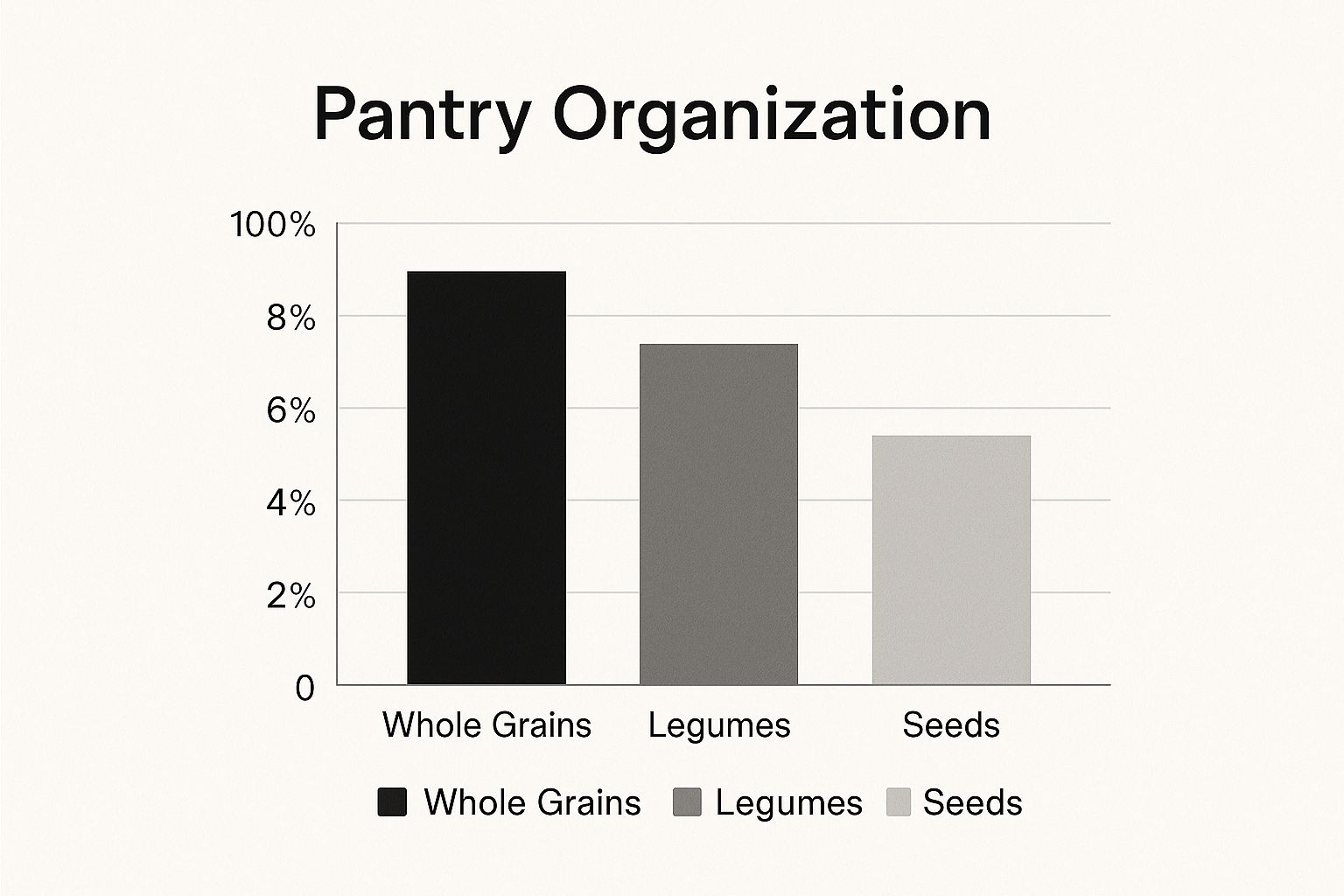
This kind of setup creates a system where good nutrition becomes your default setting.
Adopt the “Eye Level Is Buy Level” Rule
Supermarkets have known this trick for decades: the most profitable products are always placed at eye level. You can use this exact same psychological principle in your own home.
Think about what happens when you open your pantry door. If a family-sized bag of chips is the first thing you see, that’s probably what you’re going to reach for. Now, what if you saw clear jars of almonds, quinoa, and lentils instead? Suddenly, the healthy choice becomes the path of least resistance.
So, put the foods you want to eat more of—like whole grains, nuts, seeds, and beans—right in your line of sight.
What about the other stuff? Move the less-healthy treats to inconvenient spots. Put them in opaque containers on the top shelf or hide them in the back of a bottom cabinet. This simple bit of friction forces you to pause and make a conscious decision instead of just giving in to an impulse.
Design a Fridge for Grab-and-Go Health
Your fridge can be your best friend or your worst enemy, especially after a long day when ordering takeout sounds so much easier. A little organization can completely change that dynamic by making healthy options effortless.
Here are a few strategies I’ve seen work wonders:
- Create a “Ready-to-Eat” Zone: Dedicate one shelf, right at eye level, for healthy snacks and meal components. Think clear containers filled with washed and chopped bell peppers, cucumbers, and carrots. Add some hard-boiled eggs, grilled chicken strips, or single-serving containers of hummus.
- Give Produce a Proper Home: Don’t let your beautiful fruits and vegetables wilt in obscurity. Use your crisper drawers intentionally—one for fruits, one for veggies. Keeping them visible and fresh is half the battle.
- Make Hydration Obvious: Place a pitcher of cold, filtered water or unsweetened iced tea front and center. It’s a simple visual cue that prompts you to drink up throughout the day.
The core principle is simple: make the healthy choice the easy choice. When your fridge and pantry are set up for success, you’re not just organizing food—you’re automating better habits.
A thoughtfully organized pantry can dramatically shift your go-to food choices. The table below shows just how powerful this change can be, turning a space that encourages impulse buys into one that supports mindful decisions.
| Storage Area | Chaotic Setup (Default Temptation) | Health-Conscious Setup (Mindful Choice) |
|---|---|---|
| Eye-Level Shelf | Open bags of chips, boxes of cookies, and sugary cereals are the first things you see and grab. | Clear containers of nuts, seeds, and whole grains are front and center, making them the easiest option. |
| Lower Shelves | A random mix of canned goods, pasta boxes, and half-empty snack containers. | Canned beans, lentils, and vegetables are organized by type. Healthy cooking oils are easy to access. |
| Top Shelf | Forgotten items and occasional treats, often in their original, loud packaging. | Less-frequently used items and treats are stored in opaque bins, out of immediate sight. |
This isn’t just about aesthetics; it’s a functional overhaul that puts you in control of your food environment.
The Power of a Well-Stocked Kitchen
An organized food storage system does more than just curb mindless snacking—it makes you actually want to cook. When you can see all your beautiful ingredients and easily grab what you need, cooking feels less like a chore and more like a creative outlet.
And that’s a huge win for your health. People who cook at home consistently report having healthier diets. A Pew Research Center survey on eating habits found that about 30% of Americans who cook at home daily describe their diet as “very healthy.” That number drops to just 12% for those who cook less often.
Ultimately, giving your pantry and fridge a makeover is a real investment in your well-being. You’re transforming them from passive storage spaces into active partners on your journey to a healthier life.
Create a Mindful and Distraction-Free Dining Space
Where you eat matters just as much as what you eat. Your dining area, whether it’s a formal room or a small kitchen nook, sets the stage for how you experience your food. It can either encourage you to mindlessly overeat or invite you to slow down and truly savor your meal.
Transforming this space is a powerful step in creating a healthier home environment for eating. It sends a clear signal to your brain: now is the time to eat, connect, and be present. The goal isn’t about having a perfect dining room; it’s about creating a clear, intentional separation between mealtime and all the other things demanding our attention, like work or a TV show.
Think about it: have you ever finished a bag of chips while watching a movie, only to realize you barely tasted any of it? That’s “distracted eating” in a nutshell, and research confirms it often leads to eating more calories and feeling less satisfied. When our focus is on a screen, we completely miss our body’s subtle cues for hunger and fullness.
Designate a Screen-Free Zone
If there’s one change that makes the biggest difference, it’s this: establish a firm “no screens at the table” rule. That means phones, tablets, laptops, and the television all get put away. This single act is the cornerstone of reclaiming your meals as a time for genuine awareness.
When you eat without digital distractions, you start to notice things again—the crunch of a fresh salad, the aroma of spices, the rich texture of your food. Engaging all your senses is what truly satisfies us and helps our brain register that we’ve eaten, which can be a game-changer for preventing overeating later on.
Reclaiming your dining space is about creating a ritual. It’s an intentional act that tells your body and mind, “This time is for nourishment and nothing else.” This simple shift can fundamentally change your relationship with food.
Elevate the Atmosphere with Simple Touches
You don’t need an interior designer to create a mindful dining atmosphere. It’s the small, intentional details that can completely transform the feel of your eating area, making it a calmer, more inviting place to be.
Here are a few simple ideas to get you started:
- Set the Table: It sounds almost too simple, but using placemats, real cutlery, and a napkin elevates even a basic meal into a more deliberate event. This small act of preparation signals that the meal is important and deserves your full attention.
- Soften the Lighting: Harsh, bright overhead lights can feel clinical and rushed. Try switching to warmer, softer light from a nearby lamp or installing a dimmer. It’s amazing how much this can change the mood to feel more relaxed and intimate.
- Clear the Clutter: Is your dining table a dumping ground for mail, keys, and random odds and ends? That visual chaos contributes to mental chaos. Take just two minutes to clear the surface before you sit down to eat. A clean, open space is far more conducive to a calm mind.
By putting these ideas into practice, you’re doing more than just redecorating; you’re building an environment that supports healthier habits. If you’re ready to explore this practice further, our guide on mindful eating techniques offers even more ways to connect with your food. These environmental cues work hand-in-hand to foster a more intentional and deeply satisfying eating experience.
How Cooking at Home Saves You Money (and Makes You Healthier)
Let’s be honest, one of the biggest reasons people start cooking more is to save a little cash. The fantastic part? What’s good for your wallet almost always turns out to be better for your body. This link between financial and physical well-being makes home cooking a no-brainer.
The price gap between a restaurant meal and a home-cooked one can be pretty shocking when you actually do the math. Think about it: a simple pasta dish that might cost you $20 at a local Italian place can easily be made at home for under $5 a person. That’s not a one-time thing—those savings pile up fast over a month, freeing up serious cash for other goals.
It’s a huge driver for most of us. One survey found that 89% of people view cooking at home as both a healthier move and a smart way to save money. And with grocery prices always seeming to creep up, 83% of consumers are doubling down on savings, making the kitchen their new favorite restaurant. You can see more consumer insights on this trend if you’re curious.
Eating Well Without Breaking the Bank
Making nutritious meals at home doesn’t mean you have to spend a fortune on fancy ingredients. With a bit of planning and a few clever tricks, you can create delicious, healthy food that’s also incredibly affordable. It’s all about embracing simple, nutrient-packed staples.
Here are a few things that have always worked for me:
- Follow the Seasons: Fruits and vegetables are always cheaper, fresher, and more flavorful when they’re in season. I always build my weekly meal plan around what I find at the farmers’ market or in the produce aisle.
- Give Plant-Based Proteins a Try: Lentils, beans, and chickpeas are my secret weapons for budget-friendly meals. They’re packed with protein and fiber and cost a fraction of what meat does. Just swapping them in a few times a week makes a huge difference in my grocery bill.
- Become a Batch-Cooking Pro: I set aside a couple of hours on Sunday to get ahead. Making a big pot of chili, roasting a sheet pan of veggies, or cooking a large batch of brown rice means I have healthy, grab-and-go options for those hectic weeknights.
Think of it this way: time spent in your kitchen is a direct investment in your long-term health and financial stability. Every meal you cook is a deposit into both accounts, and the returns are priceless.
In the end, creating a home that encourages healthier eating is just as much about smart financial habits as it is about what’s on your plate. When you start seeing your kitchen as the engine for both wellness and savings, you’re building a truly sustainable lifestyle that nourishes you in every way possible.
Have Questions? Let’s Troubleshoot
Putting these ideas into practice is exciting, but let’s be real—life gets in the way. You might run into a few hurdles. Here are some of the most common questions I get and my advice for navigating them in the real world.
What if I’m Working With a Tiny Kitchen?
I hear this one all the time. If you’re in a small apartment or have a kitchen the size of a closet, don’t worry. This isn’t about having a huge, pristine space; it’s about being clever with the space you do have.
Your best friend here is vertical space. Think up! Wall-mounted shelves are perfect for storing healthy staples like oats and lentils in clear jars. A slim rolling cart can become your mobile produce station, tucked away when you don’t need it.
The “out of sight, out of mind” rule is even more critical in tight quarters. You can’t exactly banish temptations to another room, so the next best thing is making them invisible. Store those cookies or chips in opaque bins on the highest shelf you have. Just that little bit of extra effort—having to grab a stool and rummage around—adds enough friction to make you pause and reconsider.
How Do I Get My Family on Board?
This is often the biggest challenge. Announcing a sudden, complete kitchen overhaul usually goes over like a lead balloon. The secret is to be gradual and inclusive, not a dictator.
Frame it as a team effort, or even a fun experiment. Instead of a grand declaration, try something small and positive.
For example, you could say, “I saw this cool idea for a ‘hydration station’ with fruit-infused water. Want to try it out this week and see if we like it?” Getting the kids involved is a game-changer, too. Let them help organize the new healthy snack drawer or pick out a beautiful new fruit bowl. This gives them a sense of ownership.
The key is to make healthy eating feel like an upgrade, not a punishment. Focus on adding delicious, appealing options—like a colorful tray of pre-cut fruit—rather than just taking away old favorites. That positive spin can slowly win over even your most skeptical family members.
Research backs this up. One study on family habits found that when the entire household adopts healthier practices together, those changes are significantly more likely to stick for the long haul.
How Can I Make These New Habits Actually Stick?
Lasting change is built on solid systems, not just sheer willpower. That’s the whole point of redesigning your environment—it does the heavy lifting for you so you don’t have to rely on being motivated 24/7.
To make these new habits permanent, anchor them to routines you already have.
- Tie it to grocery day: As soon as you get home from the store, make it a non-negotiable part of your unpacking routine to wash and chop veggies for the “grab-and-go” shelf in your fridge.
- Link it to mealtime: Before anyone sits down to eat, make it a rule that the dining table must be cleared of all clutter—mail, laptops, homework, you name it.
These small, repeated actions become automatic over time. Before you know it, you won’t even have to think about it. Your home will just naturally guide you toward healthier choices, and that’s exactly what we’re aiming for.