 CravingMind AI
That overwhelming desire for a cookie? It’s not just a passing thought about how good it would taste. Craving sugar is actually a complex signal from your body and mind, a potent cocktail of brain chemistry, hormones, emotions, and deeply ingrained habits.
The Real Reasons You Crave Sugar
Have you ever found yourself rummaging through the pantry for a sweet snack when you’re not even physically hungry? It’s an incredibly common experience. That magnetic pull toward sugar often feels like a personal failing, a simple lack of willpower, but the reality is much more nuanced. It’s a biological and psychological response that’s been hardwired into us for survival.
This guide isn’t about giving you more surface-level advice like “just say no.” Instead, we’re going to dig into the hidden drivers behind your sugar urges so you can finally understand why they happen in the first place. Getting to the root cause is the only way to regain a sense of control without resorting to restrictive diets that almost always backfire.
Unpacking the Drivers of Cravings
The reasons you crave sugar are multifaceted, and they usually work together to create an almost irresistible urge for something sweet. Think of it less like a single light switch and more like a control panel with multiple levers being pulled at once.
We’ll explore the main forces at play, including:
- Your Brain’s Reward System: We’ll look at how your brain chemistry can get hooked on the dopamine rush that sugar provides, creating a powerful feedback loop.
- Gut Health and Hormones: You’ll discover the surprising role your gut microbiome and key hormones like insulin and cortisol play in dictating your food choices.
- Emotional and Habitual Triggers: We’ll dive into how feelings like stress and boredom, along with daily routines, can create automatic responses that lead you straight to the cookie jar.
By seeing your cravings not as a personal failing but as a predictable response to specific triggers, you can begin to address them with curiosity and strategy instead of guilt.
This shift in perspective is everything. For example, realizing that your 3 PM chocolate craving isn’t random—but is tied to a dip in blood sugar or a stressful afternoon meeting—gives you a concrete problem to solve.
This guide will break down these forces step-by-step, setting the stage for practical, mindful strategies. Tools like the Craving Mind app are built on this very foundation, empowering you to manage your relationship with sugar for good.
Your Brain’s Reward System on Sugar
When a powerful sugar craving hits, it’s easy to think it’s just about the taste. But what’s really going on is a complex chemical dance deep inside your brain’s ancient survival circuitry. This network, known as the reward system, is designed to reinforce behaviors that keep us alive—like eating or connecting with others—by releasing chemicals that make us feel good.
Think of it as your brain’s built-in “cause and effect” program. You do something good for survival, and your brain releases a neurotransmitter called dopamine, which gives you a little hit of pleasure. That feeling is a powerful nudge from your brain saying, “Hey, that was great! Let’s do it again soon.”
The Dopamine Rush from Sugar
Here’s the thing about sugar: it sends a massive surge of dopamine into your brain, flooding those reward pathways with a feeling of pure satisfaction. The response is far more intense than what you’d get from eating, say, a piece of broccoli. Your brain logs this potent dopamine hit as a major win, forging a powerful mental connection between sugar and feeling fantastic.
This process is what makes the habit so sticky. Your brain is simply trying to secure what it thinks is a high-energy, valuable resource. It’s a survival instinct that’s gone a bit haywire in a modern world where sugar is everywhere.
Building a Tolerance to Sweetness
Over time, this repeated cycle can create a real problem. Your brain starts to adapt to the constant dopamine spikes from sugar, and your dopamine receptors can become less sensitive. It’s a classic case of diminishing returns.
As your tolerance builds, you find yourself needing more and more sugar just to get the same level of pleasure you used to. That one cookie that used to do the trick now becomes three or four. It’s a tough cycle to break.
This is a critical reason why craving sugar isn’t just about taste—it’s about your brain chasing that chemical high it remembers. Understanding this biological loop is the first step to managing cravings without blaming yourself. It’s not a lack of willpower; it’s a deeply ingrained chemical response.
When you start to see what happens in your brain, you can begin to tackle the root of the craving with smarter, more mindful strategies. You can dive deeper into the neuroscience of sweet food cravings in our detailed guide.
How Your Gut and Hormones Drive Cravings
While your brain’s reward system gets most of the credit for cravings, it’s definitely not a solo act. Your body has another incredibly powerful communication network running in the background: the gut-brain axis. Think of it as a superhighway connecting your digestive system directly to your brain.
And who’s sending messages up this highway? The trillions of tiny passengers in your gut—your gut bacteria.
It might sound like science fiction, but certain types of gut bacteria literally feed on sugar. When you haven’t had any in a while, they can send signals up to your brain that you perceive as an intense craving. So, that urge for a cookie might not be entirely your own; it could be your gut microbiome demanding its favorite snack.
This image below shows just how powerfully the brain’s reward centers react to sugar, which helps explain why the cycle is so hard to break.
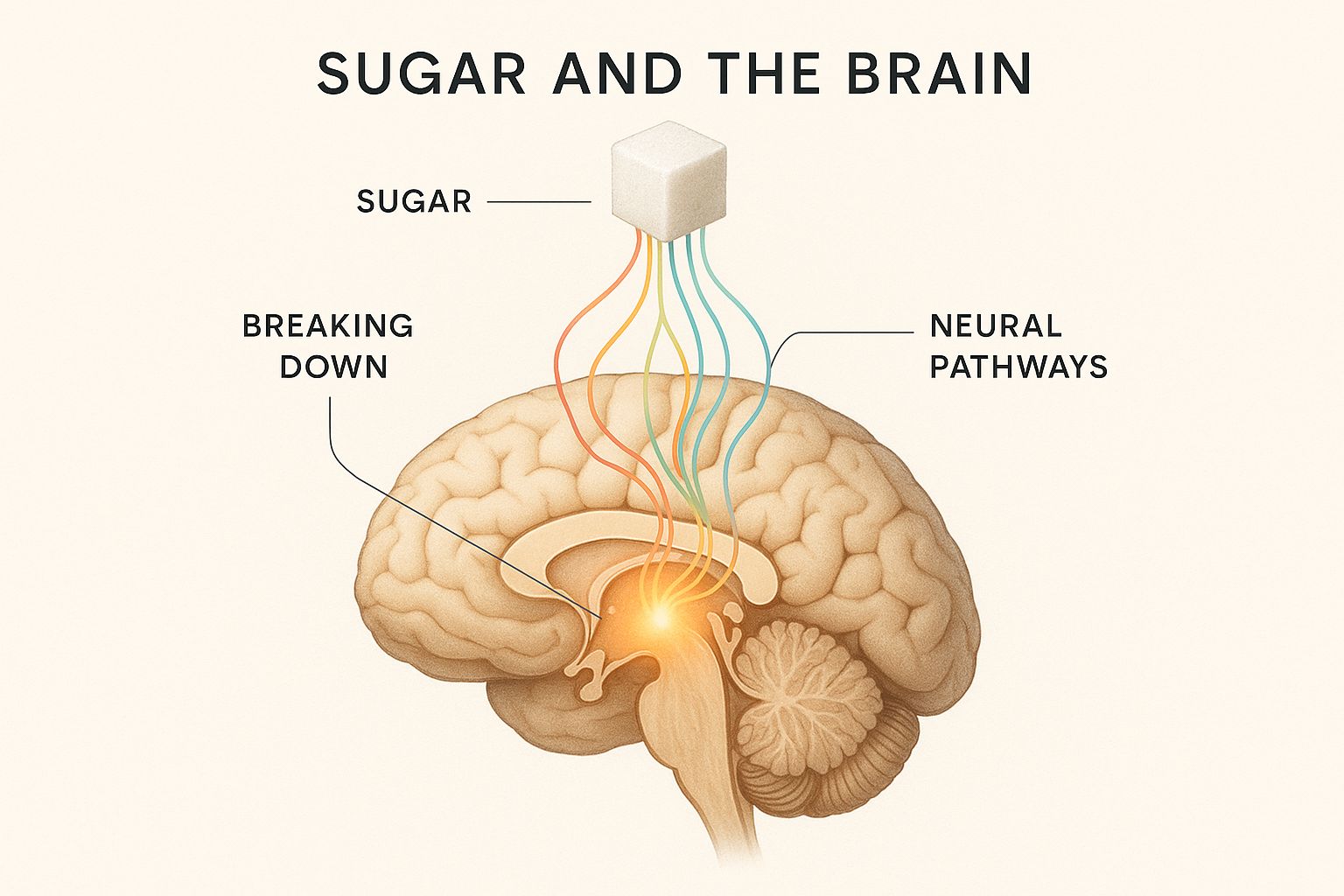
You can see the intense neurological response sugar triggers, which is precisely why it feels so good and becomes such a deeply ingrained habit.
The Hormonal Rollercoaster
Hormones are another huge piece of the puzzle. These chemical messengers are constantly directing traffic in your body, managing everything from your mood to your appetite. When it comes to sugar cravings, two of the biggest players are insulin and cortisol.
Insulin and Blood Sugar Crashes
Here’s the cycle: you eat something sugary, and your blood glucose levels shoot up. Your pancreas responds by releasing insulin, a hormone whose job is to get that sugar out of your blood and into your cells for energy.
The problem is, a big sugar rush often causes your body to overcompensate, releasing too much insulin. This leads to a sudden, steep drop in your blood sugar—what we all know as the dreaded “sugar crash.”
That crash sends a panic signal to your brain: “Emergency! We need more energy, and we need it now!” The quickest fix your brain knows? More sugar. This kicks off a vicious cycle of spikes and crashes that leaves you constantly wanting another hit.
Cortisol and Stress-Induced Cravings
Ever find yourself reaching for something sweet after a really stressful day? You can thank cortisol, your body’s main stress hormone. When you’re under pressure, cortisol floods your system, putting your body on high alert and telling it to find the fastest possible source of energy.
During stressful periods, your body is biologically primed to seek out quick, high-calorie foods. Sugar fits this description perfectly, offering a rapid energy boost and a temporary sense of comfort.
This built-in survival mechanism explains why grabbing a donut after a brutal meeting feels almost like an instinct. Your body is trying to “help,” even though the threat is a deadline, not a predator.
Clearly, it’s not just about what tastes good. These deep-seated biological and hormonal triggers are often running the show behind the scenes.
Here’s a quick summary of these powerful internal forces.
Key Drivers of Sugar Cravings Beyond Taste
| Driver | Mechanism | How It Feels |
|---|---|---|
| Gut Bacteria | Sugar-loving microbes send signals to the brain when they’re “hungry,” influencing your food choices. | A nagging, almost distracting desire for something sweet that seems to come out of nowhere. |
| Insulin & Blood Sugar | A “sugar crash” after a spike triggers an urgent signal in the brain to find more quick energy. | A sudden drop in energy, irritability, and an intense, almost desperate need for sugar. |
| Cortisol & Stress | The stress hormone primes the body for quick energy, making high-calorie, sugary foods highly appealing. | An automatic, “comfort-seeking” pull toward sweets when feeling overwhelmed or anxious. |
Understanding these drivers is the first step. It shows us that craving sugar isn’t a matter of weak willpower; it’s a complex and completely normal response to your body’s internal state.
Why We Really Reach for Sweets: The Power of Habits and Emotions
While our brain chemistry and hormones certainly lay the groundwork for sugar cravings, it’s our emotions and daily routines that usually steal the show.
Ever find yourself grabbing a cookie after a brutal day at work? Or feel that undeniable pull toward the office candy jar around 3 PM? These aren’t just random whims. They’re deeply ingrained, learned responses that our brains have perfected over time.
It’s Not About the Sugar, It’s About the Feeling
Many of us, without even realizing it, use sugar as a quick fix for uncomfortable feelings. Stress, boredom, loneliness, sadness—these emotions are powerful triggers for what we call emotional eating. In those moments, the craving isn’t really for the taste of sugar, but for the immediate comfort and relief it promises. Your brain quickly learns that the fleeting dopamine high from a sweet treat can temporarily soothe those negative feelings.
This emotional connection often starts way back in our childhoods. Remember getting a lollipop after scraping your knee? Or being treated to ice cream for getting a good report card? These early experiences build powerful connections in our brains, wiring sweetness together with feelings of safety, love, and celebration.
As adults, we continue to walk these well-trodden neural paths, often on complete autopilot. The pattern becomes second nature:
- Stress spikes: You grab a donut without even thinking about it.
- Boredom sets in: A sweet, milky coffee suddenly seems like the only interesting thing to do.
- It’s time to celebrate: The event just wouldn’t feel right without a piece of cake.
The craving isn’t for the sugar itself, but for the feeling of comfort and reward you’ve learned to associate with it. Getting this distinction is the first real step toward breaking the cycle.
Once you see this, you can start addressing the real issue—the underlying emotion—instead of just slapping a sugary band-aid on it.
Breaking the Autopilot Habit Loop
Beyond big emotions, simple, everyday habit plays a huge role. Our brains are designed for efficiency; they love to automate repeated actions to save mental energy. That daily afternoon chocolate bar or the dessert you always have after dinner? More often than not, those are just habits running on autopilot.
Your brain has forged a strong link between a specific cue (like the time of day or finishing a meal) and the routine (eating sugar), all in anticipation of the reward (that pleasant feeling). This cue-routine-reward loop is incredibly powerful and usually operates just below our conscious awareness.
This isn’t a failure of willpower—it’s just your brain being really, really good at its job. The key is to bring awareness to the process. By starting to identify your unique triggers—the time, place, person, or feeling that sets the craving in motion—you can begin to consciously interrupt that automatic pattern. This is where tools like the Craving Mind app can be a game-changer, helping you pinpoint those triggers and turn mindless reactions into mindful choices.
Societal and Environmental Influences on Cravings
It’s easy to think your battle with sugar is a solo fight, a personal test of willpower. But that’s not the whole story. While your biology and emotions are definitely in the driver’s seat, we’re all navigating a world practically built to make us want more sugar.
Understanding these powerful, external forces is the first step. It helps you see that craving sugar is not just about taste or a lack of self-control.
Think about your last trip to the grocery store. You were likely met with an obstacle course of hyper-palatable, processed foods, all engineered for maximum appeal. Clever marketing and primo shelf space make sugary snacks and drinks look like the obvious, easy choice. They’re usually cheaper, always convenient, and advertised far more than the whole foods hiding in the produce section. This setup creates an environment where saying “no” takes constant, exhausting effort.
The Rise of Convenience Culture
Our fast-paced lives have completely changed the way we eat. We need meals that are quick and easy, which has fueled the massive growth of the processed food industry. And what’s the magic ingredient for making these foods taste good, last longer, and have the right texture? You guessed it: sugar.
This isn’t just happening in your town; it’s a worldwide shift.
As more of the global population moves into cities, traditional, home-cooked diets are often pushed aside for processed, ready-to-eat options. This single change is a massive driver behind the skyrocketing sugar intake we see on a global scale.
It’s not just a matter of taste. Global sugar consumption is tied directly to big-picture economic and demographic changes. Projections show that worldwide sugar consumption is on track to hit a staggering 202 million tonnes by 2034. Much of this growth comes from growing populations and incomes in developing countries, which are rapidly urbanizing and adopting a more processed, Western-style diet. You can dive deeper into these global consumption trends in the OECD-FAO Agricultural Outlook report.
Taking Back Control of Your Environment
Seeing the bigger picture can be incredibly freeing. It shifts the narrative from self-blame (“Why can’t I just resist?”) to smart strategy (“How can I change my surroundings?”). Your personal struggle is part of a much larger, systemic challenge. You aren’t weak for finding it hard to resist; the system is designed to be hard to resist.
Once you realize this, you can stop waging a war on your willpower and start architecting a food environment that works for you, not against you.
Here are a few simple ways to start:
- Curate Your Kitchen: Make healthy options the easiest ones to grab. Keep fruits and veggies front-and-center. If you have tempting treats, store them out of sight—or better yet, don’t bring them home in the first place.
- Plan Ahead: When you’re hungry and tired, convenience always wins. Meal prepping or having healthy snacks ready to go can save you from reaching for a sugary quick fix.
- Be a Mindful Consumer: Start reading labels and paying attention to advertising. The more you recognize how products are being sold to you, the less power their marketing has over your decisions.
By acknowledging these outside pressures, you can approach your relationship with sugar with more compassion and a real strategy, making conscious choices that actually support your health goals.
Real-World Ways to Get a Handle on Sugar Cravings
So, you understand the why behind your sugar cravings—the deep-seated biological and emotional drivers. That’s a huge first step. Now, let’s shift from just understanding the problem to actually doing something about it. The goal isn’t to white-knuckle your way through life, depriving yourself of everything sweet. It’s about getting smarter, building mindful awareness, and creating habits that actually stick.
Think of it like this: you need to break the automatic loop of “craving leads to eating.” Instead of fighting the urge head-on (which, let’s be honest, often makes it stronger), you can learn to simply notice it. This is a powerful technique sometimes called “riding the wave.” You acknowledge the craving is there, get curious about the physical and mental feelings, and just… watch it. It will pass. They always do.
Every single time you ride that wave without giving in, you’re weakening the link between the trigger and the sugary reward. You’re building up your self-regulation muscle, proving to yourself that craving sugar is not just about taste. It’s a temporary signal, and you have what it takes to navigate it.
Become a Detective of Your Own Habits
To really manage cravings, you have to know what sets them off. Start paying close attention. When do your cravings show up? Is it a certain time of day, a specific place, a particular feeling, or even a person that gets the ball rolling? Pinpointing these patterns is the secret to getting ahead of them.
Once you know your trigger, you can create a new, healthier response to take the place of the old one. This isn’t about ignoring the craving; it’s about redirecting the energy behind it into something better.
Here’s a simple game plan to try:
- Find the Cue: What just happened that kicked off the craving? (e.g., “I just finished a really stressful meeting.”)
- Name the Feeling: Get specific about the emotion or physical sensation. (e.g., “I’m not actually hungry. I’m just looking for a little comfort.”)
- Pick a New Routine: Have a go-to alternative ready. (e.g., “Instead, I’m going to step outside for five minutes and get some fresh air.”)
- Enjoy the New Reward: Pay attention to how the new habit makes you feel. (e.g., “Wow, I feel so much calmer and more focused now.”)
This mindful swap helps you give your brain what it really needs without reaching for the sugar. If you want to dive deeper into breaking this cycle, you’ll find more great techniques in our guide on how to overcome sugar cravings.
The goal is not to get rid of cravings forever. It’s to change your relationship with them. When you learn to respond with intention instead of just reacting, you take back the driver’s seat and build real confidence in your choices.
It’s also fascinating to see how modern science is backing this up. New medical therapies, like GLP-1 receptor agonists, have been shown to reduce sugar cravings by directly tinkering with the brain’s reward and fullness signals. This just goes to show that managing cravings is about working with your body’s complex wiring, not just fighting against your taste buds. You can find more on how new therapies affect sugar consumption on czapp.com.
Unpacking Common Questions About Sugar Cravings
As you’ve seen, that intense pull for something sweet is more than just a passing thought. It’s a deeply wired mix of brain chemistry, hormones, and habits we’ve built over years. To help you navigate this, let’s tackle a few questions that almost always come up when people start to change their relationship with sugar.
Do Artificial Sweeteners Actually Help With Cravings?
It’s a mixed bag, and honestly, they often don’t. While they mimic the taste of sugar without the calories, they don’t quite trick the brain. Your brain’s reward system is expecting a hit of energy along with that sweet taste, and when it doesn’t get it, the satisfaction is incomplete.
Some research even suggests that these super-sweet substitutes can keep your desire for intense sweetness cranked up high. The real win comes from getting to the bottom of why you’re craving—is it a habit, an emotional trigger, a hormonal swing?—not just swapping one sweet thing for another.
How Long Does It Take for Sugar Cravings to Go Away?
There’s no magic number, as everyone’s body is unique. That said, most people notice a real shift in the intensity of their cravings within about two to four weeks of consistently cutting back. Think of this as a recalibration period for your brain, taste buds, and even your gut bacteria.
The name of the game is consistency, especially in those first few weeks. As your body adapts and you start laying down new, healthier neural pathways, those old, compulsive urges will start to lose their power.
Is It Okay to Just Give In to a Craving Sometimes?
Of course. This isn’t about achieving a state of sugar-free perfection—that’s not realistic or enjoyable. A healthy relationship with food always has room for you to enjoy the things you love, including the occasional treat.
The key difference is being the one in the driver’s seat. Mindfully enjoying a piece of cake on your birthday is a world away from unconsciously grabbing a cookie every time you feel stressed. It’s about breaking that reactive cycle. True food freedom is knowing you can have a treat because you decide to, not because an unstoppable craving is calling the shots.