 CravingMind AI
A photo food diary app is a simple concept with a powerful impact. Instead of punching numbers into a calorie counter, you just take a picture of your food. This visual approach helps you tune into your eating habits, shifting the focus from restrictive counting to mindful awareness of your food choices, moods, and cravings.
How Snapping a Photo Can Completely Change Your Habits
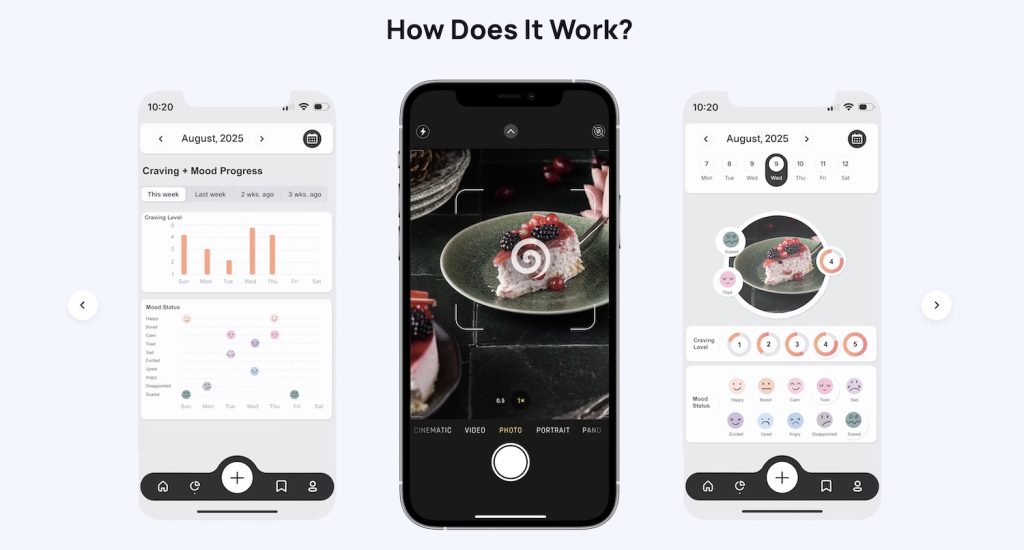
Forget about spreadsheets and complex calculations. The simple act of taking a picture of your meal can genuinely change your relationship with food for the better. It’s not about the numbers; it’s about creating a deeper, more intuitive connection with what you eat.
The real magic of a photo food diary app is the pause it forces you to take. Before that first bite, you have to grab your phone and frame the shot. It might seem small, but this intentional action brings you squarely into the present moment, making you actually see what’s on your plate.
It Builds Mindful Awareness
That brief interruption is your secret weapon against mindless eating. Instead of just chowing down while you’re distracted by your email or the TV, you’re prompted to acknowledge your meal. This tiny moment of mindfulness is the first step toward building a healthier, more sustainable relationship with food.
It’s in that pause that you can ask yourself some simple but important questions:
- Am I actually hungry right now, or am I just bored or stressed?
- Does this meal look like something that will nourish me?
- How do I think I’ll feel after eating this?
This isn’t about judging yourself. It’s about pure observation. After a while, these little check-ins start to feel natural, guiding you toward more conscious food choices. We dive deeper into this practice in our guide on mindful eating techniques.
A visual diary turns eating into a conscious act rather than an automatic reaction. It provides a non-judgmental record that helps you connect the dots between your diet, energy levels, and emotional state.
It Reveals Hidden Patterns and Triggers
Think of your photo gallery as more than just a collection of meals—it’s your personal data. As you scroll back through your log, you’ll start to spot patterns you never would have noticed otherwise.
Maybe you’ll see that you always crave sugary snacks around 3 PM on busy workdays. Or you might realize your portions are consistently larger when you eat out with certain friends. This kind of awareness is what leads to real, lasting change. It’s no wonder the global market for diet and nutrition apps is projected to hit USD 41.57 billion by 2032, as more people seek out tools that offer these kinds of personalized insights.
A photo food diary helps you pinpoint your unique triggers, empowering you to finally address the root cause of your cravings instead of just fighting the symptoms.
Choosing the Right Photo Food Diary App

With so many apps out there, picking the right one can feel overwhelming. The secret isn’t finding the app with the most bells and whistles; it’s finding one that actually fits into your life and supports your unique wellness goals. If an app is clunky or complicated, you’re just not going to use it, and the whole effort will feel like a chore.
The market for these tools has exploded. It’s a massive slice of the wellness industry, with some parts of the food tracking app market projected to hit $150 million. That’s great news because it means more options for us, but it also means we need to be smart about how we choose.
Focus on Features That Actually Help
Don’t get sidetracked by flashy features you’ll never use. The goal here is to find an app that makes mindful eating easier, not one that adds more digital noise to your life. There are a few core functionalities that are pretty much non-negotiable if you want this to work.
Here’s what I always tell people to look for:
- Quick Photo Logging: Can you open the app and snap a picture in a few seconds? If it’s a multi-step process, you’ll ditch it by day three. Speed is everything.
- Mood and Energy Tracking: What we eat is so often tied to how we feel. A good app will have a simple way to log your mood, stress, or energy levels alongside your meals. This is where the real “aha!” moments happen.
- Simple Notes or Tags: You need a spot to jot down quick context. Think things like “ate while working” or “felt sluggish after this.” This is how you start connecting the dots between your food and your life.
- Easy-to-Read Visuals: The app should show you your patterns at a glance without making you dig through complicated charts. It needs to be visual and intuitive.
This image gives a sense of what consistent, successful logging looks like based on real user data from top apps.
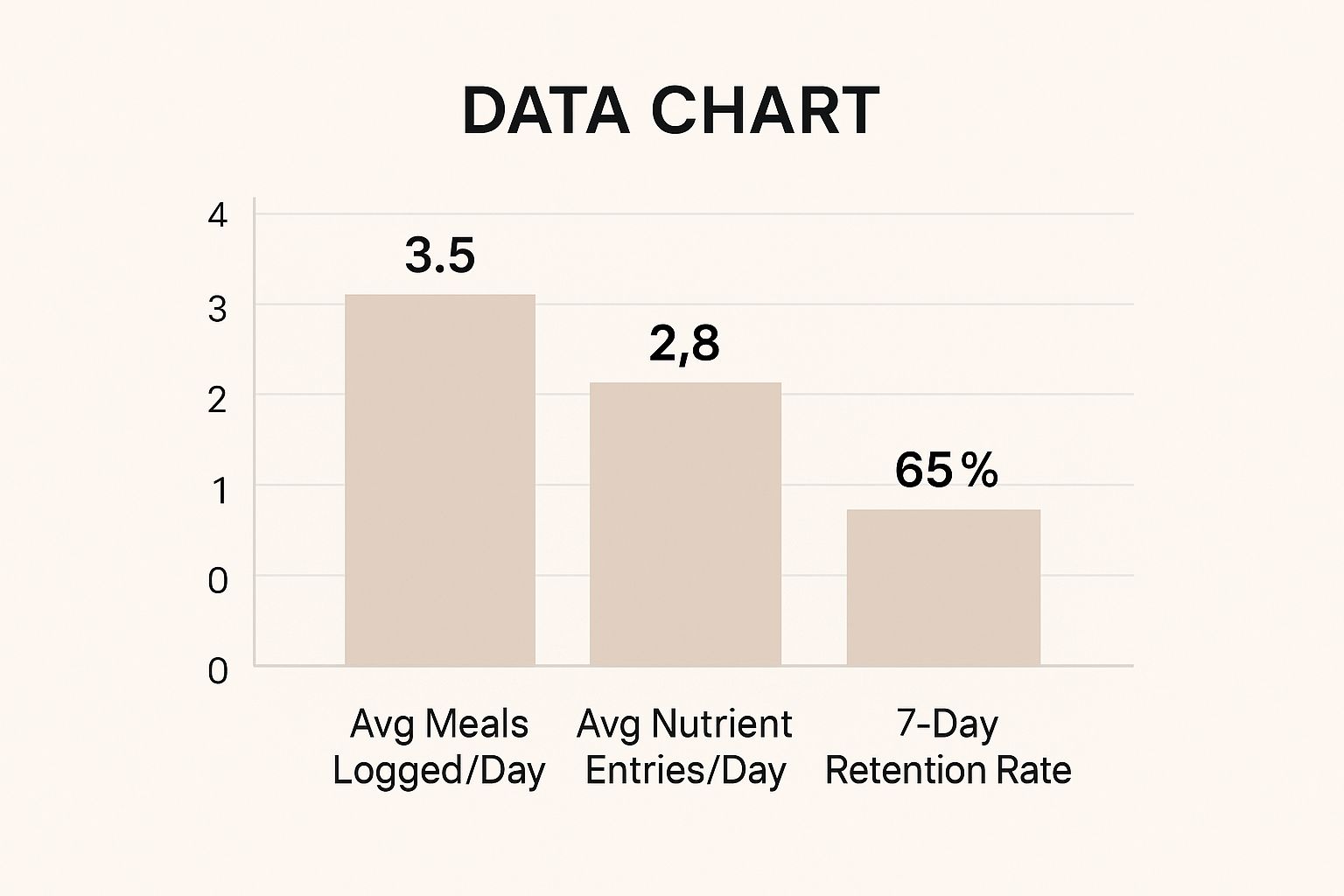
What’s really telling is that 65% 7-day retention rate. It proves that when an app is easy and enjoyable to use, people stick with it. That’s the key to building a habit that lasts.
To help you sift through the options, here’s a breakdown of the key features to compare.
Key Feature Comparison for Photo Food Diary Apps
This side-by-side comparison covers the essential features to help you choose the best app for your personal health and wellness goals.
| Feature | What to Look For | Why It Matters for You |
|---|---|---|
| Photo Logging | One-tap camera access, fast processing, and the ability to upload from your gallery. | The easier it is to snap a picture, the more likely you are to do it consistently. Friction is the enemy of habit formation. |
| Custom Tags & Notes | Flexible, easy-to-add tags (e.g., #stressed, #late-night) and a simple notes field. | This is how you personalize your diary. It transforms a simple food log into a powerful tool for self-discovery, helping you identify triggers for cravings or digestive issues. |
| Mood & Symptom Tracking | A simple scale or icons for logging mood, energy, bloating, or other physical sensations. | Food directly impacts your physical and emotional state. Tracking these connections helps you make smarter choices that support your overall well-being, not just your diet. |
| Data Visualization | A clear visual timeline or gallery view of your entries. Simple charts showing trends. | You need to see your patterns at a glance. A visual overview makes it easy to spot trends like “I tend to reach for sugary snacks in the afternoon” without needing to analyze complex data. |
| Privacy Controls | Clear terms of service, options to keep your diary private, and control over your data. | This is your personal health information. You should feel secure knowing your data is protected and that you have full control over who sees it. |
| Reminders & Nudges | Gentle, customizable notifications to prompt you to log a meal. | Life gets busy, and it’s easy to forget. Smart, non-intrusive reminders can help you build the logging habit, especially in the first few weeks, without feeling annoying. |
Ultimately, the goal is to find an app with the right mix of these features that feels intuitive to you.
Don’t Underestimate Good Design
How an app looks and feels directly impacts whether you’ll open it day after day. A clean, intuitive interface makes tracking feel effortless, almost like a calming little ritual. A chaotic or confusing one makes it feel like homework.
Before you commit, just ask yourself: does this app feel simple or stressful? Can I find what I need without having to think too hard?
The best photo food diary app is the one you forget you’re even using. It should integrate so smoothly into your routine that it becomes an effortless, two-second habit.
My best advice? Test-drive a few. Most decent apps have a free trial or a basic free version. Spend a week with two or three different ones and see which one clicks. Always, always choose simplicity and ease of use over a bloated list of features you’ll never touch.
Your First Week: Laying the Foundation
Jumping into a photo food diary app can feel a little daunting, I get it. But let’s simplify things. Your entire goal for the first week isn’t about perfection; it’s about building one simple, almost effortless habit.
Forget calories, macros, and judging your food choices. Your only job is to snap a quick picture before you eat or drink anything. That morning coffee? Snap. That handful of nuts at 3 PM? Snap. Your full-blown dinner? Snap.
This first phase is purely about creating the muscle memory of reaching for your phone. That’s it. No pressure.
Days 1-3: Just Take the Pictures
For the first three days, I want you to resist the temptation to do anything else. Don’t add notes, don’t analyze, don’t even look back at the photos if you don’t want to. Just take the pictures. This approach strips away all the pressure and makes the new habit stick.
Think of yourself as a detective gathering clues without any judgment. You’re simply observing your life as it is.
Capturing your 10 AM latte or that late-night bowl of ice cream isn’t about making you feel guilty. It’s just about acknowledging what’s happening. This simple act of observation is the real first step toward genuine awareness.
Days 4-7: Start Adding a Little Context
Once snapping photos starts to feel automatic, it’s time to add one small layer of information. Most apps, like Craving Mind, have a spot for notes or tags. Now, when you take a photo, just add a quick note about how you’re feeling.
This doesn’t need to be a long-winded journal entry. A single word or a short phrase is perfect. Your notes might look something like this:
- Breakfast: Feeling rushed
- Lunch: Stressed about a deadline, eating at my desk
- Afternoon Snack: Bored and needed a break
- Dinner: Relaxed and eating with my partner
This tiny change is where the magic starts. Suddenly, your gallery of food photos transforms into a powerful emotional map. You begin to connect what you ate with why you ate it.
The real goal here is to see your food choices not as isolated events, but as responses to your environment, your schedule, and your emotions. This is where the truly valuable insights are hiding.
By the end of your first week, you’ll have a visual story. You won’t just see what you ate; you’ll see the circumstances surrounding every bite. You might spot a pattern, like how stressful workdays almost always lead to a sugary snack. This isn’t a failure—it’s a critical clue.
Remember, this first week is all about observation, not intervention. The patterns you uncover now are the raw materials you’ll use to make mindful, intentional changes later on. So, celebrate your consistency! You’ve successfully built a new habit and gathered a week’s worth of incredibly valuable personal data.
So, you’ve spent a week snapping pictures of your meals. Good work. Your gallery is now more than just a collection of food pics—it’s a goldmine of personal data waiting to be explored. This is where the magic happens, where you turn those images into real, actionable insights.
The goal here isn’t to beat yourself up over what you ate. It’s about getting curious and understanding the why behind your choices. Think of yourself as a friendly detective, looking at the clues you’ve gathered over the last seven days.
Finding Your Personal Rhythms
Start by just scrolling through your photos. Don’t overthink it. Look for the big, obvious patterns first. Your photo food diary app makes this easy since everything is laid out visually.
Your first pass should be all about the “when” and “where.” Are there certain times of day you consistently crave the same thing? Do your weekend meals look totally different from your weekday ones?
Here’s what you might start to notice:
- Time-Based Patterns: That 3 PM slump hits hard, and suddenly you’re reaching for something sugary. Or maybe you realize that skipping breakfast on Tuesdays and Thursdays always leads to a massive, unsatisfying lunch.
- Location-Based Habits: You might see that you only order takeout on the nights you’re stuck late at the office. Perhaps your portions are way bigger when you eat at that one specific restaurant with friends.
- Social Influences: Look at who you’re with. Your photos might show you eating super healthy when you’re on your own, but going all-out with a particular group of friends.
This isn’t about making strict rules. It’s simply about seeing what’s really going on, maybe for the first time. Having the photographic evidence right in front of you makes these connections impossible to ignore and much easier to tackle.
Connecting What You Eat to How You Feel
This is where the real breakthroughs happen. Once you’ve got a handle on the what, when, and where, it’s time to layer in the “why.” This means digging into the notes you took about your mood, energy levels, and how you felt physically.
As you look back, ask yourself some specific questions:
- Energy Levels: On the days you felt totally drained, what did you eat for breakfast or lunch? On the flip side, what meals came before your most focused and productive afternoons?
- Mood Swings: Check out the photos you took right before you noted feeling stressed, anxious, or just plain bored. Is there a go-to comfort food you turn to without even thinking?
- Gut Feelings: Can you connect that feeling of bloating or an upset stomach back to a specific meal or ingredient? Your photo log gives you a clear timeline to help you play detective.
Remember, this is a tool for self-discovery, not self-criticism. Every photo is just a piece of the puzzle, helping you understand your body’s unique signals without the stress of counting every last calorie.
This kind of personal insight is exactly why the meal planning app market, which includes these photo-based trackers, hit a valuation of $2.5 billion in 2023. People are tired of generic advice and want tools that help them build healthier habits based on their own data. If you’re curious, you can learn more about the growth of the meal planning app market and see how this tech is changing the wellness game.
By using your app to link what you eat to how you feel, you’re not just tracking—you’re learning the language of your own body. And that’s the whole point of mindful eating.
Advanced Tips for Long-Term Success
Once you get the hang of snapping pics of your meals, your photo food diary app starts to become something more than just a record of what you ate. This is where it transforms into a powerful ally for heading off cravings, handling tricky social events, and truly leaning into intuitive eating. We’re shifting from just reacting to our habits to actively planning for our own well-being.
Think of your growing gallery of food photos as your own personal dataset. When you review it, you can start to see patterns and prepare for the kinds of situations that usually send your eating habits sideways. We all have them—a friend’s birthday dinner, a killer week at work, or that annual family vacation.
Proactively Plan for High-Stress Scenarios
Instead of just waiting for a craving to ambush you, you can use your past entries to see it coming. Look back through your photo log at similar times. Did that big project deadline last month result in three nights of greasy takeout? Did you come back from that weekend getaway feeling bloated and sluggish?
Now you’ve got intel. With this insight, you can build a simple game plan to handle things differently next time.
- For stressful workdays: If you know that 3 PM slump sends you searching for sugar, plan ahead. Have a satisfying, protein-packed snack ready to go. A quick glance at a photo of a past healthy choice can be a fantastic visual nudge.
- For social events: Pull up the restaurant’s menu online before you even leave the house. You can decide on a nourishing option ahead of time, so you aren’t making a rushed decision when you’re starving and surrounded by distractions.
- For travel: Pack some healthy, portable snacks that you actually like. This simple step keeps you from being at the mercy of whatever you can find at the airport or gas station.
This kind of foresight turns your app from a passive diary into an active partner in your health. It’s all about learning from your past self to set your future self up for a win.
Integrate Your Food Diary with Other Wellness Data
What you eat doesn’t happen in isolation. It’s woven into every other part of your life—how well you sleep, how much you move, and even your daily step count. Many wellness apps can talk to each other, letting you sync up data to create a much richer picture of your health.
When you start layering this information, the connections can be incredibly revealing. You might discover that on days you get less than six hours of sleep, your desire for carbs goes through the roof. Or maybe you’ll notice that a morning workout almost always leads to you making a healthier choice for lunch.
By connecting your food photos to your fitness and sleep data, you move beyond just seeing what you ate to understanding the entire ecosystem of your well-being. This holistic view is the key to sustainable, long-term success.
Cross-referencing this data helps you find the real levers for change. Sometimes, the most effective way to manage a food craving isn’t about the food at all—it’s about getting a good night’s sleep or making time for a walk on your lunch break. For example, if you’re using an app like Craving Mind, you can jot down notes about your workout or sleep quality right alongside your food photos. Over time, those connections become impossible to miss, turning your visual log into a surprisingly sophisticated tool for fine-tuning your entire lifestyle.
Common Questions About Photo Food Diaries
Jumping into any new habit is going to stir up a few questions, and starting a photo food diary is no exception. You’re probably wondering about privacy, what happens if you forget to log a meal, or even just how to stick with it long enough to see results. Let’s clear up some of the most common uncertainties so you can get started with confidence.
Privacy is a big one. Is some stranger looking at your food photos? Not if you’re using a reputable app. Always look for one with a crystal-clear privacy policy that puts you in the driver’s seat of your own data. Your food diary is your personal space, and you should have total control over who gets to see it.
What If I Miss Logging a Meal
Let’s be real: it’s going to happen. You’ll get slammed at work, your phone will die, or you’ll just plain forget to snap a picture before digging in. The important thing is not to let it throw you off your game. One missed entry doesn’t undo all your hard work.
The goal here is consistency, not perfection. If you miss a meal, just log the next one. The real value comes from the overall patterns you uncover, not from a flawless, unbroken record.
Instead of beating yourself up, just make a quick text note in the app later. Something like, “Forgot to log lunch—had a sandwich at my desk” is perfect. This keeps your record mostly complete without adding a layer of stress. Remember, the point is to build awareness, not create a new source of anxiety.
How Do I Stay Motivated
Motivation tends to ebb and flow, especially after the initial excitement of a new routine fades. The trick is to focus on the small wins and the insights you’re discovering along the way. Each week, take just five minutes to scroll back through your photos and look for one new pattern. Maybe you’ll notice a connection between that 3 PM snack and your energy levels. That’s a huge win.
To keep things interesting, try a few of these tricks:
- Set a micro-goal: Zero in on one specific thing, like figuring out your weekend eating habits or identifying what triggers your late-night snacking.
- Find an accountability partner: If you feel comfortable, sharing your journey with a supportive friend can make all the difference.
- Review your progress: Take a peek back at your very first week. You’ll probably be amazed at how much you’ve already learned.
Ultimately, motivation comes from seeing real results. When you start connecting your food choices to feeling better, getting a handle on cravings, and having more energy, the habit of logging your meals becomes its own reward. For more strategies, check out our guide on how to control food cravings for some more practical tips.