 CravingMind AI
Junk food marketing is a massive, multi-billion dollar business. It’s built on a foundation of sophisticated psychological tactics designed to shape our eating habits, often from the moment we’re old enough to watch cartoons. This isn’t just about showing you a juicy burger; it’s a calculated system that taps into our emotions to build powerful, lifelong cravings.
The Hidden Blueprint Behind Your Cravings
Ever see a commercial and suddenly need that specific snack? That’s not a coincidence. It’s the end result of a carefully engineered blueprint designed to mold your habits, preferences, and even your emotional connection to food. The junk food marketing machine is a global force, pouring immense resources into making sure its messages are absolutely everywhere.
This constant bombardment isn’t just trying to make you hungry. It’s about building deep, powerful associations in your mind. A certain brand of soda gets tied to friendship and fun. A fast-food jingle becomes the soundtrack to family time and convenience. These links work below the surface, nudging you to reach for these products not just for a quick bite, but for the feeling they promise.
The Financial Power Imbalance
When you look at the money involved, you see a huge imbalance in our food environment. Junk food brands spend fortunes to get their products in the most visible places, from Super Bowl ad breaks to the top of your Instagram feed. This financial muscle easily drowns out messages about healthier foods, making an apple or a carrot seem boring and unappealing by comparison.
The numbers tell a shocking story. Globally, the vast majority of food and beverage ad money promotes unhealthy products. A whopping 36% of spending goes toward marketing things like candy, chips, and sugary drinks. What about the good stuff? A tiny 2% is spent promoting fruits and vegetables. This lopsided spending highlights how the junk food industry dominates the conversation about what we should eat. You can dig deeper into these food marketing statistics on The Food Foundation website.
This isn’t just advertising; it’s cultural engineering. By linking their products to joy, comfort, and social connection, these campaigns weave junk food into the very fabric of our lives, making it feel like a non-negotiable part of celebrations and daily routines.
Setting the Stage for a Lifetime
Pulling back the curtain on this blueprint is the first step toward navigating a world saturated with these persuasive messages. These campaigns are built to create lifelong customers, and they often start with the most impressionable audience: kids. The goal is to lock in brand loyalty early, ensuring the preferences shaped in childhood become the purchasing habits of adulthood.
By understanding these tactics, we can see how they influence not just what we buy, but also broader cultural norms and public health. It’s about recognizing the psychological triggers and deliberate strategies at play. This knowledge is power—it helps you make more conscious decisions for yourself and your family, turning you from a passive consumer into an informed one.
How Advertisers Hack Your Brain for Profit
Junk food marketing isn’t just about showing you a pretty picture of a burger. It’s a calculated science designed to bypass your rational thought process and tap directly into your brain’s most primitive desires. Advertisers have a sophisticated playbook of psychological tricks to make their products feel like the key to happiness, comfort, and connection.
In short, they’re hacking your brain’s reward system for their own gain.
Building an Emotional Connection
It starts with something called emotional branding. Think about the last big soda commercial you saw. Did it spend much time talking about the taste or ingredients? Probably not. Instead, it likely showed you a vibrant scene of friends laughing, a family celebrating, or a crowd roaring at a concert.
The goal is to forge a link between their product and a powerful, positive feeling. That way, when you’re seeking a moment of joy or connection, you subconsciously reach for their brand. It’s no longer just a drink; it’s a bottle of happiness.
Engineering Cravings You Can Almost Taste
Beyond just feelings, advertisers are masters of triggering a physical, almost involuntary response. This is where sensory marketing comes in.
They use high-definition, slow-motion shots that make food look absolutely irresistible—the impossibly perfect cheese pull on a slice of pizza, the sizzle and steam rising from a burger on the grill, or the crisp, satisfying snap of a chocolate bar. These visuals are crafted to light up the same pleasure centers in your brain that real food does, creating a powerful, immediate craving right then and there.
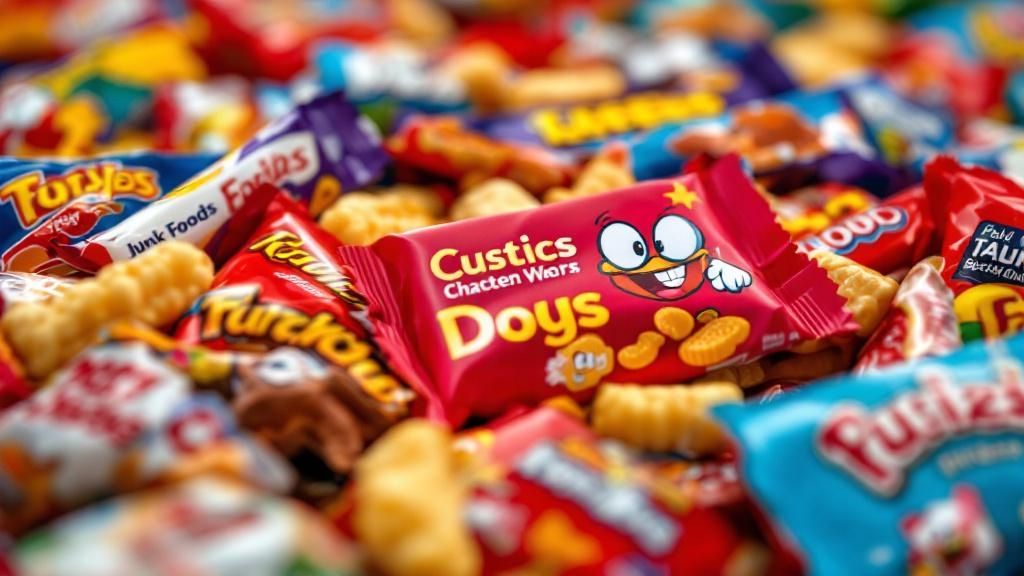
The image below shows just how effective these marketing messages are, especially when it comes to capturing the attention of kids and teens.
As the infographic suggests, the combination of exciting packaging and prominent in-store displays makes unhealthy snacks feel like the most fun and desirable option available.
Creating a False Sense of Urgency
Another classic move is to manufacture urgency. You’ve definitely seen this in action:
- Limited-Time Offers: Phrases like “for a limited time only!” prey on our deep-seated fear of missing out (FOMO). This artificial scarcity makes the item seem more valuable and special, pushing you to buy now without thinking it through.
- Exclusive Flavors: Releasing a new flavor for a short run does the same thing. It drives impulse buys and gets people talking on social media, turning customers into an unpaid marketing team.
These tactics aren’t just about selling one more McRib or Pumpkin Spice Latte. They’re about training your brain to react impulsively to their cues. To really get into the nitty-gritty of this, you can learn more about how junk food hijacks your brain in our other guide.
The table below breaks down some of the most common psychological levers that advertisers pull.
Decoding Psychological Tactics in Food Ads
This table outlines the key psychological triggers used in junk food advertising, the principle behind them, and how they are applied in real campaigns.
| Tactic | Psychological Principle | Campaign Goal | Common Example |
|---|---|---|---|
| Emotional Branding | Classical Conditioning | Associate product with positive emotions (joy, friendship, family) | A soda commercial showing happy friends celebrating together |
| Sensory Marketing | Mirror Neurons | Trigger a physical craving through visual and auditory cues | A slow-motion shot of sizzling bacon or melting cheese |
| Scarcity & Urgency | Fear of Missing Out (FOMO) | Encourage impulse purchases by creating a limited window of opportunity | “Limited-time only” seasonal menu items or flavors |
| Social Proof | Conformity & Belonging | Show that the product is a popular and accepted social choice | An ad depicting a family happily sharing a bucket of fried chicken |
| Celebrity Endorsement | Authority Bias | Transfer the likeability and trust of a famous person to the product | A famous athlete promoting a sugary sports drink |
By understanding these strategies, you can start to see past the curtain and recognize when you’re being manipulated.
The Power of Social Influence
We’re hardwired to be social creatures, and marketers know it. That’s why they rely so heavily on social proof. You’ll almost always see ads featuring groups of happy friends or loving families sharing a meal. The unspoken message is clear: our product is the centerpiece of social connection.
Seeing other people enjoying something makes us believe it’s a good, safe choice. It plays on our desire to fit in and be part of the group, reframing consumption as a shared, positive experience.
This blend of emotional, sensory, and social triggers creates a potent feedback loop. The ad makes you feel good, the food gives your brain a quick hit of pleasure, and your brain remembers that connection for next time.
Ultimately, these psychological hooks are layered together to make junk food feel irresistible. They aren’t selling you a product; they’re selling an emotion, an experience, and a feeling of belonging. The first step toward taking back control is simply recognizing the playbook for what it is.
Targeting the Next Generation of Consumers
Of all the strategies in the junk food marketing playbook, the most calculated is the laser focus on children and teenagers. This isn’t exactly new, but the methods have become incredibly sophisticated and woven into the very fabric of their daily lives. Young minds are the ultimate prize for brands because they are still developing, making them incredibly receptive to marketing. Win them over early, and you’ve likely got a customer for life.
For decades, the battle was fought during Saturday morning cartoons, where sugary cereals and snacks sponsored every show. Now, that battlefield has moved online, becoming a constant, 24/7 digital stream of content. The marketing blitz unfolds on the very platforms where kids spend their time: YouTube, TikTok, and Instagram.
This digital approach is far more personal and much harder to spot. A TV commercial is obvious. But when a favorite YouTuber casually sips a certain soda during a livestream, or a TikTok star creates a dance challenge for a new candy, the line between entertainment and advertisement simply vanishes.
The New Digital Playground
The tactics in this new environment are designed to feel authentic and fun, which makes them dangerously effective. Kids and teens often have no idea they’re being marketed to. This creates a powerful feedback loop where brands become a seamless part of their social world.
Here are a few of the key strategies in play:
- Influencer Partnerships: Brands pay popular creators to feature their products. It doesn’t feel like a stuffy ad; it feels like a genuine recommendation from a cool older sibling, tapping into the trust influencers have built with their followers.
- Branded Mobile Games: These “advergames” are free apps built around a brand’s products or mascots. A child might spend hours playing a game that is, for all intents and purposes, one long interactive commercial for a fast-food chain.
- Viral Challenges and Trends: Companies cook up branded hashtags and challenges on platforms like TikTok, encouraging users to create their own content featuring the product. This user-generated content is pure gold—it’s powerful, free, peer-to-peer marketing.
The goal is to embed these products so deeply into a child’s digital life that they become synonymous with fun, friendship, and entertainment. This strategy neatly bypasses parental oversight and critical thinking, building a direct emotional bond with the brand.
This constant, immersive exposure has a very real impact. A global study across 22 countries found that children see three to four times more ads for unhealthy foods high in fat, salt, or sugar than for healthier options. In some places, the numbers were staggering, with a ratio of 1 unhealthy ad for every 58 healthy ones. You can explore the full findings of this international research on children’s exposure to food advertising.
Why This Strategy Works So Well
A child’s brain isn’t fully wired to understand commercial intent. They see a fun video or an exciting game, not a sophisticated sales pitch. This vulnerability, combined with their incredible influence over what their parents buy—a phenomenon known as “pester power”—makes them the perfect target.
Marketers know that if a child asks for a specific brand of snack enough times, parents will often give in. By capturing the child’s attention, they effectively capture the family’s grocery budget. It’s a critical piece of the puzzle, and one of many environmental and social factors that shape our habits. To learn more about this, you might be interested in our guide on why we crave junk food.
The result is a meticulously crafted digital ecosystem where junk food is normalized, celebrated, and presented not just as a treat, but as an essential part of growing up. This intense, early conditioning builds preferences that are incredibly difficult to shake later in life, ensuring a steady stream of revenue for generations to come.
Following the Money in Junk Food Marketing
To really get a handle on the power of junk food advertising, you have to follow the money. And there’s a lot of it. The psychological tricks that get us craving certain foods aren’t cheap—they’re bankrolled by colossal budgets that make spending in other industries look like pocket change. This isn’t just about running a few commercials; it’s a calculated, strategic investment in market dominance.
The biggest names in food and beverage pour billions into marketing every single year. With that kind of financial firepower, they create an environment where their messages are everywhere. You see them on TV, they pop up in your social media feeds, they sponsor the Super Bowl, and their billboards line the highways. It’s a full-on media blitz designed to make sure their products are the first thing you think of when you’re hungry.
This constant barrage completely drowns out public health messages. A government-funded campaign trying to get people to eat more vegetables just can’t go toe-to-toe with the war chest of a global soda company. The result? Healthier choices start to seem boring, inconvenient, or just not as cool, all because they lack the money to fight for our attention.
The Digital Gold Rush
While TV ads still get a huge slice of the pie, the real action has moved online. Brands are pouring money into the places we live our lives now: social media, streaming platforms, and mobile apps. This shift allows for hyper-targeted campaigns that are way more personal and efficient than a generic TV spot ever could be.
It’s a smart, deliberate move. Digital platforms offer a direct pipeline to very specific groups of people, especially the younger audiences who are so crucial for building lifelong brand loyalty. And it’s working. They’ve created a digital world where it’s often hard to tell where the entertainment ends and the marketing begins.
A recent look at UK fast-food advertising tells the story perfectly. In 2022, the big players spent a whopping £87.5 million on digital ads, which was a 75% jump from the year before. Brands like McDonald’s quadrupled their digital budgets, while KFC and Uber Eats tripled theirs—all while the government was thinking about adding new restrictions. You can learn more about these fast food spending habits and their public health implications.
This is more than just a change in scenery for ads; it’s a complete overhaul of how they function. Digital marketing is interactive, it’s driven by our data, and it never sleeps. That creates a level of influence we’ve never seen before.
How Billions Buy Market Control
Spending this much isn’t just about selling more burgers this week. It’s about shaping the entire food environment for decades to come. The financial muscle of the junk food industry gives it the power to control the conversation around food, convenience, and what it means to be happy.
Here’s how that money translates into real-world power:
- Cultural Saturation: By sponsoring everything from music festivals to your kid’s local sports team, these brands weave themselves into the very fabric of our lives and communities.
- Retail Dominance: Massive marketing budgets buy them the best real estate in the supermarket—the prime shelf space, the end-of-aisle displays, and the impulse-buy spots at the checkout counter. Their products become the easiest, most obvious choice.
- Influencer Armies: A huge chunk of that digital budget goes straight to influencers. This creates a powerful network of peer-to-peer marketing that feels genuine and trustworthy to their millions of followers.
At the end of the day, the money spent marketing junk food does more than sell a product. It buys cultural relevance, makes unhealthy eating feel completely normal, and creates a marketplace where nutritious alternatives can barely get a word in edgewise.
Where Marketing Meets Public Health

The relentless marketing of junk food isn’t just about selling more crisps and fizzy drinks. It’s a full-blown public health issue with consequences that ripple through our entire society. When billions are poured into making foods high in fat, sugar, and salt seem normal—even desirable—it powerfully shapes what we eat, what our kids ask for, and ultimately, our collective health.
This goes way beyond individual willpower. It’s about creating a food environment that’s overwhelmingly stacked against healthy choices. The cumulative effect of seeing these ads day in and day out strains our healthcare systems and can set up entire generations for lifelong health struggles. The connection is so stark that obesity is now recognized as the second biggest preventable cause of cancer, right behind smoking.
The Ripple Effect on Community Health
The most visible consequence of this marketing blitz is the staggering rise in childhood obesity. It’s a crisis that starts early. In the UK, a shocking one in 10 children is already obese by the time they start primary school, and that number climbs as they get older.
This isn’t just about “puppy fat.” Early exposure to a constant stream of junk food ads hardwires preferences for these products, cementing poor dietary habits for life. This paves the way for a future burdened by chronic conditions like type 2 diabetes and heart disease, costing national healthcare systems billions every single year.
The constant bombardment of junk food advertising isn’t just selling snacks; it’s shaping a generation’s health trajectory. When an entire food environment promotes unhealthy choices, it becomes a systemic problem, not just a personal one.
The Thorny Debate Over Regulation
With such clear health implications on the line, the conversation around regulation has become fiercely debated. On one side, public health advocates and concerned parents are calling for much stronger government action to shield vulnerable groups, especially children. On the other, industry bodies and advertising firms argue for economic freedom and place the onus on personal responsibility.
This is the ethical tightrope we’re all walking. Where exactly does a company’s freedom to advertise end, and our collective responsibility to protect public health begin? Striking that balance is one of the most urgent challenges policymakers are wrestling with today.
Around the world, different approaches are being tried and tested, each aiming to turn down the volume on junk food marketing.
- Watershed Bans on TV: A popular idea is to restrict junk food ads during hours kids are most likely to be watching, like before 9 p.m. This creates a protective “watershed” for young, impressionable viewers.
- Outright Online Bans: Let’s face it, kids are online more than they’re watching traditional TV. That’s why some proposals push for a total ban on paid digital ads for these foods, covering everything from social media influencers to in-game promotions.
- Straightforward Labeling: This strategy is all about empowering people right at the supermarket shelf. Mandating clear, “traffic light” labels on the front of packaging helps cut through the marketing fluff so you can see a product’s nutritional value at a glance.
- Bans on Outdoor Ads: Some local authorities are taking matters into their own hands, banning junk food ads on buses, billboards, and public transport to create healthier visual spaces for everyone.
None of these solutions are perfect, and they all face pushback. But they signal a growing recognition that the marketing and advertising junk food industry has an enormous and often detrimental impact on our well-being. As more evidence links ad exposure to poor health, the call for real, meaningful action is only getting louder. It’s forcing us all to ask what kind of food environment we truly want for ourselves and for the generations to come.
Becoming a More Conscious Consumer
Knowing how the billion-dollar junk food marketing machine works is the first big step. But now, it’s time to move from just knowing to actually doing something about it. This isn’t about being perfect or getting overwhelmed; it’s about taking back your power with small, deliberate changes that make you more resilient to the constant barrage of advertising.
The goal is to become someone who actively chooses their food, not someone who is passively sold to. It all starts with building your media literacy—the ability to see and pick apart the very tactics we’ve been talking about. The next time an ad catches your eye, ask yourself: What feeling are they really selling me? What deep-seated need are they trying to hook into?
Cultivating a Healthier Digital Space
Let’s be honest, your social media feed is prime real estate for the marketing and advertising junk food industry. Taking back control of this digital space is one of the most effective things you can do. Think of it as tidying up your mental kitchen.
Start by being more intentional with who you follow. Unfollow or mute accounts that constantly push junk food, even if they’re massive influencers. Then, actively search for and follow creators who post mouth-watering, healthy recipes or talk about mindful eating. This one move starts training the algorithm to work for you, slowly replacing the junk food noise with content that actually supports your goals.
Practical Steps for Building Resilience
Real power comes from having a toolkit of practical strategies. Instead of trying to change everything overnight, focus on adding a few key habits that create a buffer between you and the marketing noise. These tips work together to help you and your family build a more mindful approach to food.
- Talk to Kids About Ads: Frame it simply. Explain that a commercial’s only job is to sell something, not to give good health advice. Help them learn to spot the difference between a fun cartoon and a sales pitch. You can turn commercial breaks into little learning moments.
- Create a Mindful Home Environment: Make the healthy choice the easy choice. Keep a big bowl of fresh fruit on the counter and tuck the chips and cookies away in a cupboard. You’d be surprised how often a beautiful, easy-to-grab apple wins out over a snack you have to dig for.
- Practice the Pause: You see an ad, and suddenly you’re craving fries. Instead of reacting, just stop. Take a deep breath. Ask yourself: “Am I actually hungry, or did that ad just flip a switch in my brain?” That tiny moment of hesitation is where you find the space to make a conscious choice.
Reclaiming control isn’t about declaring war on junk food. It’s about building a peaceful, intentional relationship with food, where your choices are guided by your own well-being, not by a marketing team’s quarterly goals.
By putting these ideas into practice, you’re building up your defenses. You’re learning to navigate the modern food world with more confidence. Every conscious choice you make strengthens your ability to see past the slick packaging and emotional manipulation, freeing you up to choose the foods that truly nourish your body and mind.
Frequently Asked Questions

Let’s tackle some of the most common questions that come up when we talk about junk food marketing. Getting straight to the point on these topics can really clarify how this industry works and how it shapes our decisions every single day.
How Has Digital Media Changed Junk Food Advertising?
Digital media didn’t just change the game; it created a whole new one. Old-school TV ads were like shouting into a crowd. Today’s digital campaigns are like whispering directly into someone’s ear. Brands now use data to zero in on specific demographics—especially teens and young adults—right where they live online, on platforms like TikTok and Instagram.
This approach masterfully blurs the lines between entertainment and advertising.
- Influencer Marketing: A creator someone trusts casually promotes a snack, making it feel less like an ad and more like a friend’s tip.
- Branded Games (Advergames): These aren’t just games; they’re playable commercials that get people to associate a brand with fun.
- Viral Challenges: Brands get millions of users to do their marketing for them by creating shareable trends and videos featuring their products.
The result is a constant, 24/7 loop of exposure that’s nearly impossible for parents to monitor, effectively hooking a new generation on these brands from an early age.
Why Is Regulating Junk Food Marketing So Difficult?
It’s a tangled mess, and for good reason. First, you have powerful industry lobbies that fight tooth and nail against any new rules, often pointing to economic impacts or framing it as a free speech issue. Then there’s the challenge of even defining “junk food” in a way that’s legally airtight—any ambiguity creates a loophole that brands will jump through.
On top of all that, the internet is global. A country can ban a certain type of ad, but that doesn’t stop kids from seeing it on social media if the content originates from somewhere else. This creates a political and jurisdictional nightmare that makes real, effective regulation incredibly slow and difficult to enforce.
The most powerful tactic in the marketer’s playbook is arguably emotional branding. It works by linking a product not just with taste, but with deep, positive emotions like happiness, family connection, and celebration.
What Is The Most Powerful Tactic Marketers Use?
While making food look, sound, and smell irresistible is a big part of it, the single most powerful tool in the arsenal is emotional branding. This is the art of connecting a product to a core human feeling, completely sidestepping our rational minds.
Think about it. A burger and fries isn’t just a meal; it’s positioned as a reward for a job well done or a fun family night out. A can of soda isn’t just a sugary drink; it’s sold as pure joy and excitement.
This conditioning creates an automatic trigger. When you feel a certain way, your brain is already primed to crave a specific brand. This deep-seated connection is what builds lifelong loyalty, and it’s the absolute cornerstone of marketing and advertising junk food.