 CravingMind AI
We’ve all been there. You’re not actually hungry, but you find yourself standing in front of the pantry anyway. Maybe it was a stressful day at work, a fight with your partner, or just a wave of boredom. This is the heart of emotional eating: the urge to eat based on your feelings, not because your body needs fuel.
It’s a powerful and common way many of us cope. We use food—often the sugary, fatty, comforting kind—to distract ourselves, numb difficult emotions, or just find a moment of relief. While it feels good in the short term, this cycle can take a toll on both our physical and mental health.
Why We Connect Feelings and Food

Let’s be real for a second. Reaching for a cookie after a rough day isn’t a moral failing. It’s a deeply human response, wired into our biology and reinforced since childhood. The link between how we feel and what we eat is incredibly strong, and that’s precisely why it can feel so hard to change.
In this guide, we’re going to get to the bottom of emotional triggers and stress eating. We’ll start by unpacking the crucial difference between emotional hunger and actual physical hunger, helping you tune into what’s really driving your cravings.
The Science of Emotional Cravings
If you do this, you’re far from alone. The American Psychological Association found that 38% of adults admitted to overeating or choosing unhealthy foods because of stress. For nearly half of those people, it’s a weekly habit—or even more frequent.
The numbers show that 33% eat for distraction, while 27% use food specifically to cope with stress. If you’re curious, you can learn more about these stress-related eating habits and their impact.
The core idea is simple: We learn that eating can change how we feel. Food can boost positive emotions or soothe negative ones by triggering the release of feel-good brain chemicals like serotonin and dopamine.
Over time, this becomes an almost unconscious reflex. An uncomfortable feeling pops up, and instead of sitting with it, your brain’s well-worn path leads you straight to the kitchen for a quick, temporary fix.
This guide will help you understand:
- The real science behind why stress makes you crave certain foods
- How to tell the difference between “I’m hungry” and “I’m feeling something”
- Practical, real-world strategies to build a healthier, more aware relationship with food
By the time you’re done reading, you’ll have the tools and the confidence to navigate your emotions without letting your pantry be your only source of comfort.
Identifying Your Personal Hunger Cues
If you want to get a handle on emotional eating, you have to start by becoming a detective in your own life. This isn’t about following generic advice; it’s about digging into the specific situations, feelings, or even times of day that make you want to eat when your body isn’t actually hungry.
Think back to the last time you grabbed a snack for comfort. What just happened? Was it right after a tense call with your boss? Or maybe it was during a quiet evening when a wave of loneliness hit? These moments are your personal clues. Recognizing these patterns is the most powerful first step you can take. It’s how you shift from an automatic reaction to a conscious choice.
This image really highlights how common feelings like stress, boredom, and loneliness create a direct line to the pantry.
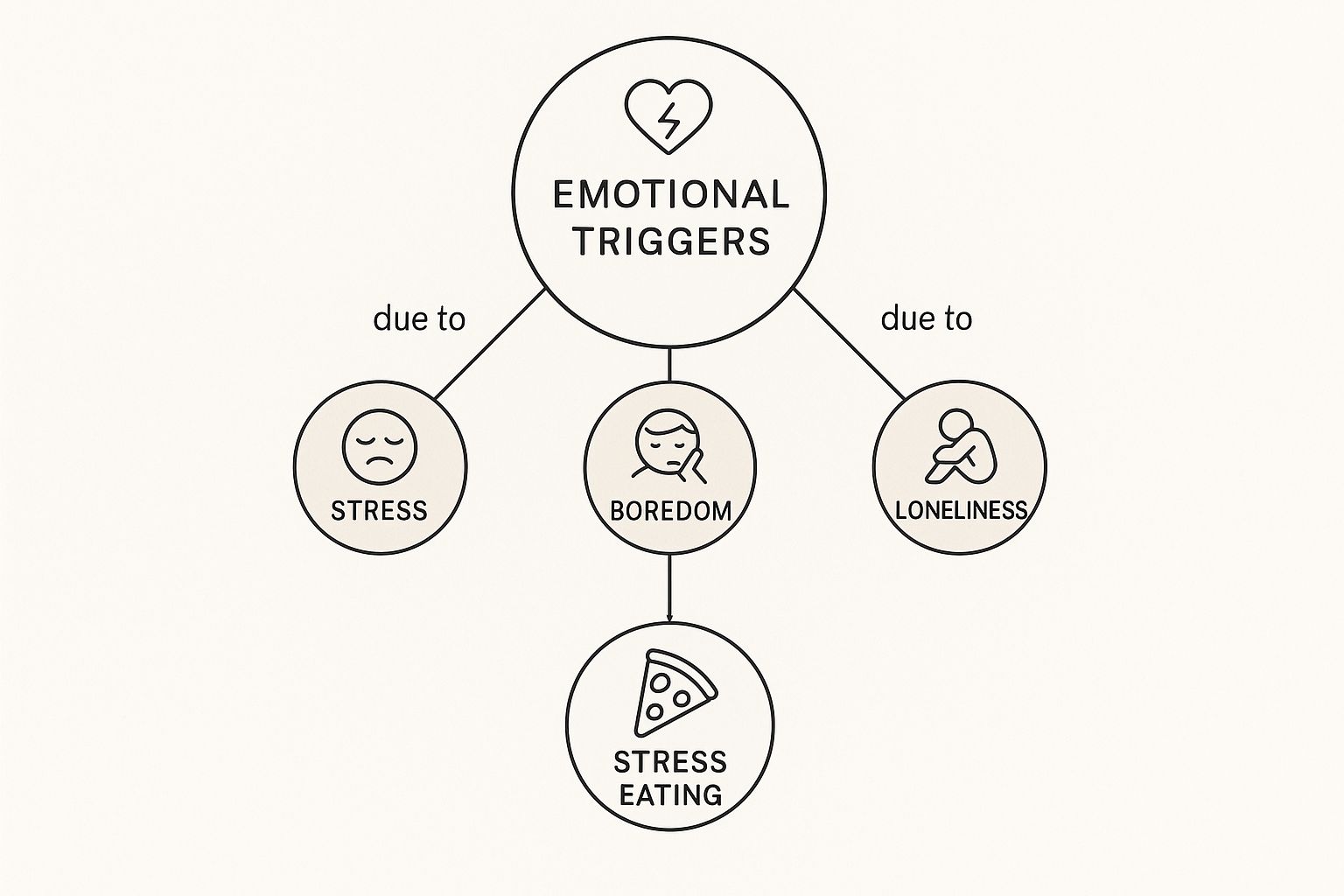
As you can see, these emotions carve out a well-worn path to food, turning eating into a go-to coping strategy instead of what it’s meant to be: a response to your body’s need for fuel.
Differentiating Physical and Emotional Hunger
One of the trickiest parts of this process is learning to tell the difference between real, physical hunger and its emotional twin. In the heat of the moment, they can feel surprisingly similar. Physical hunger is your body’s way of saying it needs energy. Emotional hunger, on the other hand, is your mind’s attempt to quiet an uncomfortable feeling.
The real giveaway is urgency and specificity. Physical hunger tends to build gradually, and just about anything sounds pretty good. Emotional hunger hits you like a ton of bricks and demands a very specific food—usually something sweet, salty, or fatty.
Learning to pause and simply ask, “What am I really feeling right now?” is a game-changing skill. That small moment of reflection can stop the cycle of emotional triggers and stress eating before it even gets started.
Decoding Physical Versus Emotional Hunger Cues
To make it easier to figure out what your body is telling you, it helps to see the cues for each type of hunger side-by-side. Think of this table as your field guide for decoding cravings as they happen.
| Cue Characteristic | Physical Hunger | Emotional Hunger |
|---|---|---|
| Onset | Develops gradually over time. | Appears suddenly and feels urgent. |
| Food Specificity | You’re open to various food options. | You crave a specific comfort food. |
| Sensation | Felt in the stomach (growling, emptiness). | Felt in the head as a craving. |
| Mindfulness | You’re aware of what and how much you eat. | Often leads to mindless, automatic eating. |
| Satisfaction | You feel satisfied and stop when full. | It’s easy to overeat without feeling full. |
| Post-Eating Feeling | You feel neutral or energized. | Often followed by guilt, shame, or regret. |
Getting familiar with these differences gives you the power to identify what’s truly driving your urge to eat. This isn’t about judging yourself; it’s about gathering information. Every craving is a chance to learn more about your inner world and find healthier ways to navigate it, putting you back in control of your choices.
Why Stress Makes You Crave Junk Food

Have you ever had one of those days where a bag of chips or a sleeve of cookies feels less like a snack and more like a survival kit? That magnetic pull toward junk food isn’t just you “giving in.” It’s a deeply rooted biological response, a complex dance between your brain and your hormones.
When stress hits, your body flips the “fight-or-flight” switch. This ancient survival mechanism floods your system with hormones, with cortisol leading the charge. This so-called stress hormone was incredibly useful for our ancestors, giving them the instant energy needed to outrun a predator.
A Modern Misfire of an Ancient Signal
The thing is, your body hasn’t quite caught up to the 21st century. Your brain often can’t tell the difference between a looming deadline and a saber-toothed tiger. The stress response is the same.
Cortisol screams at your brain to find the quickest, most potent fuel source imaginable to handle the perceived crisis. And what fits that description perfectly? Sugar and fat.
Your brain gets tricked into thinking it’s in a life-or-death situation. Cortisol basically bypasses your rational mind, creating an overwhelming urge for high-calorie foods that promise a fast energy boost. This is how the powerful link between stress and specific cravings is forged.
This is exactly why a crisp salad holds zero appeal when you’re feeling completely frazzled. Your body isn’t asking for nutrients; it’s demanding an immediate energy deposit. This is the starting point for the cycle of emotional triggers and stress eating—a biological signal misinterpreting modern problems.
The Brain’s Reward System
So, you eat the doughnut. Instantly, your brain’s reward center lights up like a pinball machine, releasing a hit of dopamine—the “feel-good” neurotransmitter. You get a wave of comfort and relief, which temporarily silences the blaring stress alarms.
Your brain quickly learns this simple but powerful equation: Stress + Junk Food = Relief.
This feedback loop turns a one-time choice into an automatic habit. And you’re not alone in this. A 2022 study found that nearly 64% of people dealing with stress reported turning to emotional eating, a pattern that became even more common during the pandemic. You can see the full research on the stress-eating connection for yourself.
Getting a handle on this biological process is the first, most crucial step. When you realize it’s often your hormones driving the cravings—not actual hunger—you gain the power to choose a different response. To go even deeper, check out our article on the science behind the urge for unhealthy food.
The Hidden Costs Of Emotional Eating

Grabbing a favorite snack when you’re stressed can feel like a life raft in a stormy sea. It offers instant comfort, a quick fix. But that temporary relief is a bit like a high-interest loan—it comes with steep long-term consequences.
This isn’t about shaming or fear-mongering. It’s about pulling back the curtain on what really happens when we repeatedly use food to quiet our emotions. Over time, this pattern builds a kind of debt that impacts both our physical health and our mental well-being, paradoxically making it harder to feel good.
When we consistently reach for high-sugar, high-fat foods in response to emotional triggers and stress eating, we’re creating real, tangible health challenges. It’s not just about the number on the scale; it’s about how your body feels and functions every single day.
The Physical Toll
The connection between emotional eating and our physical health isn’t a mystery; it’s a well-documented reality. Flooding your system with excess calories from foods that offer little nutritional value throws your body’s delicate balance out of whack, leading to a lot more than just weight gain.
Recent analyses of clinical studies have confirmed what many of us know from experience. The research shows a strong link between emotional eating, increased body weight, and the difficulty of losing that weight. Why? Because the foods we crave in those moments are almost always high in sugar and fat. This behavior also ramps up the risk for metabolic problems like diabetes and heart disease down the road. You can discover more about these long-term health findings in this comprehensive review.
This pattern can spin into a frustrating cycle: stress triggers poor food choices, which leads to low energy and health risks, which in turn causes even more stress.
The Emotional Aftermath
The physical side is one thing, but the psychological toll might be the most damaging part of the equation. That fleeting moment of comfort from a pint of ice cream is almost always followed by a tidal wave of much heavier feelings.
This emotional hangover is a familiar cocktail of:
- Guilt: That nagging feeling of regret for “giving in” to the craving, which quickly turns into harsh self-criticism.
- Shame: This goes a step deeper than guilt. It’s the feeling that you are flawed or weak for not having more control.
- Reduced Self-Esteem: When you constantly break the promises you make to yourself, it chips away at your confidence and can send your body image into a nosedive.
This loop of seeking comfort only to be hit with self-blame just strengthens the very feelings you were trying to numb in the first place. Instead of solving the problem, it adds a whole new layer of emotional distress.
Recognizing these hidden costs is a huge step. It’s the motivation we need to stop fighting a losing battle and start building healthier, more effective ways to cope—which is exactly what we’ll dive into next.
Building Your Emotional First-Aid Kit
Understanding why you reach for food when you’re stressed or upset is a huge first step. Now, let’s turn that insight into action by building a practical toolkit of healthier alternatives. Think of it as your emotional first-aid kit—a collection of go-to strategies you can rely on when difficult feelings pop up, instead of defaulting to the pantry.
The idea here isn’t to just grit your teeth and power through cravings. It’s about having a game plan ready before emotional triggers and stress eating even have a chance to take hold. When you prepare these tools in advance, you’re making the healthier choice the easier choice.
In-the-Moment Tactics for Cravings
When an intense craving hits, it feels like an emergency. Your brain is screaming for that quick dopamine rush, and it wants it now. Having a few simple tactics ready can create just enough breathing room to make a conscious decision instead of an automatic one.
These are designed to break the cycle and give the craving time to fade on its own.
The Five-Minute Pause: Before you even think about opening the fridge, set a timer for five minutes. Seriously. Just sit with the feeling without judging it. Give it a name—”Okay, this is stress”—and then try a few deep breaths. This tiny delay is often powerful enough to dial down the craving’s intensity.
Change Your Scenery: Where you are has a massive effect on what you do. If the kitchen is calling your name, get out of there. Step outside for a lungful of fresh air, walk into a different room, or even just stare out a window for a minute. A simple change of environment can be a surprisingly effective mental reset.
The real magic here is creating a “pattern interrupt.” You’re snapping the automatic wire that connects an emotional trigger straight to the act of eating. This gives the rational part of your brain a moment to catch up and weigh in.
Proactive Habits for Building Resilience
The best defense is a good offense, right? The same principle applies to emotional eating. When you build proactive stress management habits into your daily life, you lower your overall emotional “temperature.” This makes you far less likely to get overwhelmed by triggers in the first place.
These aren’t quick fixes, but daily practices that build real, long-term emotional strength.
- Mindful Moments: You don’t need to become a meditation guru. Just take two minutes a day to focus on your breath. This simple exercise trains your brain to notice what’s happening internally, so you can catch those emotional hunger cues as they start to bubble up.
- Prioritize Sleep: Skimping on sleep is a one-way ticket to high cortisol levels. When you’re exhausted, your body’s stress response is on a hair-trigger, and your desire for high-energy junk food goes through the roof. Aiming for 7-9 hours of quality sleep is one of the most powerful things you can do to manage stress eating.
For a deeper dive into these techniques, our complete guide on how to stop emotional eating has plenty of other strategies you can put to work today.
Creating Your Personalized Coping Menu
This is where you make the first-aid kit your own. A “coping menu” is just a list you create of non-food activities that genuinely calm you down, distract you, or offer comfort. The trick is to make this list before you need it, so you aren’t trying to think up alternatives while a craving is yelling in your ear.
Your menu should have a mix of options for different moods and timeframes.
Your Coping Menu Categories
| Category | Activity Examples |
|---|---|
| Soothing Activities (5-10 mins) | Listen to a favorite calming song, sip a cup of herbal tea, do a few gentle stretches. |
| Distracting Activities (15-20 mins) | Call a friend you haven’t talked to in a while, put on an engaging podcast, play a quick game. |
| Engaging Activities (30+ mins) | Go for a walk, work on a hobby like drawing or knitting, get lost in a good book. |
| Physical Release (Anytime) | Do some jumping jacks, dance around to an upbeat song, punch a pillow (it works!). |
Having this menu written down and ready to go gives you something concrete to turn to. When a trigger hits, you don’t have to think—you just pick an item from your list and do it. It’s a simple but powerful way to start responding to your emotions with intention, not just reacting to them.
Answering Your Questions About Stress Eating
Even when you have a solid plan and the right tools, changing your relationship with food can still feel tricky. New questions and unexpected challenges are going to pop up, and that’s a completely normal part of the journey.
Let’s dive into some of the most common hurdles people face when trying to break free from the cycle of emotional triggers and stress eating. My goal here is to give you clear, compassionate answers that build on what you’ve learned and boost your confidence to keep moving forward.
Is It Ever Okay To Eat Emotionally?
Absolutely. Let’s be real—food is tied to everything from celebration and culture to comfort and connection. Enjoying birthday cake with your family or sharing a favorite meal with a friend is one of life’s simple joys. Food is not the enemy here.
The trouble starts when food becomes your primary or only tool for dealing with your feelings. The goal isn’t to be a perfect, rigid robot around food. It’s about building a bigger emotional toolkit, so that eating becomes a conscious choice you make, not a knee-jerk reaction you can’t control.
Mindful indulgence is a healthy part of life—that’s when you truly savor a treat without a side of guilt. What we’re working on is reducing the mindless, automatic eating that stress triggers, putting you back in the driver’s seat.
What If I Still Struggle To Identify My Triggers?
Figuring out your triggers is a bit like learning a new language. It takes time, patience, and a lot of practice, so don’t get frustrated if you can’t immediately pinpoint what sends you running for the pantry.
A simple food-and-mood journal can be a game-changer. Just for one week, jot down what you ate and—this is the important part—how you were feeling right before you ate it.
- Were you putting off a big work project?
- Did you feel a pang of loneliness after scrolling through Instagram?
- Was it just that classic 3 PM energy crash at your desk?
After a while, you’ll start to see clear patterns emerge from the day-to-day noise. If you’re still feeling stuck, talking to a therapist can be incredibly helpful. They can offer a safe, supportive space to dig into deeper emotional patterns that are often tough to see on your own.
How Do I Handle An Overwhelming Craving Right Now?
When a massive craving hits, your gut instinct is probably to fight it with everything you’ve got. But a much better strategy is something called “urge surfing.” Instead of trying to stop the wave, you just notice it, observe it without judging yourself, and trust that it will eventually crest and fade.
Acknowledge the feeling head-on. Say to yourself, “Wow, this is a really intense craving, and that’s okay.” Then, set a 15-minute timer on your phone. For those 15 minutes, pick something from your personalized coping menu—call a friend, put on a specific pump-up song, or just step outside for a breath of fresh air.
More often than not, by the time that timer goes off, the craving’s intensity will have dialed way down. This one small action proves to your brain that you don’t have to act on every urge, which is a seriously empowering feeling.
When Is It Time To Seek Professional Help?
If emotional eating is consistently causing you real distress, affecting your health, or just feels completely out of your control, getting professional support is a smart and powerful next step. It’s not a sign that you’ve failed; it’s a sign of strength.
A therapist who specializes in eating behaviors can help you get to the root of what’s causing your emotional triggers. At the same time, a registered dietitian can give you personalized nutrition strategies and help keep you accountable. Reaching out for expert guidance is a brave and important investment in your long-term health.