 CravingMind AI
Imagine this: you’ve just eaten a filling, nutritious dinner. You’re not physically hungry anymore, yet something inside you whispers seductively: “Cookies. Chips. Ice cream.” Why? Why do we crave foods we know aren’t good for us? Why does broccoli rarely spark the same intense desire as pizza or chocolate?
Unhealthy food cravings are nearly universal, transcending age, culture, and background. Whether it’s salty fries or sugary soda, we’re often drawn to high-calorie, low-nutrient foods—even when we know they’re not the best for our health. This paradox has puzzled scientists, nutritionists, and psychologists for decades.
In this blog post, we’ll explore the science behind our cravings for unhealthy foods, uncovering the biological, psychological, social, and environmental factors that make junk food so irresistible. We’ll also examine how the food industry exploits these cravings and offer some actionable tips to regain control over your diet and your brain.
1. Cravings vs. Hunger: What’s the Difference?

Before diving into why we crave unhealthy foods, it’s crucial to differentiate between cravings and hunger.
- Hunger is a physiological need. When your body lacks fuel, it sends signals like stomach growling or low energy to prompt you to eat.
- Cravings, on the other hand, are psychological. They’re specific and emotionally charged—usually centered around particular foods like pizza, candy, or soda.
You rarely “crave” a cucumber. You might crave chocolate-covered pretzels. Cravings are influenced by your brain chemistry, habits, emotions, and surroundings, and they’re often not tied to any real nutritional need.
2. The Evolutionary Basis for Craving High-Calorie Foods
One of the primary reasons we crave unhealthy food lies deep in our evolutionary history.
A. Scarcity in the Past
For most of human history, food—especially calorie-dense food—was scarce. Our ancestors had to compete for survival, and eating high-fat, high-sugar foods whenever they were available increased the chances of living another day. This led our brains to reward these foods with feel-good chemicals like dopamine.
B. The Brain’s Love for Sugar and Fat
Sugar and fat are extremely efficient sources of energy. The brain, which uses about 20% of our daily energy, especially values quick-fix energy like glucose. When we eat sugary or fatty foods, our brains release a flood of dopamine, reinforcing the behavior and creating a cycle of desire.
In today’s world of abundance, we still carry these ancient neural circuits. The problem? These evolutionary traits haven’t adapted to modern food environments full of ultra-processed snacks.
3. The Role of Dopamine and the Reward System
Dopamine is a neurotransmitter commonly associated with pleasure and reward. But its role is more complex—it motivates us to seek out behaviors that may bring rewards.
A. How Junk Food Hijacks Your Brain
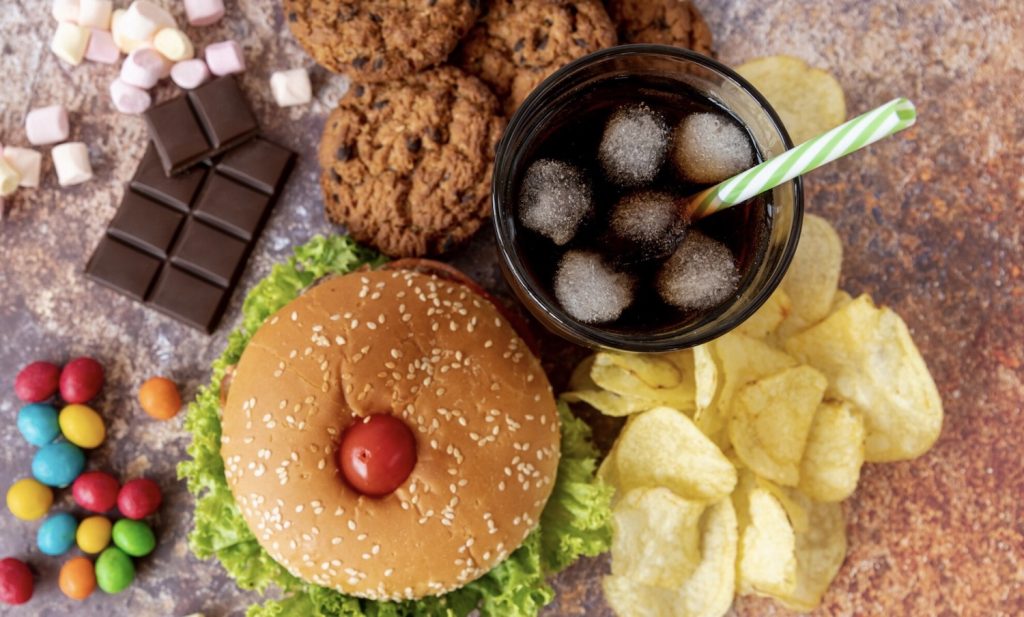
Unhealthy foods, especially those high in sugar, salt, and fat, create a powerful dopamine response. Each time you eat a chocolate bar or gulp down soda, your brain links that sensory pleasure with the action of eating the food. Over time, it builds strong neural pathways that scream: “Eat this again!”
B. Tolerance and Overstimulation
Just like with drugs, repeated exposure to high-reward foods can lead to dopamine tolerance. This means you need more of the food to get the same level of satisfaction. The more we indulge, the less satisfying it becomes—yet we keep going back, trying to reclaim the original high.
4. Processed Foods Are Designed to Be Addictive
Food companies know how to exploit your brain. Many modern processed foods are engineered to be hyper-palatable and nearly impossible to resist.
A. The “Bliss Point”
Food scientists use the term bliss point to describe the perfect combination of sugar, salt, and fat that maximizes pleasure. It’s the reason chips, ice cream, and fast food taste “just right”—not too salty, not too sweet, but perfectly addictive.
B. Texture, Flavor, and Crunch
Beyond taste, texture plays a role. Foods that are crunchy, creamy, or melt in your mouth are more satisfying and memorable. Think about the satisfying crunch of a Dorito or the creamy melt of chocolate on your tongue.
C. Fast Rewards
Many junk foods require little to no chewing and deliver an immediate hit of pleasure. This instant gratification strengthens the craving loop.
5. Emotional Triggers and Stress Eating
Cravings are often tied to emotions. Stress, sadness, boredom, or even happiness can trigger a desire for comfort food.
A. Cortisol and Stress
When you’re stressed, your body releases cortisol, which increases appetite—particularly for high-fat, high-sugar foods. Your body is preparing for a fight-or-flight situation, and it wants quick energy.
B. Emotional Associations
We also form emotional attachments to foods. Maybe mac and cheese reminds you of childhood. Maybe ice cream was a treat after good report cards. These associations become comfort rituals that we turn to in emotional moments.
6. Habit and Conditioning
Much of our craving behavior is habitual.
- We snack while watching TV.
- We reward ourselves with a treat after a long day.
- We celebrate with cake, commiserate with cookies, and fuel late nights with caffeine and sugar.
Over time, these behaviors become deeply conditioned. Even when we’re not physically hungry, these cues—TV, emotions, routines—can trigger cravings.
7. Environmental and Social Influences
You don’t crave in a vacuum. Your environment and social circle influence your eating behavior more than you think.
A. Marketing and Advertising
Unhealthy food is aggressively marketed. From billboards to social media to catchy jingles, junk food companies spend billions to associate their products with happiness, energy, youth, and fun.
B. Availability and Convenience
Unhealthy options are everywhere. Vending machines, gas stations, food delivery apps—they make high-calorie foods just a click away. Fresh, whole foods often require planning and prep, making them less convenient.
C. Social Norms and Peer Pressure
We bond over food. Office doughnuts, movie popcorn, birthday cake—they’re not just food, they’re shared rituals. It can be tough to say no when everyone else is indulging.
8. Nutritional Deficiencies and Biological Signals
Sometimes cravings stem from actual biological needs—but they’re misdirected.
For example:
- A magnesium deficiency might manifest as a chocolate craving.
- Low sodium levels could make you crave salty chips.
Unfortunately, our bodies don’t always send clear signals. They nudge us toward familiar sources—like processed snacks—rather than healthier options.
9. Sleep, Hormones, and Willpower
Sleep deprivation can fuel cravings in powerful ways.
A. Ghrelin and Leptin
These two hormones regulate hunger and satiety:
- Ghrelin increases appetite.
- Leptin signals fullness.
When you don’t sleep enough, ghrelin increases and leptin decreases—making you hungrier and less satisfied after eating. Plus, sleep deprivation reduces your impulse control, making it harder to resist cravings.
10. The Role of Gut Microbiome
Your gut bacteria can influence your cravings. Certain microbes thrive on sugar and simple carbs, and when they flourish, they send signals to your brain to feed them more of what they want.
An unhealthy microbiome can lead to a vicious cycle of cravings, poor eating, and inflammation.
11. Cultural and Childhood Influences
The foods we’re exposed to in childhood shape our preferences and cravings.
- If you grew up with sugary cereals, soda, and fast food, your brain has built strong associations with those flavors.
- Family habits—like rewarding with dessert or using food as punishment—can shape your lifelong relationship with eating.
Culture also plays a role. In some societies, sweet or fried foods are central to holidays and celebrations. These traditions reinforce cravings with emotional meaning.
12. Why “Just Use Willpower” Doesn’t Work
Many people blame themselves for lacking willpower. But cravings aren’t a character flaw—they’re a neurobiological and psychological response to your environment.
Trying to “white knuckle” your way through cravings rarely works long-term because:
- The brain’s reward system is too powerful.
- Willpower is a finite resource that depletes with stress and fatigue.
- You’re fighting millions of dollars of food industry marketing and manipulation.
Instead of relying on willpower, the key is environmental design, habit reshaping, and emotional awareness.
13. Breaking the Craving Cycle: What You Can Do
A. Increase Awareness
The first step is noticing your cravings:
- When do they occur?
- What emotions or triggers are involved?
- Are you actually hungry?
Track your cravings in a journal or app. Awareness gives you power.
B. Crowd Out, Don’t Cut Out
Instead of forbidding unhealthy foods (which can backfire), focus on adding:
- More whole foods
- Healthy fats
- Fiber-rich meals
- High-protein snacks
When your body is well-nourished, cravings naturally decrease.
C. Change Your Environment
Remove temptation:
- Keep junk food out of the house.
- Prepare healthy snacks in advance.
- Don’t shop hungry.
Make healthy choices easier to access and more convenient.
D. Manage Stress
Learn to self-soothe without food:
- Exercise
- Journaling
- Deep breathing
- Listening to music
- Calling a friend
When stress goes down, so do cortisol and cravings.
E. Improve Sleep
Aim for 7–9 hours of quality sleep. A well-rested brain is better equipped to regulate appetite and make thoughtful choices.
F. Heal Your Gut
Eat more fermented foods, prebiotics, and fiber to support a balanced microbiome.
14. Final Thoughts: Rewiring Your Brain for Better Food Choices
Cravings for unhealthy food are normal—but they’re not destiny.
Your brain was designed to survive in a world of scarcity, not to navigate modern food courts. But that doesn’t mean you’re powerless. By understanding the biological and psychological roots of your cravings, you can begin to make small, consistent changes.
Instead of judging yourself for wanting that candy bar, get curious. Ask what’s driving the craving—hunger, emotion, habit, stress? Then, respond with compassion and intention.
The more you practice awareness and shift your environment, the more your brain will adapt. Cravings don’t have to control you—you can retrain your habits, one bite at a time.
Would you like this post formatted for SEO or turned into a downloadable PDF?