 CravingMind AI
Our craving for high-calorie food isn’t a modern failing; it’s a deep-seated survival instinct passed down through generations. Our brains are hardwired to celebrate finding energy-dense foods like fats and sugars because, for most of human history, they were rare and vital for survival. This ancient programming still drives our desires today, making the processed foods of the modern world almost impossible to resist.
Why Your Brain Still Thinks It’s a Caveman
Ever wondered why a crisp, fresh salad just doesn’t spark the same gut-level desire as a slice of pizza or a warm donut? The answer has nothing to do with willpower. It’s all about your brain’s ancient survival software, which is still running the show.
For the vast majority of human history, our ancestors lived in a world where the next meal was never guaranteed. Calories were scarce and hard to come by, so stumbling upon a source of high-energy food was like striking gold.
This is where the brain’s reward system kicks in. Back around 10,000 years ago, surviving meant getting really good at finding and storing energy. Our brains evolved a powerful, non-negotiable preference for foods loaded with fats and sugars, rewarding us with a rush of pleasure that screamed, “This is good! Find more!” You can find some great insights on this from the American Heart Association.
Your Brain’s Outdated Operating System
A great way to think about it is that your brain is like a smartphone running on a really old operating system. That software was perfectly designed for its original environment, where its core functions were to:
- Seek out high-energy foods: It laser-focused on fats and sugars because they delivered the biggest bang for the buck—fuel for hunting, staying warm, and simply surviving.
- Encourage eating—a lot: When a calorie-dense food source appeared, the brain’s directive was clear: eat as much as you possibly can. Store that energy for the inevitable lean times ahead.
- Release feel-good chemicals: Eating these foods flooded the brain with dopamine, the neurotransmitter of pleasure and reinforcement. It essentially tagged the experience, telling the brain, “Remember this! Do it again!”
This ancient wiring wasn’t a flaw; it was a brilliant survival mechanism. It ensured our ancestors loaded up on life-saving calories whenever they had the chance.
The problem, of course, is that our software was never updated for the world we live in now. We’ve gone from scarcity to an environment of overwhelming food abundance, where high-calorie options are cheap, convenient, and available 24/7. This fundamental clash between our Stone Age brain and our modern food landscape is the very source of our most intense cravings.
Why We’re Hardwired to Love Fats and Sugars
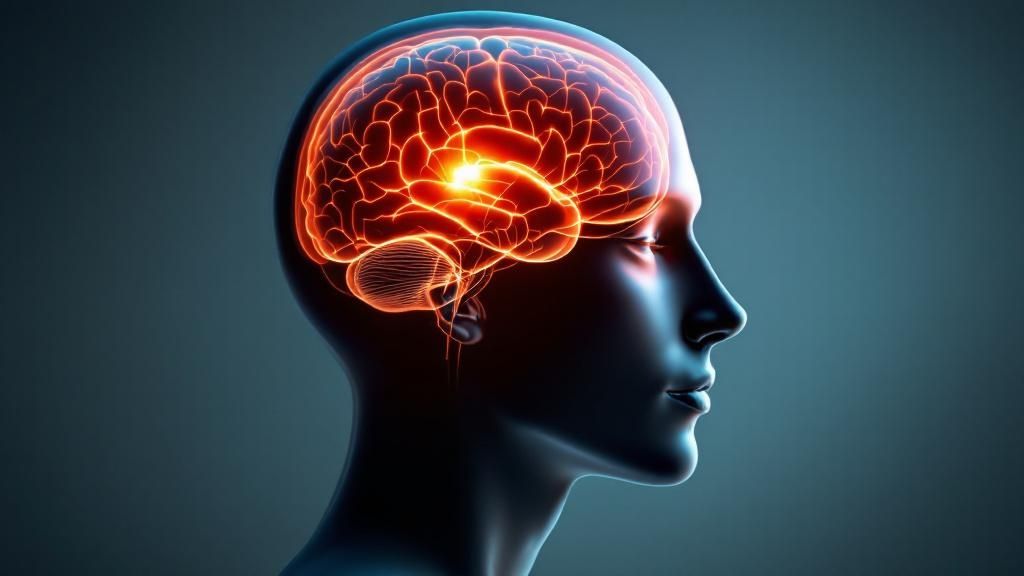
Long before we had pantries, refrigerators, and takeout menus, our ancestors lived in a world where the next meal was never a guarantee. It was an environment of feast or famine, and in that world, calories were currency. This reality forged a deep, biological preference for fats and sugars—a survival instinct that’s still running our brains today.
Think of it this way: for early humans, fats were the ultimate energy reserve. They weren’t a dietary villain; they were life insurance.
Gram for gram, fat packs more than twice the energy of protein or carbs. For someone facing a brutal winter or a long journey with no food in sight, storing body fat was the single best way to survive. It was a dense, slow-burning fuel that could keep them going when their surroundings offered nothing.
The Brain’s Built-in Calorie Counter
This powerful drive for energy efficiency has a name: optimal foraging theory. It’s a fancy term for a simple, brilliant concept. Our brains evolved to get the most bang for our buck—the maximum amount of energy for the minimum amount of effort.
Why would an ancestor waste precious time and energy gathering low-calorie roots when a single, fatty animal or a cluster of nuts could provide fuel for days? This instinct made them incredibly resourceful. So, when you find yourself craving a cheeseburger or a slice of pizza, you’re not being weak. Your brain is just running an ancient program, telling you to find the most concentrated energy source it can.
The Bottom Line: Our desire for high-calorie food isn’t a modern moral failing. It’s a biological inheritance, an old survival script that prioritizes pure energy to protect us from starvation.
Sweetness: Nature’s “Safe to Eat” Sign
While fats offered long-term fuel, sugar provided something just as crucial: a quick, life-saving burst of energy. In the wild, a sweet taste was a reliable signal for two very important things: energy and safety.
This innate “sweet tooth” was a fantastic evolutionary shortcut. It steered our ancestors toward ripe, calorie-dense fruits and away from things that were bitter, unripe, or even poisonous.
- A Shot of Quick Energy: The simple sugars in fruit delivered an immediate glucose hit, fueling muscles and brains for a hunt or a quick escape from danger.
- A Reliable Safety Signal: Unlike bitterness, which often indicated toxins, sweetness almost always meant a food was safe to eat and loaded with vital nutrients.
This ancient wiring is precisely why sugar is so irresistible. It’s a deep, primal urge for something that our bodies recognize as both fuel and safety. You can explore more about the science behind the urge for unhealthy foods to understand how these drives play out now. When you combine fat and sugar, you get the ultimate prize—a powerful signal of peak energy and safety that our brains are still wired to chase down.
Why Some People Gain Weight More Easily: The Thrifty Gene Theory
Beyond our basic evolutionary wiring for fats and sugars, there’s another crucial layer to this story that explains why some of us seem to gain weight just by looking at a croissant. It’s a fascinating concept called the “thrifty gene” hypothesis, and it’s a perfect example of a brilliant survival strategy gone wrong in the modern world.
Think of these genes as your body’s master energy accountant. For our ancestors living through feast-and-famine cycles, this genetic trait was a lifesaver. It gave the body a simple, powerful instruction: when food is available, store every spare calorie as fat. Don’t waste a thing. This built up a crucial energy reserve for the lean times that were always just around the corner.
This survival instinct, hardwired into our DNA for scarcity, is now constantly clashing with our modern environment of endless, readily available food.
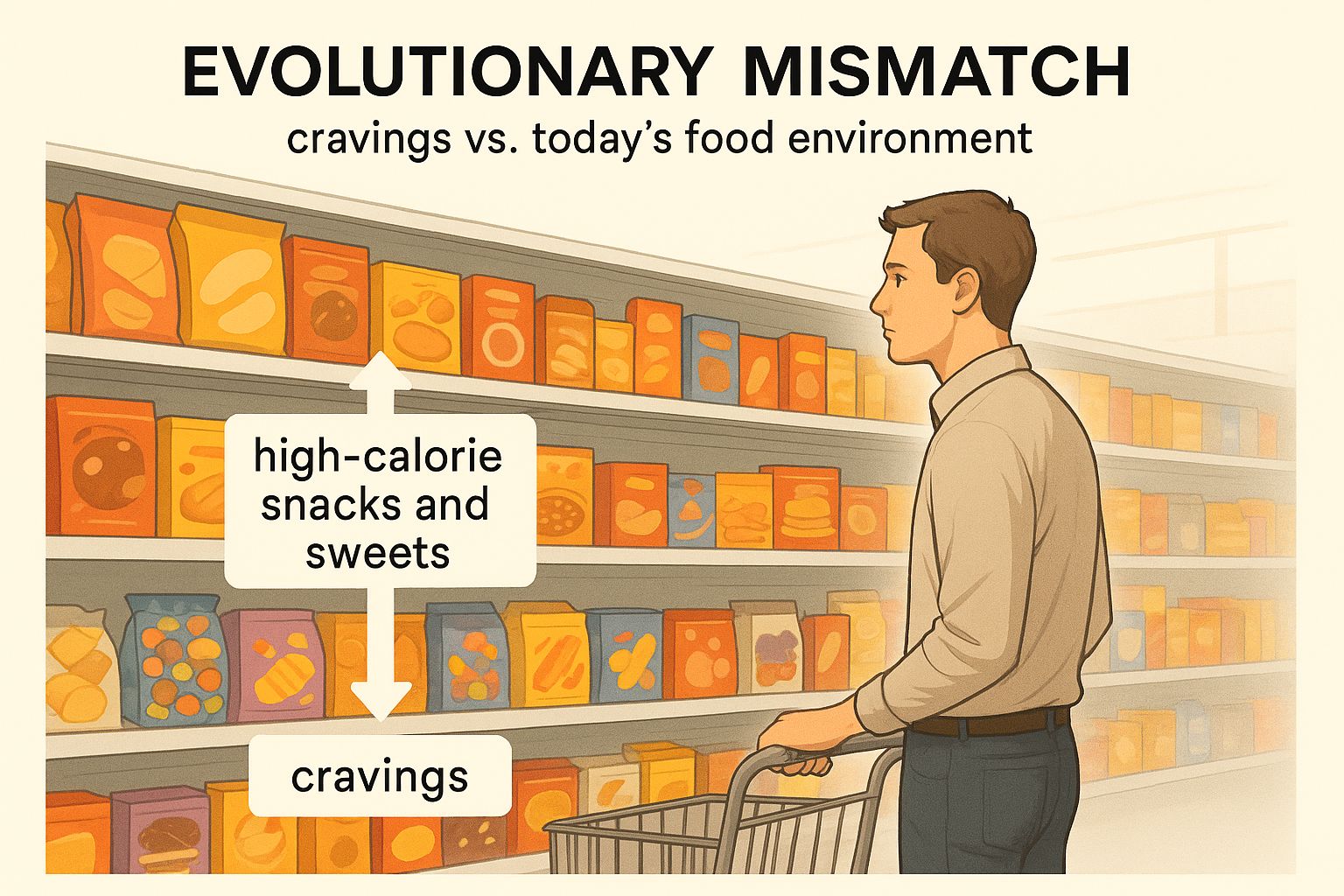
The image above captures this mismatch perfectly, showing how our ancient brain programming is simply overwhelmed by the 24/7 availability of calorie-packed foods.
A Survival Trait That Backfired
For thousands of generations, having these thrifty genes was a massive evolutionary advantage. People who could efficiently store fat were far more likely to survive famines, have the energy to hunt or gather, and successfully raise children. Naturally, these life-saving genes spread widely through the human population.
In fact, it’s estimated that these genes are present in about 85% of modern humans. They were our ancestors’ biological insurance policy against starvation. Individuals with this genetic makeup were champs at converting excess calories into body fat, giving them a readily available energy source when food was scarce. As you can learn in more detail from Harvard Health, our bodies are naturally predisposed to store fat as a result.
Fast forward to today, and the situation has completely flipped. We no longer live in a world of scarcity. We live in a world of overwhelming abundance, and for those carrying thrifty genes, that’s a real problem.
In a world of drive-thrus and delivery apps, a genetic program designed to prevent starvation now actively promotes weight gain and metabolic stress.
The following table breaks down this “evolutionary mismatch” to show how yesterday’s advantage became today’s challenge.
Evolutionary Trait Mismatch in Modern Times
| Trait | Ancestral Environment Advantage | Modern Environment Disadvantage |
|---|---|---|
| Efficient Fat Storage | Stored energy to survive famine and food scarcity. | Leads to rapid weight gain and obesity when calories are abundant. |
| Sugar & Fat Cravings | Drove consumption of rare, high-energy foods for survival. | Encourages overconsumption of processed foods, leading to chronic diseases. |
| Low Energy Expenditure | Conserved precious calories during periods of rest or low activity. | Contributes to a sedentary lifestyle and makes weight management more difficult. |
This clash between our ancient biology and modern lifestyle is at the heart of many contemporary health issues.
This is precisely why “just having more willpower” often feels like an impossible fight against your own body. Your body isn’t broken when it stores fat; it’s just running an ancient survival program that served it well for millennia. Understanding this isn’t an excuse, but it’s a critical perspective. It shifts the focus from self-blame to finding smart strategies for navigating an old-school genetic inheritance in a brand-new world.
The Brain Science Behind Wanting Versus Needing
Have you ever finished a huge, satisfying meal, felt completely stuffed, and then found yourself eyeing the dessert menu with genuine interest? It’s a classic experience that perfectly illustrates a fascinating quirk in our brain’s wiring: the chasm between biological hunger (needing food) and psychological desire (wanting it).
This split isn’t an accident. It’s a direct throwback to our evolutionary past, where survival depended on seizing any chance to load up on energy-dense foods, whether we were hungry at that moment or not. Because of this, our brains evolved two distinct systems for eating. One system acts like a fuel gauge, monitoring our body’s real-time energy needs. The other is a powerful, pleasure-seeking engine that’s always on the hunt for a reward.
Your Brain’s Dedicated Seeking System
This “wanting” system isn’t just some vague feeling—it’s driven by specific, hardwired neural circuits. Scientists have pinpointed clusters of neurons deep in the brainstem that function as a dedicated seeking system for high-calorie, rewarding foods. Critically, this system operates completely independently of how full your stomach is.
When these specialized neurons fire up, they unleash a potent drive for pleasure that has nothing to do with hunger. This is precisely why the mere sight or smell of a warm cookie can trigger an intense urge to eat, even when you don’t need a single calorie.
Essentially, your brain has a built-in alarm that screams, “That looks delicious and packed with energy—grab it now, just in case!” This is the real reason you can feel full from dinner yet somehow have a separate “dessert stomach.” The craving for that brownie isn’t coming from your gut; it’s being broadcast by an ancient, reward-seeking circuit in your brain.
From Survival Instinct to Modern Challenge
This neurological setup was a brilliant survival strategy for our ancestors. Stumbling upon a rare patch of sweet berries or a fatty animal source was a massive energy win. The brain made absolutely sure we wouldn’t just walk past such a valuable opportunity.
Remarkable studies have brought this powerful drive to light. In one experiment with mice, researchers found that activating these specific neurons sent the animals on a mission to find and devour high-calorie foods like chocolate. This happened even when healthier options were right there and the mice weren’t hungry at all. You can read more about these fascinating food-seeking neurons and their impact on cravings. Humans have similar neurons, which tells us this is a deeply conserved survival mechanism.
Understanding this helps reframe what a craving really is. It’s not a failure of willpower; it’s a biological echo from a time when our survival depended on it. This fundamental dynamic of wanting versus needing is core to understanding the brain’s reward system and its powerful response to sugar, which lights up our ancient wiring like a jackpot.
It’s Not a Flaw, It’s a Feature: Working With Your Ancient Brain
So, we’ve established that your brain is hardwired to seek out calorie-dense foods. Knowing this is one thing, but actually navigating a modern world overflowing with them is a whole different ballgame.
The secret isn’t to declare war on your own biology. Trying to crush ancient survival instincts with sheer willpower is a recipe for frustration and, eventually, failure. Instead, the trick is to learn how to work with your programming, not against it. By making a few clever tweaks to your environment and your mindset, you can gently guide those powerful instincts toward healthier choices.
Think of it this way: instead of feeling guilty when a craving for donuts hits, you can see it for what it is—an echo of a survival mechanism that once kept your ancestors alive. Then, you can respond with the wisdom of the 21st century.
Remodel Your Food Landscape
One of the most effective things you can do is apply a modern spin on something called optimal foraging theory. At its core, this theory says that your brain is lazy—it wants the most reward (calories) for the least amount of effort. You can totally use this to your advantage.
The goal is to make healthy eating the path of least resistance.
- Put the Good Stuff Front and Center: A bowl of shiny apples on the counter is far more likely to be grabbed than one hidden in a crisper drawer. Keep pre-cut veggies and hummus right at eye level in the fridge.
- Add a Little Friction: For the less-healthy stuff, do the opposite. Tuck those cookies away in an opaque container on a high shelf. Just that tiny bit of extra effort—getting a stool, opening the container—can be enough to make your brain say, “Eh, never mind.”
- Be Your Own Personal Chef: Cook a big batch of quinoa or roast a tray of vegetables over the weekend. Portion out healthy snacks into grab-and-go bags. When a craving strikes, having a satisfying, healthy option ready to go is a game-changer.
By curating your kitchen this way, you’re not fighting your brain. You’re simply making it ridiculously easy for it to make the choice that benefits your modern body.
Understanding your evolutionary programming empowers you to make conscious choices that honor your biology while supporting your long-term health and well-being.
Make Smart Swaps, Not Sacrifices
Cravings don’t have to be a zero-sum game. The “all-or-nothing” approach of complete deprivation often backfires, making you want the forbidden food even more. A much smarter strategy is to find nutrient-dense alternatives that scratch the same itch.
Think of it as giving your brain a strategic upgrade.
Craving something salty and crunchy? Instead of potato chips, try some air-popped popcorn with a little olive oil and sea salt, or maybe some roasted chickpeas. Need a sweet fix? A square of rich, dark chocolate or a bowl of Greek yogurt with fresh berries can be surprisingly satisfying. These swaps deliver the fat, sweetness, or texture your brain is screaming for, but they also pack in fiber, protein, and valuable nutrients.
Become a Mindful Eater
Finally, one of the most powerful tools in your arsenal is simple awareness. Cravings often operate on autopilot, triggered by a TV commercial, a stressful email, or just plain boredom—not actual hunger. This is where mindful eating comes in. It introduces a critical pause between the urge and your reaction.
Before you reach for that snack, just stop. Take a breath. Ask yourself, “What’s really going on here? Am I physically hungry, or am I trying to soothe another feeling?”
That moment of reflection is everything. It separates a true need for fuel from a brain-driven desire for a quick dopamine hit. It’s in that small gap of time that you take back control and make a conscious choice.
Shifting Your Mindset About Food Cravings
Once you understand the deep history written into our DNA, it becomes crystal clear: craving a donut isn’t a personal failure. It’s a biological echo, a leftover piece of an ancient survival script that kept our ancestors alive through famine and uncertainty. Grasping this simple truth is the first real step toward changing your relationship with food for good.
Instead of waging a war against your body, filled with frustration and guilt, you can start to approach cravings with a sense of informed curiosity. Think about it—harsh, restrictive diets often just crank up the volume on those ancient urges, trapping you in a miserable cycle of craving, restricting, and then giving in. A much better way forward is to work with your body, not against it.
The most important thing to remember is this: your cravings are not a sign of weakness. They are a signal from a brain that is simply running its original, time-tested programming.
When you truly accept the evolutionary reason you crave high-calorie foods, you take back the power to choose. You can finally start to tell the difference between true, stomach-rumbling hunger and a brain simply clamoring for a quick and easy energy hit.
From Battleground to Partnership
This change in perspective opens the door to a much more balanced and sustainable approach. It’s about respecting your biology while still making choices that serve your modern health goals. You can learn to navigate today’s world of endless food options by using mindfulness and smart strategies, effectively guiding your body’s ancient instincts.
Ultimately, this knowledge transforms what felt like an internal battle into a partnership. You start to listen to your body’s signals with compassion, not criticism, which empowers you to build a healthier and more peaceful relationship with eating for the rest of your life.
Digging Deeper: Your Food Craving Questions, Answered
Even after connecting the dots between our modern kitchens and our ancient past, some specific questions usually pop up. Let’s tackle some of the most common ones to bring these ideas into sharper focus.
Can We Just Turn Off These Ancient Cravings?
If only it were that simple! The short answer is no—you can’t just flip a switch on a survival instinct that’s been baked into our DNA for millions of years. The drive to seek out energy-dense food is a core part of our biological operating system.
But that doesn’t mean you’re just along for the ride. The real goal isn’t to silence the craving, but to change how you respond to it. Once you start to understand your personal triggers—is it stress from work? The habit of reaching for a cookie at 3 PM? The smell from a bakery you walk past?—you can start building new patterns. It’s less about fighting a battle and more like learning to dance with a very old, very persistent partner.
The secret isn’t suppression; it’s awareness. When you can see a craving for what it truly is—an echo from our evolutionary past—you gain the power to consciously choose your next move, rather than just reacting on autopilot.
Why Does Stress Send Me Straight to the “Comfort Foods”?
When you’re feeling stressed, your body goes into high alert and releases a flood of cortisol. This is the classic “fight-or-flight” hormone, and one of its main jobs is to get your body ready for action by demanding a quick shot of energy.
Here’s the fascinating part: your brain doesn’t really know the difference between the stress of a tight deadline and the stress of, say, running from a saber-toothed tiger. The signal is the same: find fuel, and find it now. Your brain instinctively calls for the most efficient energy sources it knows—fats and sugars. These “comfort foods” not only deliver that fast energy but can also give you a temporary little lift by nudging up mood-regulating brain chemicals, creating a brief moment of relief.
What’s the Deal with Gut Bacteria and Cravings?
It might sound like science fiction, but the trillions of tiny microbes living in your gut—your microbiome—have a surprisingly loud voice when it comes to your food choices. Different types of bacteria have different favorite foods. Some thrive on fiber from vegetables, while others have a major sweet tooth for sugar and fat.
These little guys aren’t just passive tenants. They can actually produce chemical signals that travel to your brain, influencing your appetite and even your mood. If you have a large colony of sugar-loving bacteria, they can essentially hijack your cravings, sending out signals that scream, “Feed me sugar!” This sets up a powerful cycle: the more sugar you eat, the more these specific microbes flourish, and the stronger their signals—and your cravings—become. Keeping those gut microbes in balance is a huge piece of the puzzle.