 CravingMind AI
Mindful eating is all about paying full, deliberate attention to your food, your body, and the entire experience of eating—without any judgment. It’s the conscious shift from eating on autopilot to being fully aware, which lets you truly taste your food and listen to your body’s natural signals for hunger and fullness.
What Are Mindful Eating Habits Anyway?

First things first, let's be clear: mindful eating isn't just another restrictive diet. It has nothing to do with counting calories, labeling foods as "good" or "bad," or depriving yourself of things you enjoy. Think of it more like a meditation that’s focused entirely on your meal, where the only goal is to be present.
Have you ever driven a familiar route and arrived at your destination with almost no memory of the actual drive? That’s what eating on autopilot is like. You might polish off a whole bag of chips while watching TV, only to realize you barely tasted a single one or missed the fact that you were full halfway through. This kind of disconnect is incredibly common in our fast-paced lives, where meals are often rushed or squeezed in while we're doing something else.
The Core of Mindful Eating
Mindful eating habits are the perfect antidote to that autopilot mode. It’s really just the practice of being fully engaged in the entire process of eating, from start to finish, and noticing all the little details along the way. A huge part of this is reconnecting with your body's innate wisdom—signals that often get drowned out by stress, distractions, and the pressures of daily life.
The whole practice really boils down to two key ideas:
- Awareness: This means paying close attention to the sensory experience of eating. What are the colors on your plate? The smells, the textures, the flavors? It also means tuning into your body's physical hunger and satiety cues.
- Intention: This is about making conscious choices about what you eat and why you're eating it. Are you eating because you're physically hungry, or are you reaching for a snack out of boredom, stress, or habit?
By bringing a non-judgmental awareness to your meals, you start to see your own unique eating patterns more clearly. This self-knowledge is the true foundation for building a healthier, more peaceful relationship with food.
A Practice of Progress, Not Perfection
It’s crucial to remember that developing mindful eating habits is a journey, not a destination you arrive at overnight. You won't be perfectly mindful at every single meal, and that’s completely okay. The goal isn't perfection; it's about making progress and showing yourself some compassion.
Every meal becomes a fresh opportunity to practice. Some days you’ll be more present and focused than others. The real key is to approach each time you eat with a sense of curiosity and kindness, gently guiding your attention back to the present moment whenever it wanders. This simple but powerful shift is what paves the way for a more intuitive and enjoyable connection with food, and it's something anyone can do, no matter their history with eating or their dietary goals.
The Real Benefits of Eating Mindfully

Bringing mindfulness to your meals is about more than just having a peaceful lunch. The positive effects actually ripple out, touching almost every part of your mental and physical health. It's a powerful way to completely reshape your relationship with food, turning it from a source of stress into one of genuine nourishment and enjoyment.
When you start paying attention to how and why you eat, you kick off a cascade of benefits that science is just beginning to fully appreciate.
One of the most noticeable changes is how it helps with problematic eating habits. Mindful eating has been shown to dial down both emotional and binge eating, which are huge factors in weight gain. With nearly 43% of adults worldwide classified as overweight or obese in 2022, we clearly need better tools in our toolbox.
By simply cultivating a gentle, non-judgmental awareness of your body’s cues, you start to build a more intuitive connection to your hunger and fullness. You can read more about the research behind this at Harvard's School of Public Health.
Rewiring Your Response to Food Cravings
Think of mindful eating as a pause button for those sudden, overwhelming food cravings. Instead of reacting on autopilot and reaching for the snacks, you learn to stop and just get curious about the craving itself. That tiny moment of reflection is a game-changer.
By simply asking, "Am I truly hungry, or am I feeling something else?" you create the space to differentiate between physical hunger and an emotional urge.
This skill is the key to breaking free from unhealthy eating cycles. It gives you the power to find out what's really going on—are you stressed, bored, or sad?—and deal with that root cause directly. Maybe you need a quick walk, a few deep breaths, or a chat with a friend. Over time, food starts to lose its grip as an emotional crutch.
Boosting Psychological Well-Being
The mental health perks of mindful eating are just as impressive as the physical ones. When you eat with full awareness, you start to quiet that constant, nagging anxiety about food that so many of us live with. That endless internal debate about what you "should" or "shouldn't" be eating finally begins to fade.
This newfound peace naturally leads to better body image and a lot more self-compassion. Instead of judging every choice you make, you learn to listen to your body with kindness. This shift alone can create some wonderful outcomes:
- Reduced Guilt: You stop labeling foods as "good" or "bad," which allows you to enjoy a balanced diet without the shame.
- Increased Enjoyment: When you truly savor each bite, you get more satisfaction from less food, often leading to natural portion control.
- Better Stress Management: By spotting your emotional triggers, you can build a toolkit of healthier, non-food-related ways to handle stress.
In the end, mindful eating habits don't just change what's on your plate; they change your entire outlook. You're building a foundation of self-awareness that extends far beyond the dinner table, improving your overall quality of life from the inside out.
Simple Principles to Start Eating Mindfully
Changing your relationship with food isn't about some massive, overnight diet overhaul. It’s much simpler than that. It’s about making small, intentional shifts from eating on autopilot to being truly present with your meals. Think of these principles as your toolkit for building a more intuitive and enjoyable way of eating for the long haul.
The main idea here is to start listening—really listening—to your body without any judgment. Your hunger and fullness cues are like quiet whispers, and they're easily drowned out by the noise of a busy day. Our goal is to simply create enough space to hear them again.
Slow Down to Truly Tune In
If there's one habit that makes the biggest difference, it's this: slow down. It’s a game-changer. Why? Because it takes your brain about 20 minutes to get the message from your stomach that you're full. When you rush through a meal, you blow right past that signal, which is a classic recipe for overeating and feeling uncomfortable later.
Slowing down isn't just about chewing more, though that helps. It's about creating deliberate pauses. Try a few of these at your next meal:
- Put your fork down between bites. Seriously, just set it down. This simple action creates a natural pause and gives you a moment to check in and actually taste your food.
- Take a mindful sip of water. Use it as a mini-reset button to break the momentum of eating too quickly.
- Aim for 20-30 chews per bite. It might feel strange at first, but it makes a huge difference for digestion and naturally slows your pace.
By deliberately slowing down, you give your body a chance to communicate its needs. This is the first step in honoring your natural hunger and fullness cues.
Engage All Your Senses
Mindful eating is a full-body experience, not just a taste experience. We often get so caught up in flavor that we miss out on everything else. When you engage all your senses, meals become richer, more interesting, and far more satisfying.
Before you even take a bite, take a moment to notice:
- Sight: What colors and shapes do you see on your plate? Appreciate the visual appeal.
- Smell: What aromas can you pick up? Can you identify different spices or ingredients?
- Touch: What’s the texture like in your mouth? Is it crunchy, smooth, chewy, or soft?
- Sound: Listen to the sound of a crunch or the sizzle of food. It's all part of the experience.
This process of checking in with your body and senses is a core part of the practice.
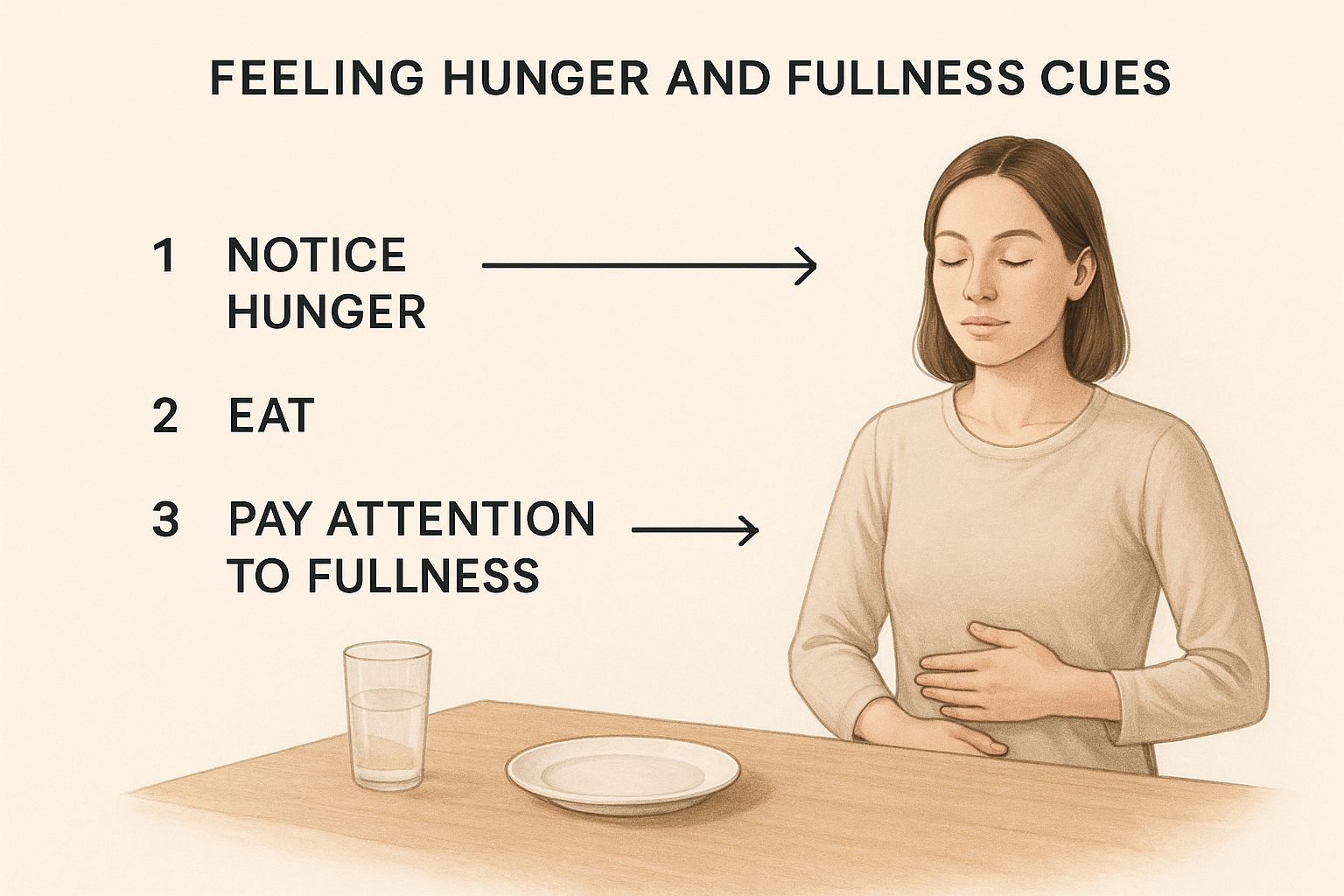
As you can see, it's about tuning out the external noise and turning your attention inward to what your body is actually telling you.
The table below gives some practical, real-world examples of how you can swap common mindless habits for more mindful alternatives.
Mindless vs Mindful Eating A Practical Comparison
| Situation | Mindless Action | Mindful Alternative |
|---|---|---|
| Eating lunch at your desk | Typing with one hand, eating with the other. | Step away from the screen for 15 minutes. |
| Grabbing a snack from the pantry | Eating straight from the box while standing up. | Put a portion in a bowl and sit down to eat it. |
| Watching TV after dinner | Reaching for chips out of habit, not hunger. | Pause and ask, "Am I actually hungry?" Sip tea instead. |
| Feeling stressed or emotional | Automatically heading for the fridge for comfort. | Take 5 deep breaths and identify the feeling first. |
This isn't about perfection; it’s just about noticing these moments and seeing where you can make a small, conscious choice.
Honor Your Hunger and Fullness
Learning to tell the difference between true, physical hunger and other eating triggers is a foundational skill. Is that a genuine rumbling in your stomach, or is it boredom, stress, or just a random craving?
Try checking in with yourself on a hunger scale from 1 (starving) to 10 (uncomfortably stuffed). The sweet spot is to start eating when you’re at a 3 or 4 and stop when you hit a pleasant 6 or 7.
This simple practice helps you avoid getting ravenously hungry—which almost always leads to poor choices—and teaches you to recognize satisfaction without needing to feel stuffed. It’s all about respecting your body’s signals.
Of course, where you eat matters, too. Your environment plays a huge role in your habits. You can dive deeper into this with our guide on the power of environment and where you eat. All these principles work together, laying the groundwork for a healthier, more intuitive relationship with every single meal.
Here’s a fascinating side effect of changing how you eat: you often start to change what you eat, without even trying. This isn’t about forcing yourself to follow a strict meal plan. It’s about how mindful eating habits naturally guide you toward better food choices just by making you pay more attention.
Imagine eating a greasy, highly-processed meal while you’re scrolling through your phone. You barely register the taste before it’s gone. Now, picture eating that same meal mindfully, with no distractions. You’d probably start to notice other things—the heavy feeling in your stomach, the sudden drop in your energy levels, or just a general sense of blah.
Your Body Is Already Talking, You Just Need to Listen
That heightened awareness is where the magic happens. Your body is always sending you signals about the food you eat. Mindful eating is like turning up the volume on that feedback loop, making it much harder to ignore.
All of a sudden, you're connecting the dots. You start to realize how certain foods make you feel, not just in the moment, but an hour later. That connection builds a powerful, internal drive to pick foods that leave you feeling energized and vibrant, not sluggish and weighed down.
With a little practice, you might notice some big changes:
- You start wanting more whole foods. You begin to crave the clean energy you get from fresh fruits, vegetables, and lean proteins.
- Processed foods lose their appeal. When you’re paying full attention, the artificial flavors and the inevitable energy crash just aren't as satisfying anymore.
- You gain a better sense of portion size. By actually listening to your body's "I'm full" signals, you stop eating when you're satisfied, not just when the plate is empty.
It’s Not Just a Feeling—It’s Backed by Science
This isn't just a nice idea; the research supports it. A huge French study with 13,768 adults discovered a clear link between mindful eating and healthier diets. Researchers found that people who scored higher on mindfulness tests naturally ate more plant-based foods like fruits and vegetables and less meat and dairy. You can dig into the details in the full study on how mindful eating affects food choices.
The reason for this shift is simple: mindful eating changes your entire relationship with food. It’s no longer a fight between "good" and "bad" choices. Instead, it becomes a practice of listening to what your body is asking for.
At the end of the day, improving your diet doesn't have to feel like a battle. When you focus on building mindful eating habits, you're really just learning to trust yourself to make better choices instinctively. It's a much kinder, more sustainable path where eating well feels less like a chore and more like taking care of yourself. The best part? The changes come from you, not from a rulebook.
How to Handle the Bumps in the Road to Mindful Eating
Starting a mindful eating practice is one of the best things you can do for yourself, but let's be honest—it’s not always a straight line. Life gets messy. You’re going to hit roadblocks that tempt you to fall back into old, mindless habits. That's completely normal. The secret isn't about having a perfect record; it's about knowing how to handle these challenges when they pop up.
Most people get tripped up by the big three: crazy schedules, social situations, and emotional eating. A slammed workday might mean you’re inhaling lunch over your keyboard, or a night out with friends can make you feel awkward for slowing down. Just knowing what these hurdles look like is half the battle.
The Challenge of a Busy Schedule
In our go-go-go world, time feels like a resource we never have enough of. Trying to eat mindfully can seem like a luxury you just can’t afford. When you're bouncing from one task to the next, it's so easy to slip into autopilot and just scarf something down to refuel.
But here’s the good news: you don't need a full hour-long, zen-like experience to be mindful. Even just a few minutes can completely change the game.
- Create a "No-Screen Zone": This is a simple one. Get up from your desk. Move to a different chair, or even stand by a window. That small physical change tells your brain it's time to shift gears and focus on your meal.
- Take Three Deep Breaths: Before you even pick up your fork, just pause. Take three slow, intentional breaths. This tiny action is surprisingly powerful for calming your mind and grounding you in the present.
- Focus on the First Five Bites: If you’re really crunched for time, make a deal with yourself. Be 100% present for just the first five bites. Really taste the food, notice the textures, and smell the aromas. It’s a small commitment that can set a much more mindful tone for the rest of your quick meal.
The goal isn’t perfection. It’s about finding small pockets of mindfulness in a busy day. One mindful meal is better than none.
Coping with Emotional Eating Triggers
We’ve all been there. Stress, boredom, sadness—these feelings can send us running straight to the pantry for comfort. When those big emotions surface, the pull to soothe them with food can feel unstoppable. This is exactly where mindful eating shows its true power. That sudden, intense craving isn't a weakness; it's a signal to pause and check in with yourself.
Learning to tell the difference between what your heart wants and what your stomach needs is a game-changer. It's such a key skill that we've gone deep on it before; you can get a better handle on this by understanding the differences between emotional hunger vs physical hunger.
So, next time you feel that urge, try this: instead of reaching for a snack right away, experiment with a non-food comfort first. Maybe a short walk around the block, putting on a song that makes you happy, or just scribbling down what’s on your mind. By putting a little space between the feeling and your reaction, you take back the driver’s seat. It's a muscle you build over time, and it makes your mindful eating habits stronger and more sustainable.
Your Role in a Healthier World
Taking on mindful eating is a personal journey, for sure. But the ripple effects of your new habits reach far beyond just you. Every time you slow down and really listen to your body’s cues, you’re doing more than improving your own health—you're casting a vote for a healthier, more conscious world.
Think of it as a single drop of rain. On its own, it doesn't seem like much, but when millions of drops come together, they create a powerful river. In the same way, your commitment to mindful eating joins a growing movement that’s quietly reshaping our future, one meal at a time. You're helping nudge our culture away from mindless speed and back toward intention and genuine nourishment.
Aligning Personal Habits with Global Goals
This isn't just a feel-good idea; your personal practice lines up perfectly with some of the biggest public health goals on the planet. Around the world, organizations are focused on improving what we eat to fight back against chronic diseases. The World Health Organization (WHO), for instance, has set massive nutrition targets to tackle issues like obesity and nutrient deficiencies.
While you might not see "mindful eating" explicitly named in these global policies, its core principles are exactly what’s needed. It's all about making deliberate choices, which naturally leads to better food selection and portion control.
Your daily practice supports these huge objectives in a few very real ways:
- Promoting Portion Awareness: When you tune into your body’s fullness signals, you stop overeating almost automatically. This is a massive win against obesity and the health problems that come with it.
- Reducing Processed Food Intake: Many people find that when they eat with total awareness, those hyper-processed, sugary snacks just aren't as satisfying anymore. You start naturally gravitating toward whole, real foods.
- Increasing Nutritional Literacy: Paying attention teaches you how different foods actually make you feel. This builds a powerful, personal understanding of nutrition that empowers you to make smarter choices.
By practicing mindful eating, you shift from simply reacting to health issues to proactively building a foundation of well-being. You become an active participant in preventative health, both for yourself and for those you inspire.
Creating a Ripple Effect of Change
Your habits don't exist in a bubble. When your friends, family, or coworkers see you eating with intention—and genuinely enjoying your food—it gets them thinking. It shows them that a healthy relationship with food isn't about strict diets or what you can't have. It’s about awareness and respect for your body.
This is exactly how cultural change begins. By modeling a calmer, more conscious way of eating, you help make it the new normal. You're showing people around you a path to wellness that feels sustainable, not punishing.
Ultimately, your journey makes a powerful statement. It says that health is more than just a number on a scale; it's about building a kind, attentive connection with yourself. Every mindful meal is a small but meaningful step toward a world where we’re all more connected to our food, our bodies, and each other.