 CravingMind AI
If you’ve ever felt like you’re fighting a losing battle against food cravings, I want you to know something important: it’s not a willpower problem. It’s a biology problem. The key to breaking the cycle isn’t about white-knuckling your way through it; it’s about understanding what’s happening in your brain and learning how to interrupt the pattern.
It’s Not a Willpower Problem—It’s Brain Chemistry
Feeling powerless against a sudden, intense urge for a bag of chips or a sleeve of cookies is an incredibly common experience. For years, we’ve been told that giving in is a sign of weak discipline, but that’s a fundamental misunderstanding of how cravings work.
The truth is, many of today’s ultra-processed foods are engineered to be irresistible. Food scientists have perfected the “bliss point”—the ultimate combination of sugar, fat, and salt that sends a jolt of dopamine straight to your brain’s reward center. This isn’t just satisfying; it’s a powerful biological feedback loop that leaves your brain screaming for more.
This is the cycle we get stuck in. A trigger pops up, the craving hits, and our brain pushes us toward the “reward.”
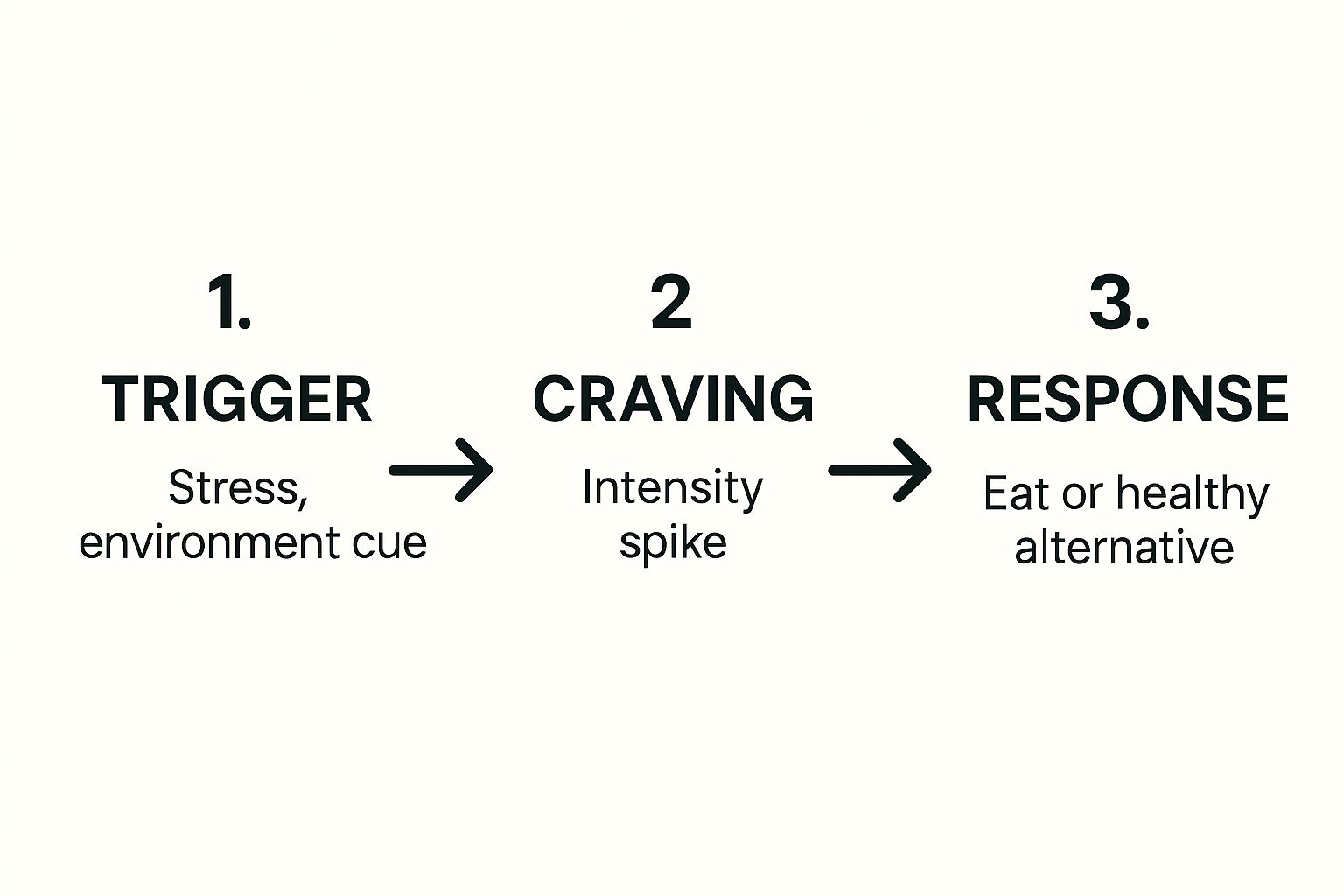
But as the image shows, there’s a crucial moment—a pause between the craving and the response—where you have the power to make a different choice. That’s our window of opportunity.
The Four Stages of the Food Craving Cycle
To really get a handle on this, it helps to see the craving cycle as a four-part process. When you can pinpoint where you are in the cycle, you’re better equipped to step in and change the outcome.
| Stage | What Happens | How It Feels |
|---|---|---|
| 1. Trigger | An internal or external cue occurs. It could be seeing a commercial, feeling stressed, or just walking past a bakery. | A sudden thought or memory of the food. You might not even feel a strong urge yet. |
| 2. Craving | Your brain releases dopamine, creating a powerful urge to seek out the food you’re thinking about. | An intense, almost obsessive desire. It can be hard to focus on anything else. |
| 3. Response | You act on the craving and eat the food. | A temporary sense of relief, pleasure, or satisfaction. |
| 4. Reward | The “feel-good” chemicals confirm to your brain that this was a good decision, reinforcing the entire loop for next time. | A fleeting high, often followed by feelings of guilt, regret, or physical discomfort. |
Recognizing these stages in real-time is the first step toward dismantling the cycle.
Understanding the Science of the Urge
The comparison isn’t an exaggeration: research increasingly shows that our brains react to these hyper-palatable foods in ways that mirror the response to addictive substances. In fact, some studies suggest that as many as 14% of adults and 12% of children meet the clinical criteria for food addiction.
Cravings are not a moral failing; they are a biological response.
This cycle is dug in deep, reinforced by learned habits, emotional associations, and even our own hormones. All these factors team up to make the urge feel completely overwhelming.
Once you understand this, you can stop blaming yourself and start taking strategic action. The goal isn’t to get rid of cravings forever—that’s unrealistic. It’s about learning to manage your response to them. You can dive deeper into the science behind the urge and why we have cravings for unhealthy food in our detailed guide. It’s all about working with your biology, not against it.
Become a Cravings Detective
If you want to get a handle on food cravings, you have to stop fighting them blindly. The first, most crucial step is to understand what’s actually causing them. It’s time to put on your detective hat and investigate your own habits.
Cravings rarely just pop up out of nowhere. They’re almost always a response to a specific trigger—something in your environment, a feeling you’re having, or even a particular time of day. Your mission is to figure out what your personal cues are.

Think of it this way: these triggers are the starting pistol for the whole craving race. If you can identify them, you can choose not to run.
Keep a Craving Log (It’s Easier Than It Sounds)
For just one week, I want you to keep a simple log. This isn’t about shaming yourself or counting calories; it’s purely an information-gathering exercise. Every time a strong craving hits, just take a moment to note a few things.
You don’t need a fancy journal. A note on your phone or a sticky pad on your desk works perfectly. The key is just doing it.
Approach this with curiosity, not judgment. Every craving is a clue that helps you piece together the puzzle of your own patterns.
When you feel that familiar pull, pause and ask yourself these questions:
- What food is it, exactly? Get specific. Are we talking about salty, crunchy potato chips or a rich, dark chocolate bar?
- What time is it? Do you find yourself wandering to the pantry every day around 3 p.m.?
- Where are you and what’s going on? Are you slumped at your desk after a frustrating meeting? Or are you vegging out on the couch watching your favorite show?
- How do you feel? Try to name the emotion in one word. Stressed? Bored? Lonely? Tired? Even happy and celebratory feelings can be triggers.
After just a few days of this, you’ll be amazed at the patterns that jump out at you. You might realize your “random” sugar craving almost always appears right after a tense phone call with a family member. Or maybe that nightly ice cream habit is less about the ice cream and more about feeling lonely once the house is quiet.
This insight is everything. Once you know the real need behind the craving—a need for comfort, a break from stress, or a distraction from boredom—you can find a better way to meet it. This is the bedrock of breaking the craving food cycle for good.
Practical Ways to Interrupt Cravings in the Moment
When a powerful craving hits, it can feel like a tidal wave. Your brain is laser-focused on that one thing, and all rational thought seems to vanish. The secret isn’t to build a wall against that wave but to learn how to surf it.

That’s the whole idea behind a mindfulness practice called “urge surfing.” Instead of fighting the craving, you simply notice it. Acknowledge the thoughts and the physical feelings without judging them. Think of it like a wave in the ocean—it builds, it peaks, and then it inevitably recedes.
The good news? Most cravings lose their power within 15-20 minutes. Your goal is simply to find a way to navigate that short window without giving in.
Create a Pattern Interrupt
A pattern interrupt is exactly what it sounds like: a quick, simple action that breaks you out of the mental loop of the craving. It doesn’t need to be dramatic; it just needs to shift your focus. The trick is to have a few ideas ready to go before the craving strikes.
Here are a few of my favorite go-to interrupts:
- Change Your Scenery: Standing in the kitchen staring into the pantry? Walk into another room or, even better, step outside for a few minutes of fresh air. A new environment can hit the reset button on your brain.
- Shock Your Senses: Chug a big glass of ice water. Splash some cold water on your face. Chew a piece of intensely minty gum. A strong, new sensory input can easily overpower the craving’s signal.
- Get Moving (Just a Little): Do 10 push-ups or a few quick stretches. A short burst of movement releases feel-good endorphins and gives your mind something else to concentrate on.
An interrupt isn’t about punishment or distraction. It’s about creating a moment of pause. That brief space is often all it takes for your more logical, long-term thinking to catch up with that powerful, in-the-moment impulse.
Having a few of these tricks up your sleeve is a game-changer for breaking the craving food cycle. These in-the-moment tactics are just one piece of the puzzle. For a more comprehensive look at building lasting habits, check out our full guide on how to manage food cravings.
Of course. Here is the rewritten section with a more natural, human-written tone.
Building a Lifestyle That Keeps Cravings in Check
Learning to handle a craving when it hits is one thing, but the real win is making those urges less powerful and less frequent to begin with. The long-term strategy is all about building a lifestyle that shores up your defenses against the very things that drive cravings. Think of it as creating a stable foundation so your body isn’t constantly screaming for a quick-energy fix.

It really starts with what’s on your plate. One of the most powerful things you can do is prioritize protein and fiber at every meal. This simple change helps you get off the blood sugar rollercoaster that so often ends with a desperate need for sugar or refined carbs. For instance, starting your day with eggs and avocado creates a sense of steady energy, a world of difference compared to the crash-and-burn cycle of sugary cereal.
And don’t forget water. It’s so easy to overlook, but consistent hydration is non-negotiable. More often than you’d think, your brain mixes up thirst signals with hunger, sending you to the pantry when all you really need is a glass of water. Just keeping a water bottle nearby can cut down on those false alarms significantly.
Your Best Defense Goes Beyond the Kitchen
Food is a huge piece of the puzzle, but other parts of your life are just as powerful. Chronic stress and skimpy sleep? They’re two of the biggest culprits behind cravings that feel completely out of your control. When you’re tired, your body amps up ghrelin (the “I’m hungry” hormone) and dials down leptin (the “I’m full” hormone). It’s a perfect storm for wanting high-calorie junk.
Your environment and daily habits are either working for you or against you. The goal is to consciously design a routine that makes healthy choices the path of least resistance.
This is why we have to look at the root cause. For many people, intense and recurring cravings are a symptom of a much deeper struggle. In fact, what feels like a simple craving can sometimes be linked to food addiction, a condition affecting over one in seven adults in the United States. While that sounds daunting, clinical reports show that people can find success with therapies that teach them the skills to manage these intense urges. You can find more details in these food addiction statistics on AddictionHelp.com.
Making changes that actually stick means looking at the big picture. Here are a few foundational habits I always recommend focusing on:
- Make Sleep a Priority: Seriously, aim for 7-9 hours a night. A well-rested brain is just better at everything, especially managing impulses and making good decisions.
- Build Your Stress-Management Toolkit: Find what works for you. Maybe it’s a five-minute meditation, a quick walk around the block, or scribbling in a journal. Having go-to coping strategies means you’re less likely to automatically reach for food as comfort.
- Set Up Your Environment for Success: If you know potato chips are your downfall, why keep them in the house? It’s not about willpower; it’s about making the right choice the easy choice. Stock your kitchen with healthy, appealing options so they’re always within reach.
Ultimately, breaking the craving food cycle isn’t about constantly fighting a battle. It’s about creating a life where those urges just don’t have as much power over you in the first place.
Here’s a look at what to do when you inevitably get off track.
Let’s get one thing straight: when you’re trying to rewire your relationship with food, setbacks are going to happen. It’s not a question of if, but when. Seeing this as a failure is the biggest mistake you can make. It’s simply part of being human.
The real test isn’t about perfectly avoiding every craving. It’s about how quickly and kindly you get back on course after you’ve strayed.
The All-or-Nothing Trap
We’ve all been there. You eat one cookie you “shouldn’t” have, and suddenly your brain says, “Well, the day’s ruined. Might as well eat the entire sleeve.” This is a classic cognitive trap called the abstinence violation effect, where one small slip feels like a total failure, erasing all your hard work.
But that’s just not how progress works. A single moment or a single meal is just a tiny data point—it doesn’t define your entire journey.
From Self-Blame to Self-Discovery
Instead of letting guilt take over, try getting curious. That moment right after a setback is pure gold for learning. Before you let the negative self-talk start, just pause and ask a few gentle questions. This simple shift can stop a shame spiral dead in its tracks.
- What was the real trigger here? Think back. Was it stress from a work email? Boredom on a Sunday afternoon? Maybe you were celebrating. Pinpoint the feeling that came before the craving.
- What can I learn from this? Maybe this experience showed you that keeping a bag of chips in the pantry is just not a good strategy right now. That’s not a failure; it’s useful information.
- What’s my very next move? Don’t think about tomorrow or next week. What can you do right now? The answer could be as simple as drinking a big glass of water or deciding what healthy dinner you’ll make.
A setback is only a failure if you refuse to learn from it. Think of it as valuable intel that makes your game plan even stronger.
This cycle of slipping up and recovering is where you build genuine, lasting resilience. It’s also deeply rooted in our biology. When we abruptly cut out those super-tasty, highly palatable foods, our brains can go into a kind of withdrawal. Animal studies have found that stopping a high-fat, high-sugar diet can actually make the brain more motivated to seek out sweet rewards and can even increase anxiety. If you’re interested in the science, you can read more about these relapse-like responses and their neurochemical basis.
What truly matters is your immediate response. Don’t wait for “tomorrow” or “next Monday” to start over. Your very next choice is what sets your direction. Go for a quick walk, drink some water, and remind yourself that one choice doesn’t have the power to derail your entire day.
Common Questions About Beating Food Cravings
As you start working on breaking the craving cycle, a lot of questions are bound to pop up. Getting some clear answers can make the whole process feel less intimidating and give you the confidence to keep going. Let’s dig into some of the most common ones I hear.
How Long Does This Actually Take?
This is the big one, isn’t it? While a single, intense craving might only last 15-20 minutes if you can successfully distract yourself, retraining the deep-seated habit is a longer game. The truth is, the timeline is different for everyone. It really depends on the food, your specific emotional triggers, and how consistently you practice new coping strategies.
It’s better to think in terms of weeks and months, not days. This isn’t a race; it’s about making steady, sustainable progress.
Should I Just Cut Out the Craved Food Entirely?
This is a really personal decision, and there’s no one-size-fits-all answer. For some people, going cold turkey is the cleanest way. A “zero tolerance” policy for, say, potato chips, removes the guesswork and can stop the craving cycle from ever getting started. It’s simple and direct.
But for many others, that kind of strict rule backfires. It can feel like deprivation, which only makes the food more appealing—that classic “forbidden fruit” effect. This can lead to an even bigger binge down the road. For these folks, learning to enjoy those foods mindfully and in moderation is a far more sustainable path.
The only way to know is to experiment and find what truly works for you. Your relationship with food is unique, and your strategy should be too.
You could even try eliminating a food for a short period, like a few weeks, just to reset your baseline. Then, you can try mindfully reintroducing it and see how you feel.
Can a Lack of Nutrients Cause Cravings?
Yes, absolutely. While so many of our cravings are tied to habits and emotions, some are definitely rooted in biology. Your body is smart, and it will send out strong signals when it needs something essential.
Think of it this way:
- That relentless urge for chocolate? It might be your body’s cry for more magnesium, a crucial mineral for hundreds of bodily functions.
- Constantly reaching for salty snacks? This can sometimes be a sign of adrenal fatigue or a need for electrolytes, especially if you’ve been sweating a lot.
- A sudden, intense craving for red meat could point to an iron deficiency.
If you have a very specific craving that just won’t quit and doesn’t seem tied to an obvious emotional trigger, it’s worth investigating. Making sure your diet is packed with a wide variety of nutrients is a foundational step in breaking the craving food cycle. It helps you meet your body’s physical needs before they turn into overwhelming urges.